Feeds:
Posts
Comments

bunge_runovermap.jpg

When Bill Bunge mapped out the locations of car/pedestrian collisions in Detroit (Detroit Geographical Expedition, 1968) he and the map were advocating a way of thinking about what was happening to the black community in Detroit – and advocating for change.

All maps advocate.

To advocate means to “to speak or write in favor of; support or urge by argument; recommend publicly.” The word derives from the Latin advocate: “to call to one’s aid.”

What map does not advocate, or argue for something? We are always calling maps to our aid.

Three free books on maps and advocacy have been made available for download recently, and are worth a look.

•••••

Two New PDF Books [added June 6 2009]:

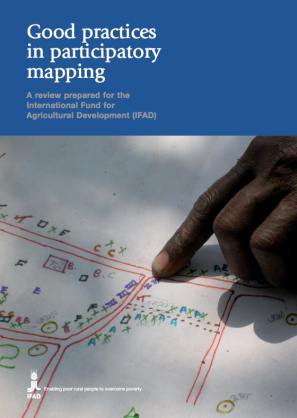
Good Practices in Participatory Mapping (2mb PDF here, 2009). Published by International Fund for Agricultural Development.

A review of participatory mapping methods.

This report will review existing knowledge related to participatory mapping and recent developments. Specifically:

  • Section 1 will define the main features of participatory mapping;
  • Section 2 will discuss key applications of participatory mapping;
  • Section 3 will present specific tools used in participatory mapping, including their strengths and weaknesses;
  • Section 4 will identify good practices and explore the significance of process in participatory mapping initiatives.
participatorymapping

•••••

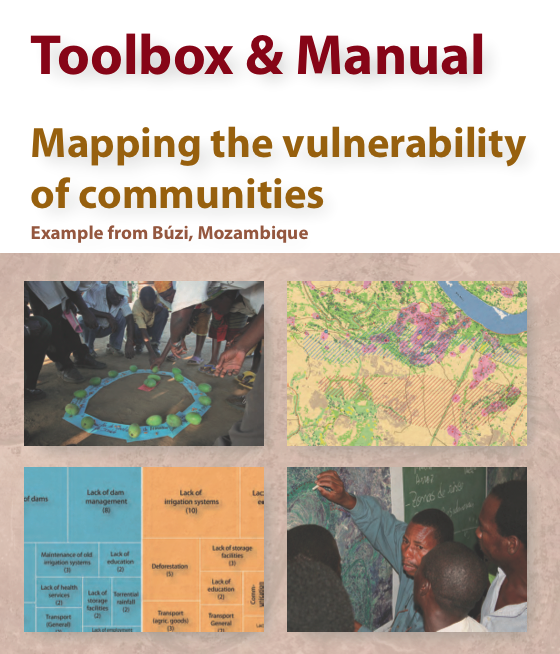
Toolbox & Manual: Mapping the Vulnerability of Communities (4.4mb PDF English version here, Portuguese version aqui, 2008). Published by Salzburg University Centre for Geoinformatics.

A overview of concepts and methods for community mapping, focused on vulnerability.

Within the research and project context it is aimed to provide the local communities with appropriate maps of their communities. The maps should enhance planning and decision making processes within the communities in regard to reduce local vulnerabilities and allow appropriate planning of disaster response measures. It is the first time in Mozambique that maps have been produced with such an accuracy (high resolution data) and for disaster risk management through the integration of participatory practices.
mappingvulnerability

•••••

•••••

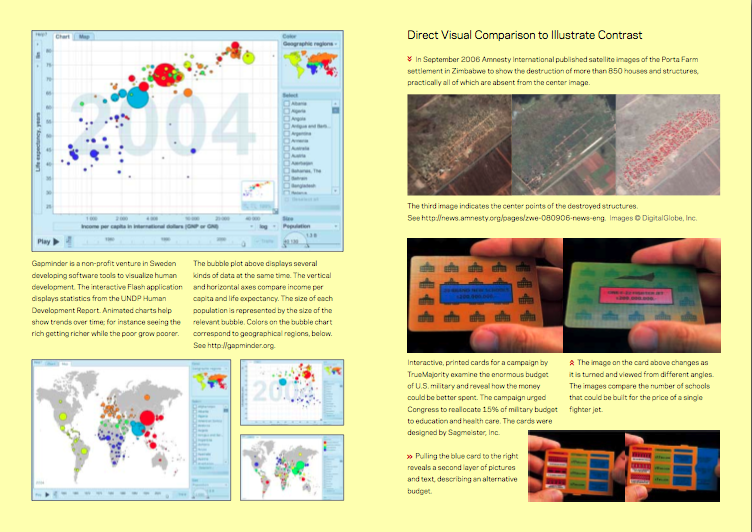
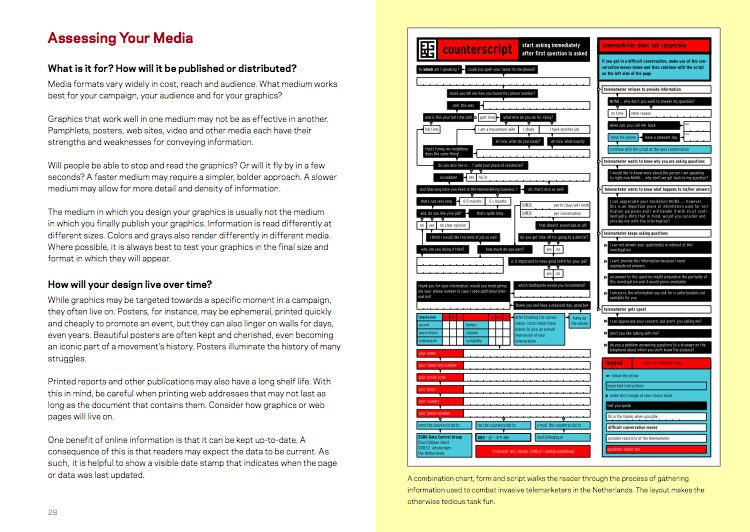
Visualizing Information for Advocacy: an Introduction to Information Design (7mb PDF here, January 2008). Published by Tactical Technology Collective.

Succinct, well-designed, with many good examples of maps and information graphics for advocacy.

…a manual aimed at helping NGOs and advocates strengthen their campaigns and projects through communicating vital information with greater impact. This project aims to raise awareness, introduce concepts, and promote good practice in information design – a powerful tool for advocacy, outreach, research, organization and education.
vifa1

vifa2

•••••

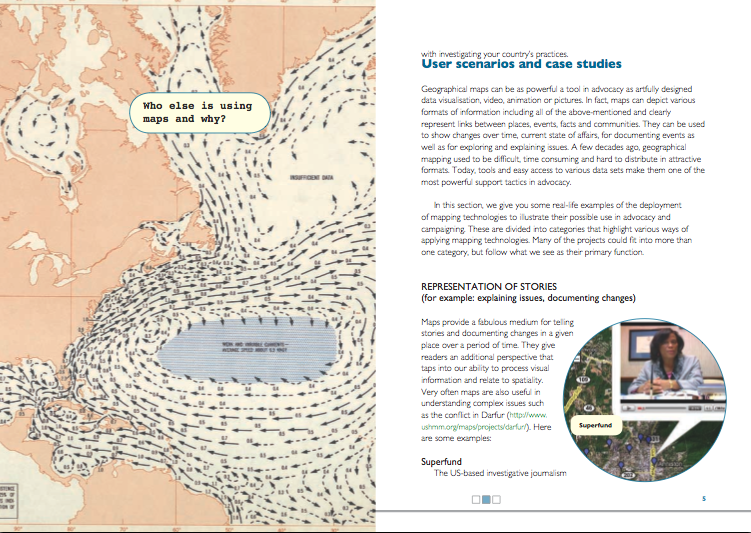
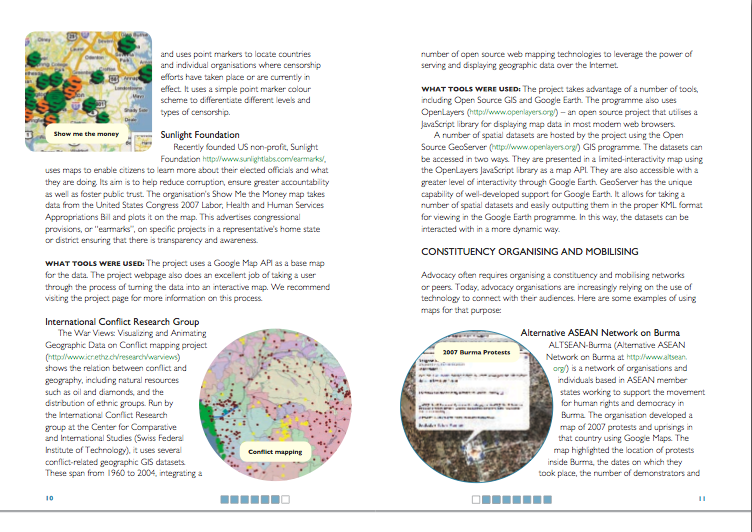
Maps for Advocacy: An Introduction to Geographic Mapping Techniques (3mb PDF here, September 2008). Published by Tactical Technology Collective.

A great overview of maps and advocacy with many examples and resources.

The booklet is an effective guide to using maps in advocacy. The mapping process for advocacy is explained vividly through case studies, descriptions of procedures and methods, a review of data sources as well as a glossary of mapping terminology. Scattered through the booklet are links to websites which afford a glance at a few prolific mapping efforts.
mfa1

mfa2•••••

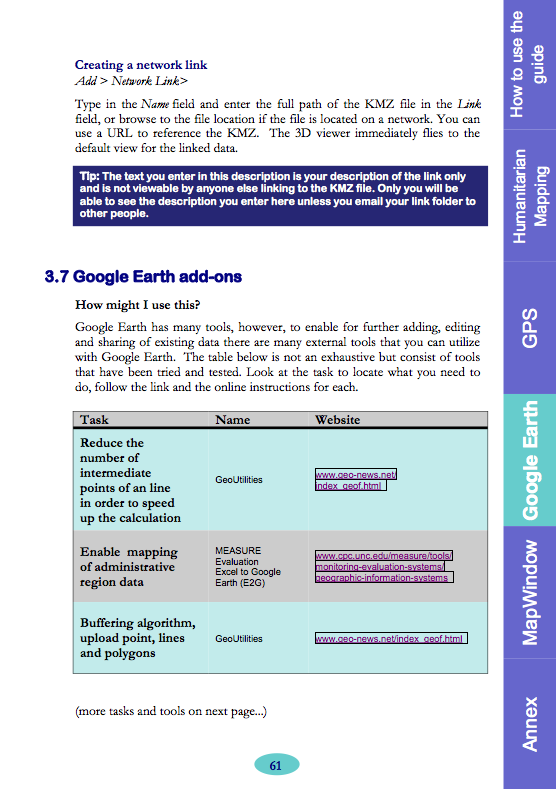
Field Guide for Humanitarian Mapping (3.2mb PDF here, March 2009). Published by MapAction.

A textbook for using maps and GIS in humanitarian work.  The Guide provides detailed information on data collection (GPS) and the use of Google Earth and MapWindow (free mapping software).

The guide was written to meet the need for practical, step-by-step advice for aid workers who wish to use free and open-source resources to produce maps both at field and headquarters levels. The first edition contains an introduction to the topic of GIS, followed by chapters focused on the use of two recommended free software tools: Google Earth, and MapWindow. However much of the guidance is also relevant for users of other software.
fghm1 fghm2

•••••

Some related resources:

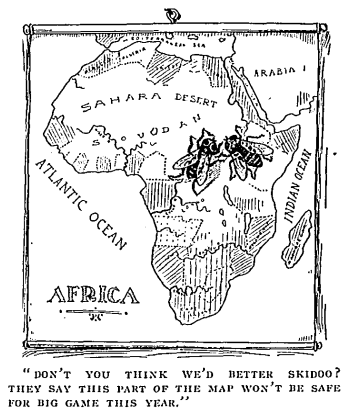
Flies on a Map

flies-on-map

Don’t you think we’d better skidoo? They say this part of the map won’t be safe for big game this year.”

Life, February 4, 1909

snowice_header

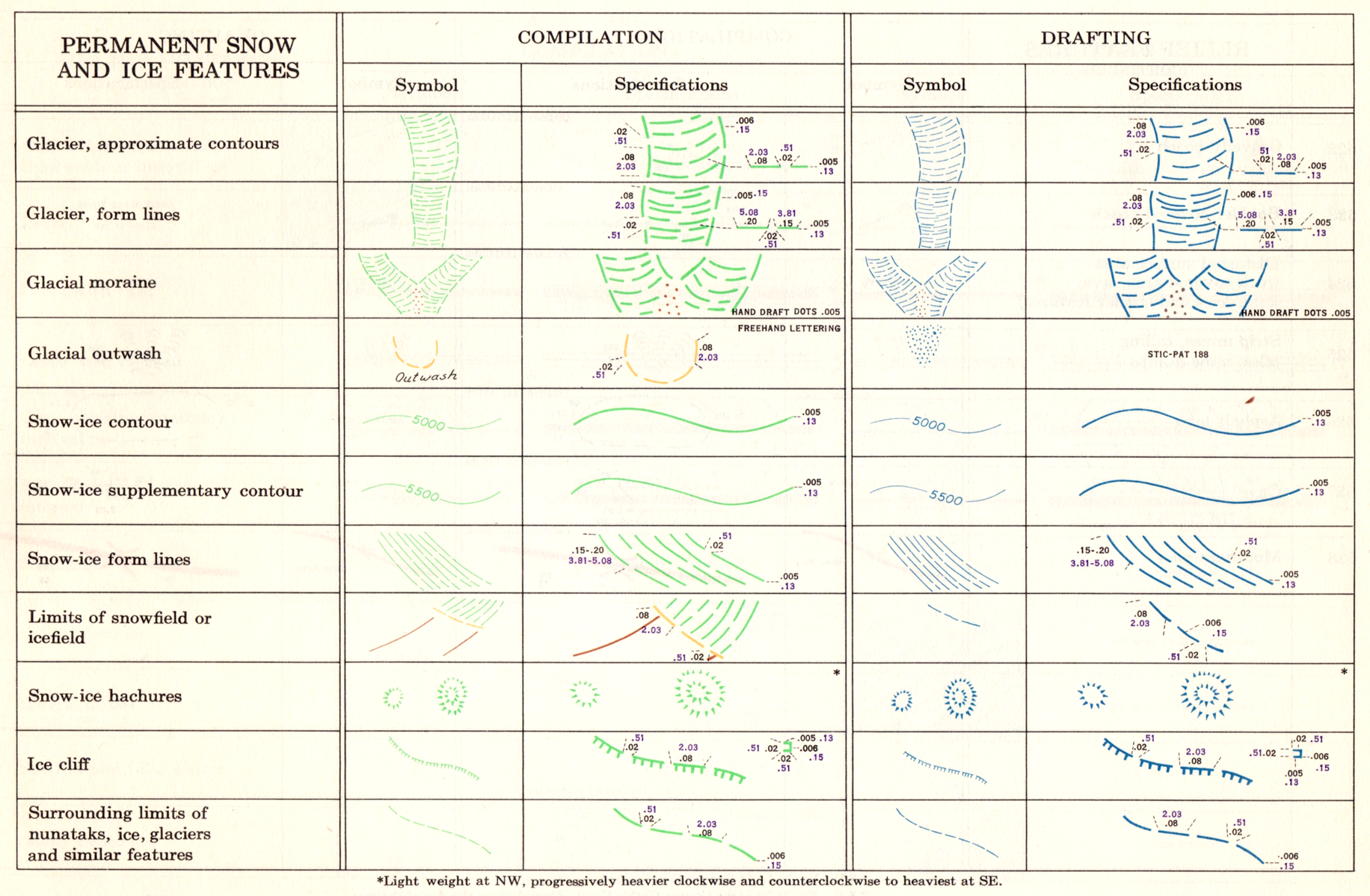
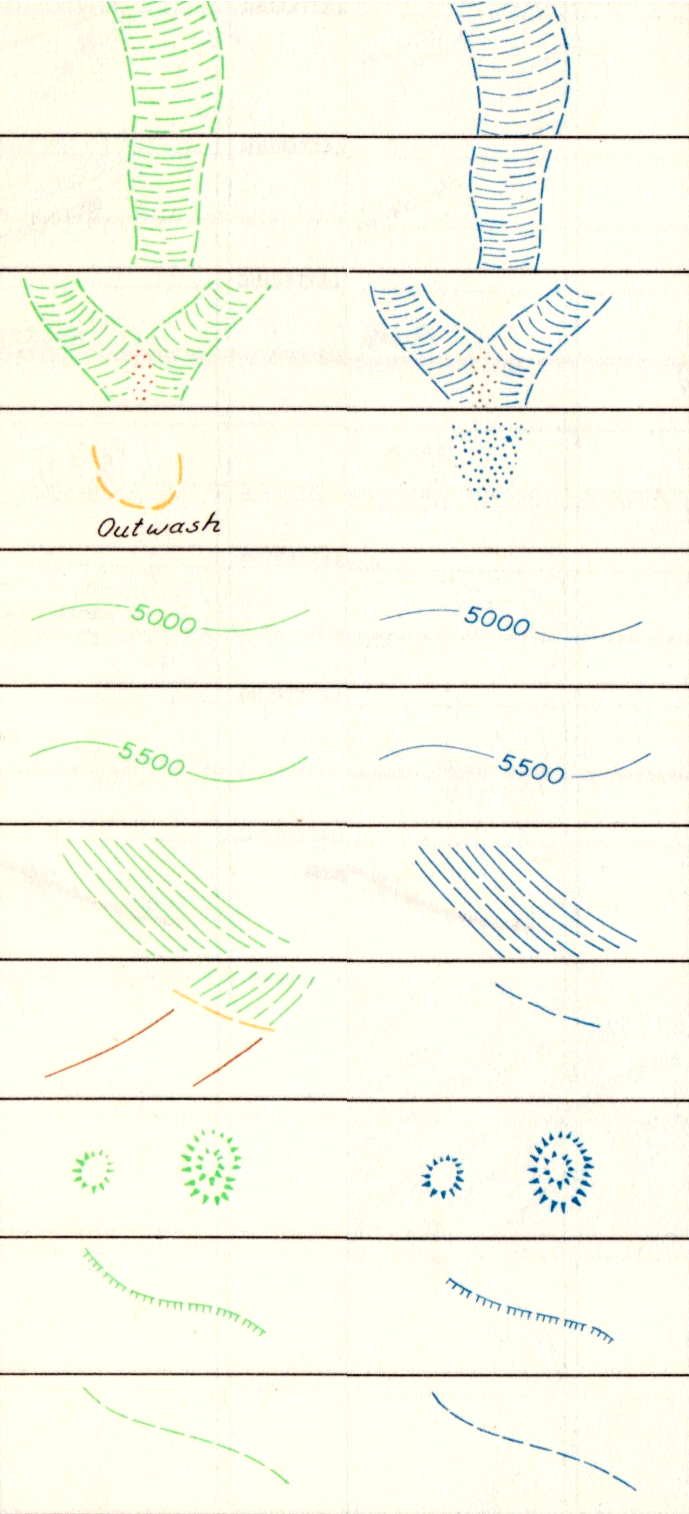
This manual establishes the design, weights, and gauges of symbols, and the type styles and sizes to be used in compiling and drafting standard topographic maps prepared by the Army Map Service for publication at the scale of 1:1,000,000.

During the compilation stages, strict adherence to symbol specifications shall not be required.  Line weights and gauges may be varied twenty percent (20%), plus or minus, from prescribed specifications.

In using the symbols specified for drafting, strict adherence to the prescribed weights and gauges must be maintained.

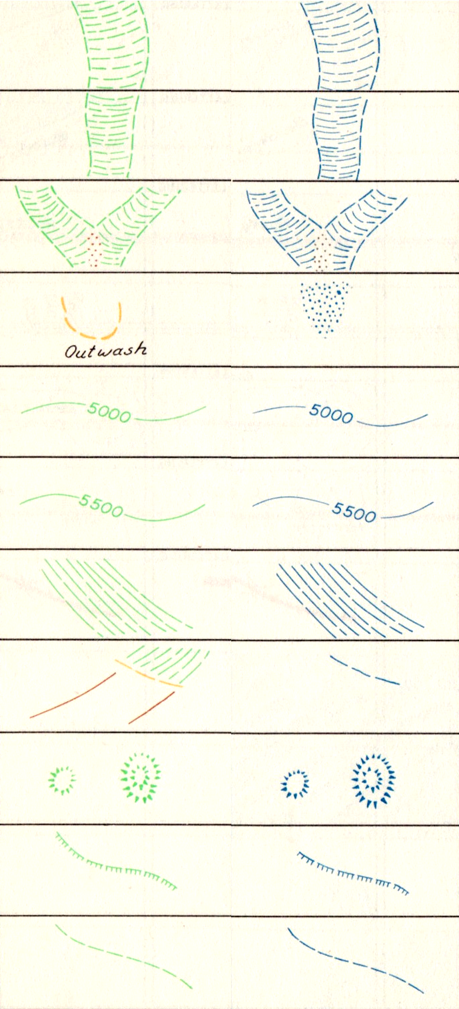
The examples below are map symbols for permanent ice and snow features.

The 1953 Army Map Service guide Symbols for Small Scale Maps details map symbol specifications for compiled maps (left, below) and drafted maps (right, below). Compiled maps are the initial draft of a map, where diverse sources of information are drawn together.  Using the compiled map, a cartographic draftsman creates the final, drafted map, suitable for printing.
snowice_symbols1

The map symbol specifications include detailed symbol dimensions:

Specifications for glaciers:

snowice_glacier

Specifications for ice cliffs:

snowice_icecliff

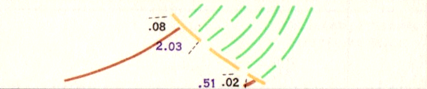
Specifications for the limits of icefields or snowfields:

snowice_limits

The entire page 22 of the Army Map Service Symbols for Small Scale Maps, including specifications for permanent snow and ice features is linked below:

snowice_symbols_all

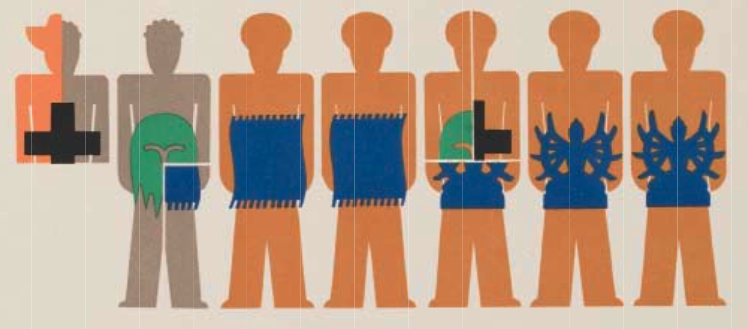
Mapping with Isotype

picture-2


picture-3

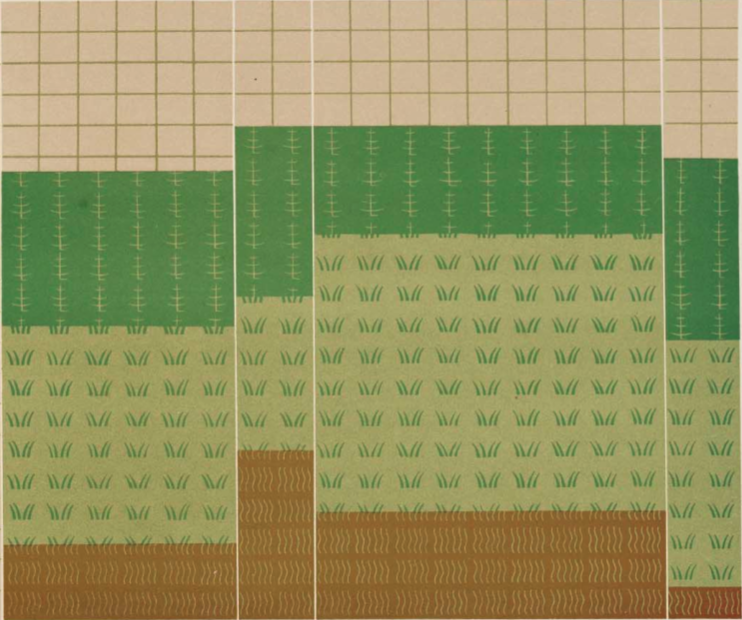
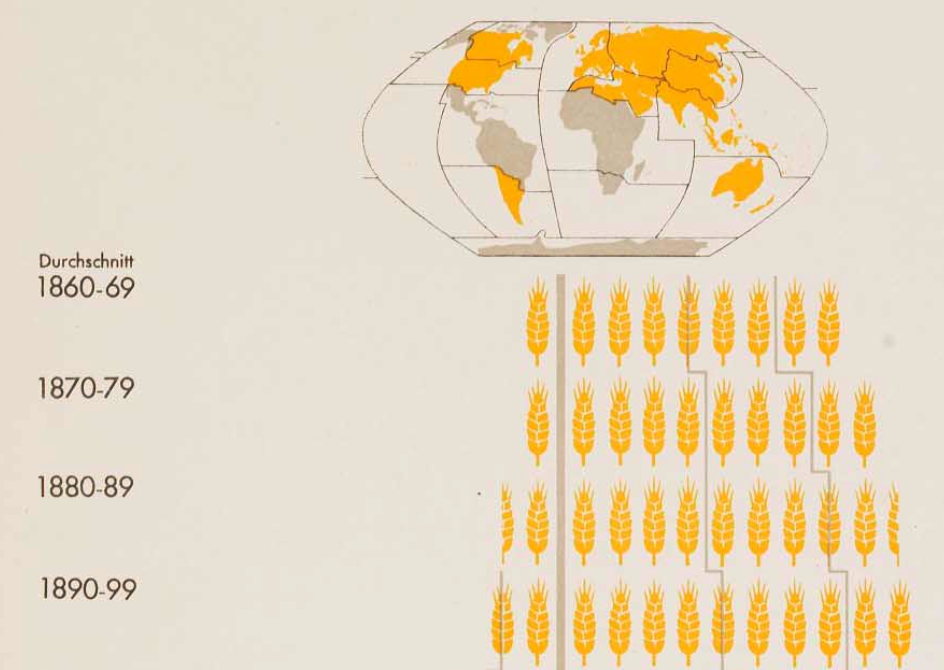
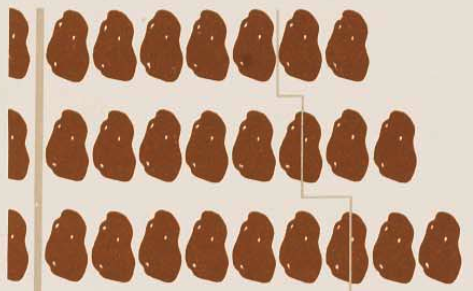
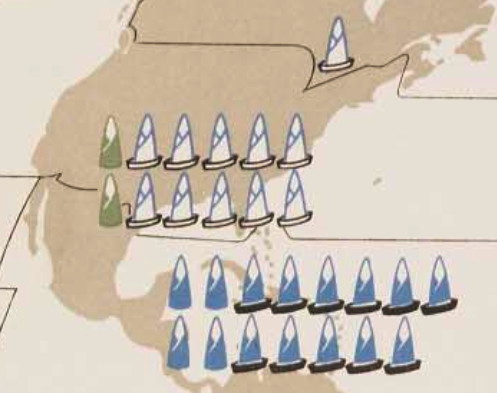
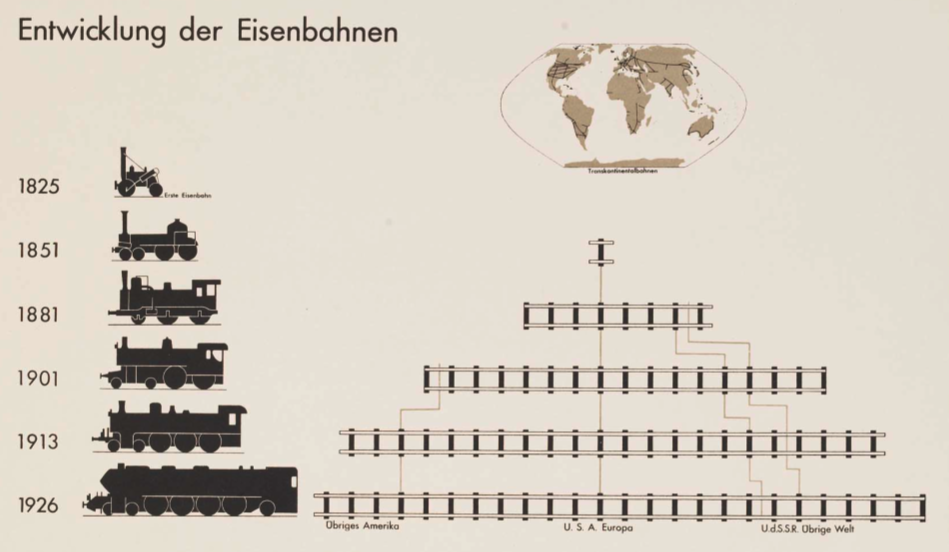
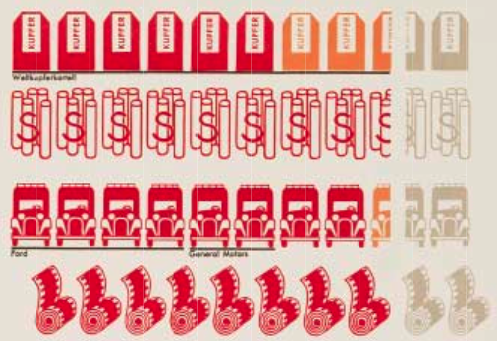
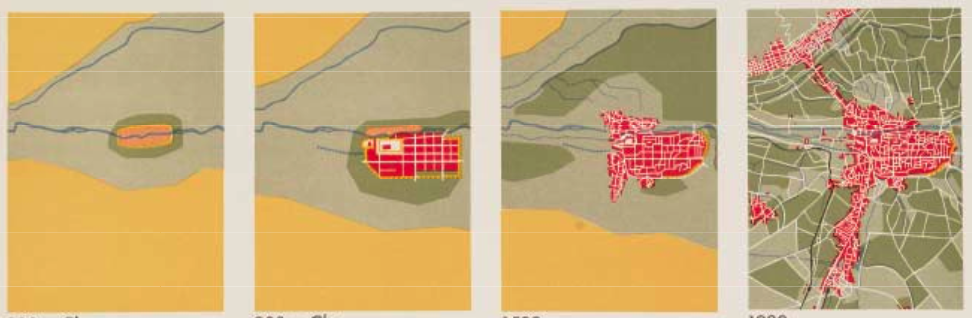
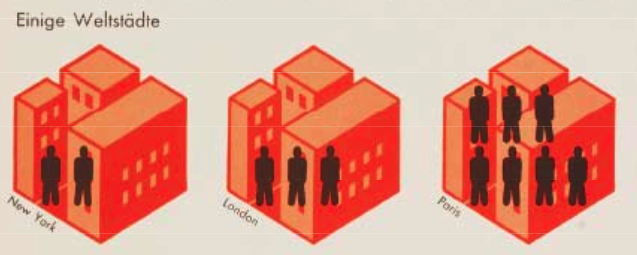
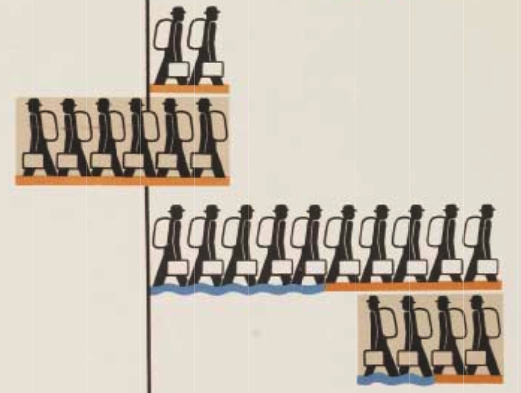
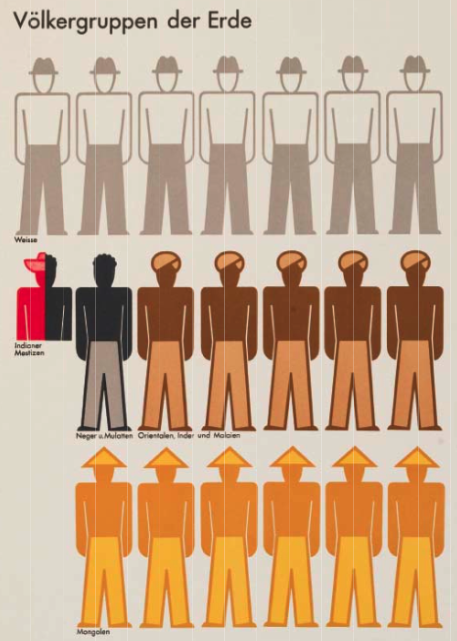
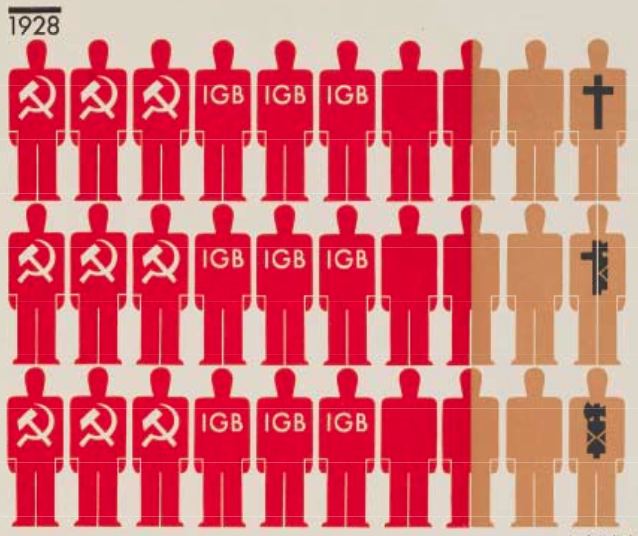
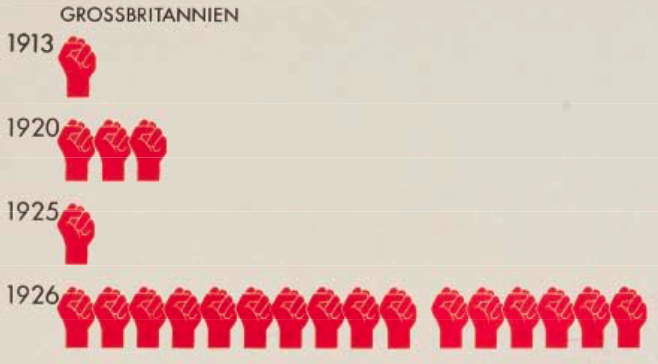
I was moving some piles of junk in a storage room and came across a 1934 U.S. Public Works Administration book on Mississippi Valley public works projects (Report of the Mississippi Valley Committee of the Public Works Administration, October 1, 1934). The book is full of maps and other information graphics influenced by Otto Neurath, Gerd Arntz, and Marie Reidemeister’s picture language, isotype.

I always thought isotype had a great look to it.  Its context, in Vienna Circle logical positivism, is a bit wonky, and the idea that symbols – if designed carefully enough – could be “universally communicable” across all cultural and social differences, is merely the dream of those born with a peculiar neurology.  Nevertheless, the isotype “look” is cool in a retro sort of way, and it has certainly influenced the current spare design ethos in cartography.

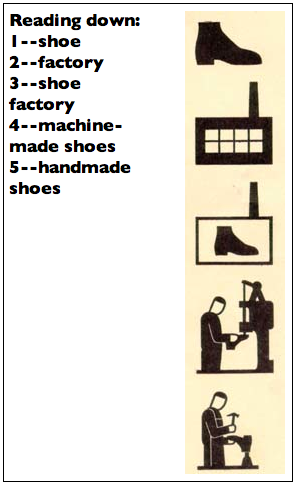
Some annotated examples of the isotype “language” from a 1937 article by Neurath:

isotype_lang1 sotype_lang2 sotype_lang3

The Gerd Arntz Web Archive is a spectacular collection of thousands of isotype symbols designed by Arntz. All seem to be free to use. (symbols are copyrighted by Pictoright – thanks to Jonathan Hunt for pointing this out). The site also has a breif biography of Arntz.

gmdh02_00158_0 gmdh02_00094_0gmdh02_00045

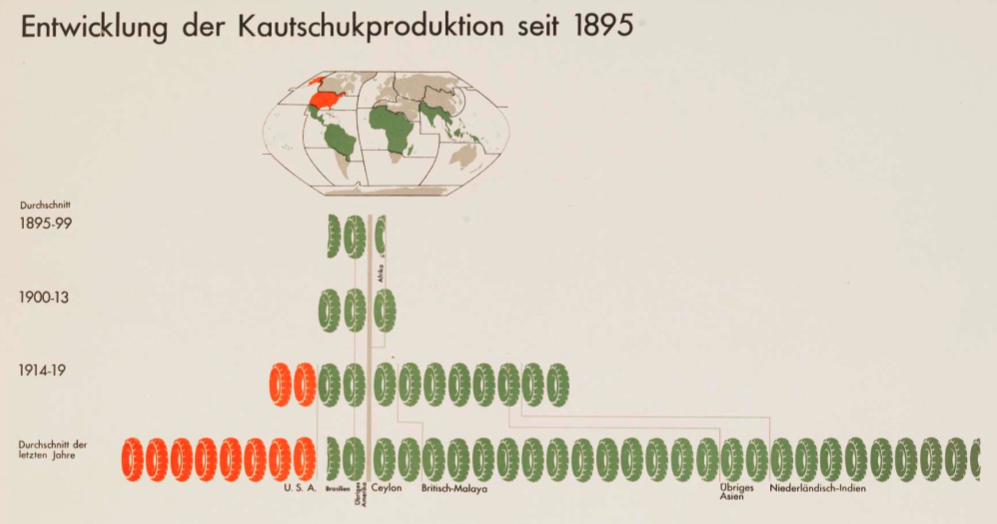
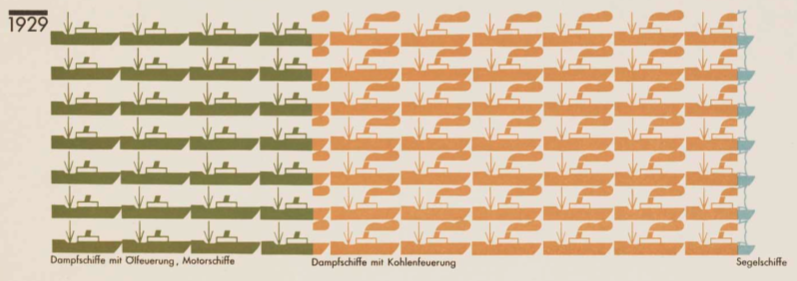
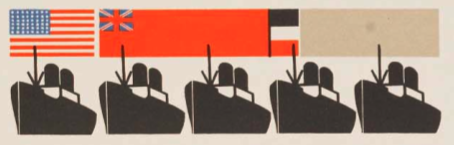
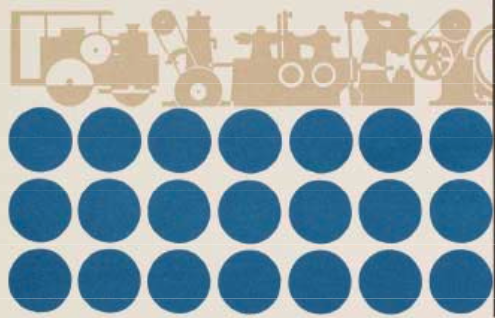
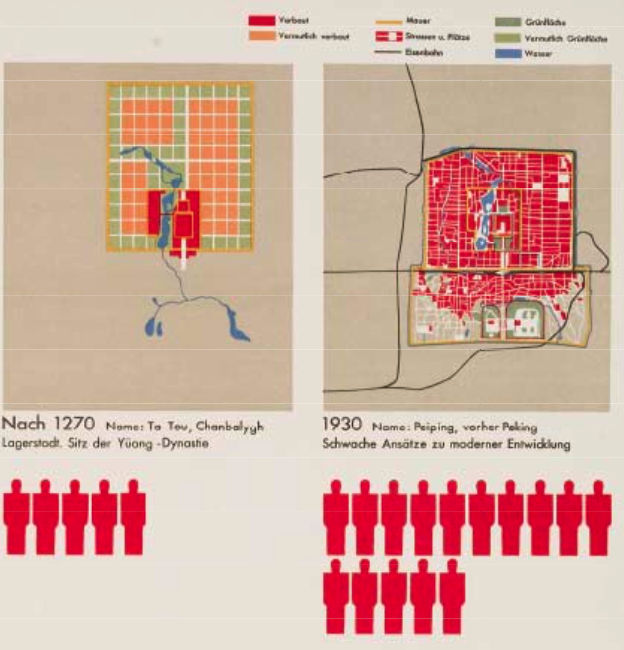
In casting about the internets, I was gladdened to find someone had scanned the isotype classic, Atlas of Gesellschaft und Wirtschaft (1930, 14+mb PDF).  As far as I know the atlas was printed (on sheets) in limited numbers and has never been easy to find.  Sybilla Nikolow discusses the atlas in her article “Society and Economy: An Atlas in Otto Neurath’s Pictorial Statistics from 1930.” (PDF)

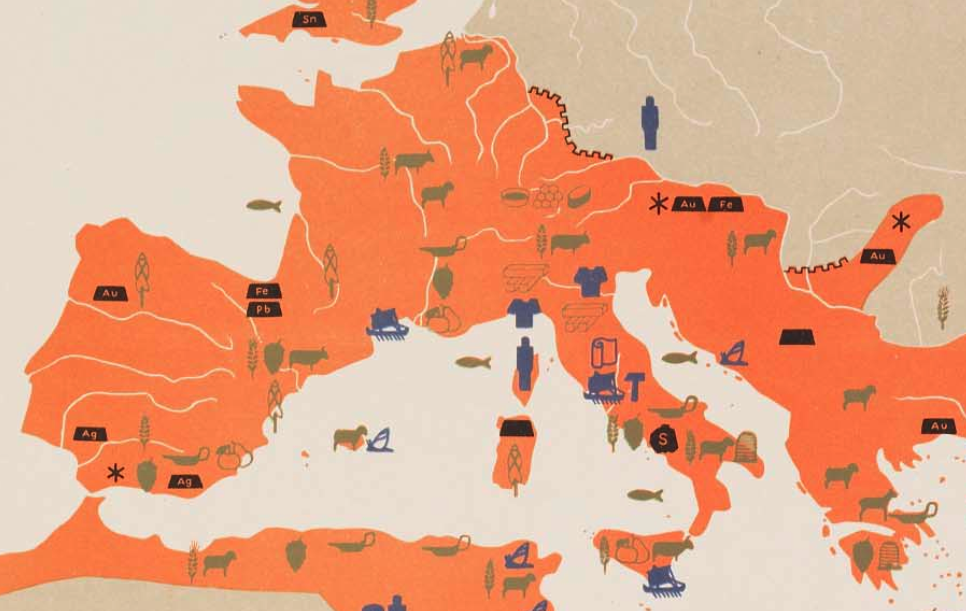
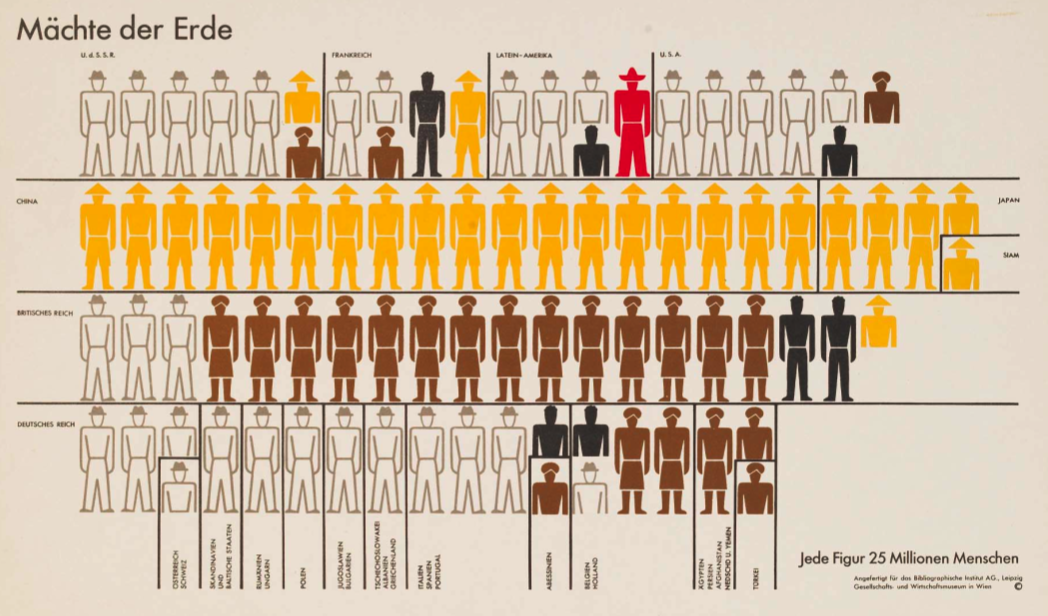
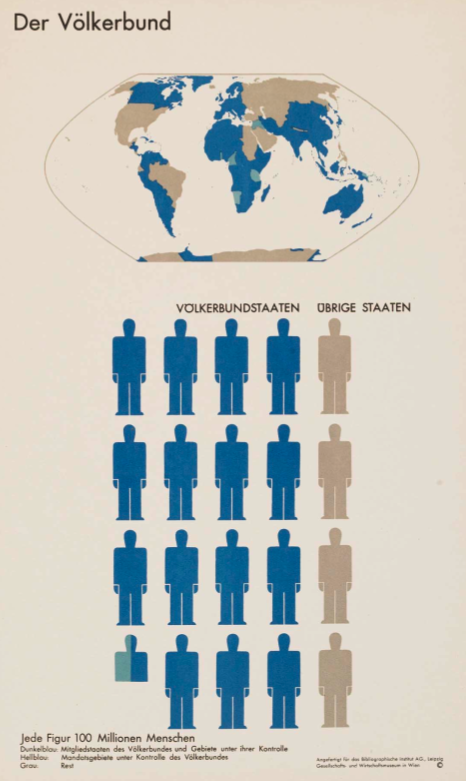
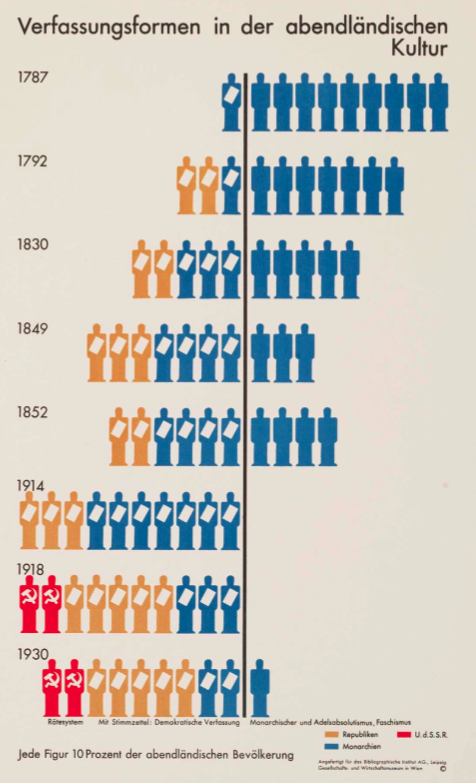
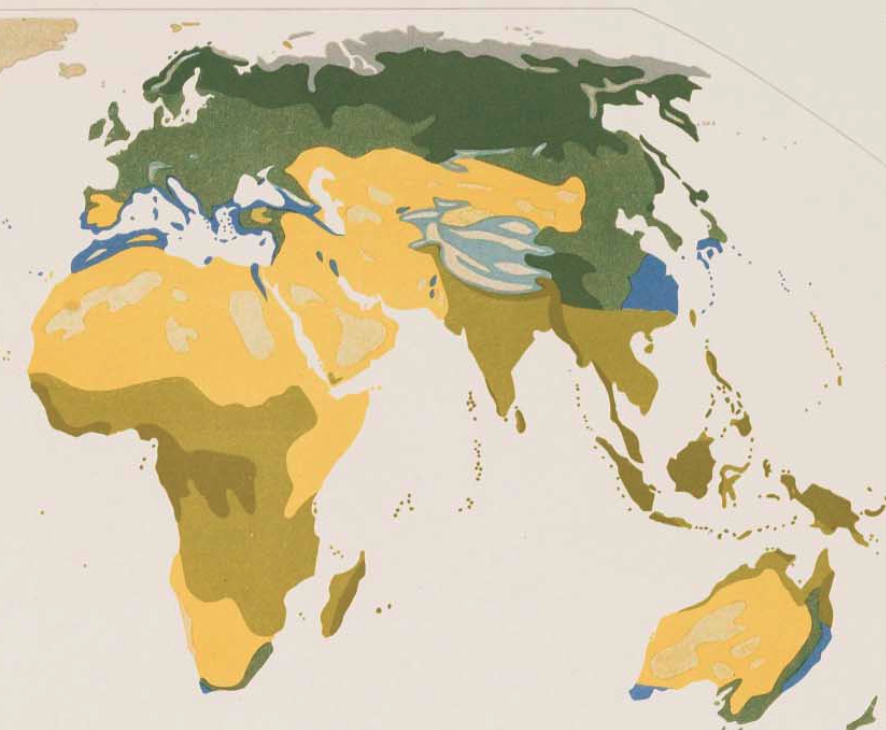
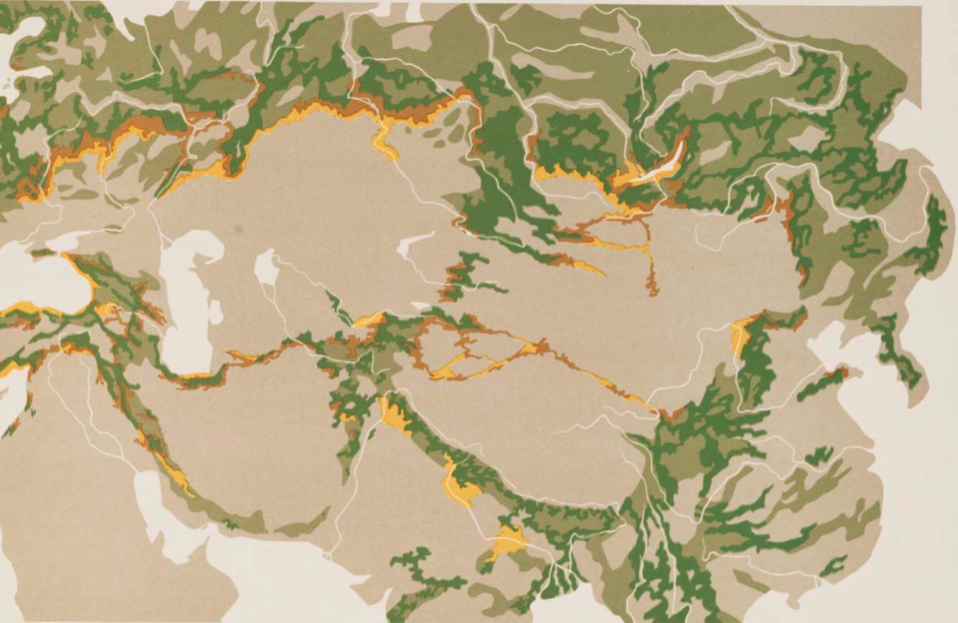
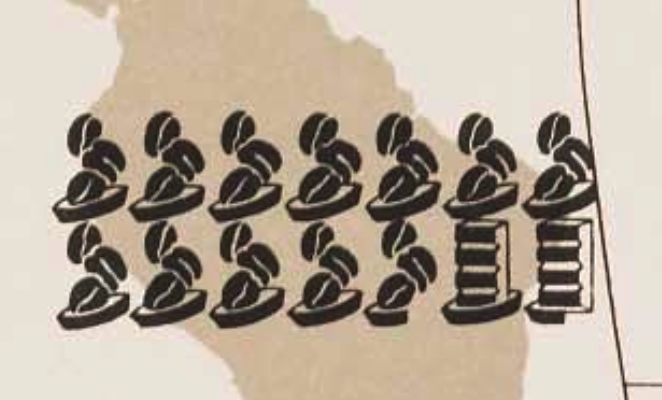
A sampling of maps and graphs from the Atlas follows, and a few more useful isotype resources can be found way at the end.

isotype01

isotype02

isotype03

isotype04

isotype05

isotype06

isotype07

isotype08

isotype09

isotype10

isotype11

isotype12

isotype13

isotype14

isotype15

isotype16

isotype17

isotype18

isotype19

isotype20

isotype21

isotype22

isotype23

isotype24

isotype25

isotype26

•••••

A few interesting isotype resources:

The Isotype Institute documents the history of isotype and has much useful information.

A snazzy discussion of isotype done up by mixing isotype and text is Modern Hieroglyphics. (PDF)

Ellen Lupton reviews the history and significance of isotype in her article “Reading Isotype.” (PDF)

isotype

Neurath and the Vienna Method of Picture Statistics (PDF). A chapter out of an e-book called Speaking of Graphics An Essay on Graphicacy in Science, Technology and Business by Paul J. Lewi. Seems like a nice overview of the history of isotype and its characteristics.

The DADA Companion has much information on design and art related to isotype. Search for “isotype” or “Neurath.”

A new book to be published in April of 2009 is called The Transformer: Principles of Making Isotype Charts by Marie Neurath and Robin Kinross.

Austin Kleon’s blog on graphic design has a nice posting on isotype, comics, and information graphics design. Search the blog for other isotype references.

The web magazine Mute has a feature called The Dutch Are Weeping in Four Universal Pictorial Languages At Least that reviews a series of contemporary exhibits that focus on isotype and related ideas. One exhibit called After Neurath has a significant amount of information and links.

The New York Times summarized 2007 US and Coalition member deaths in Iraq in a isotype-esque chart (click for larger version):

iraq_2007_deaths

Stroom De Haag writes (in the online magazine Archined) about Neurath as the “grandfather of open source.”

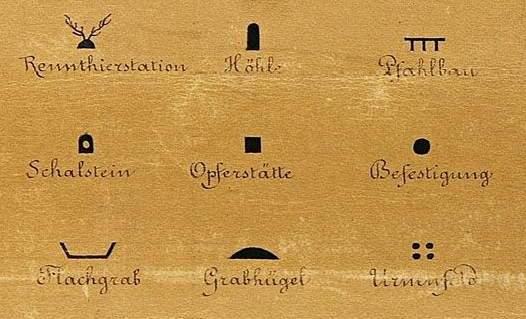
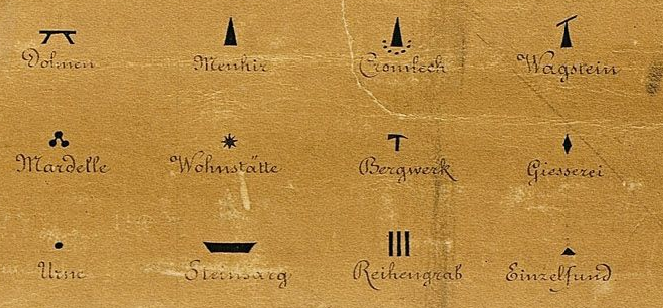
alsace_archaeo

arch-detail

alsace_archaeo_leg4

alsace_archaeo_leg3alsace_archaeo_leg2

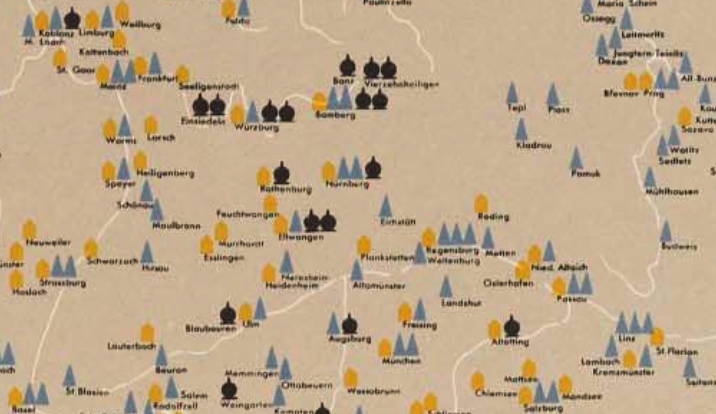
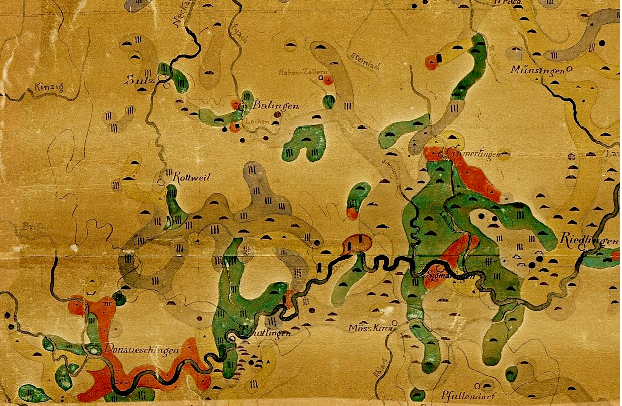
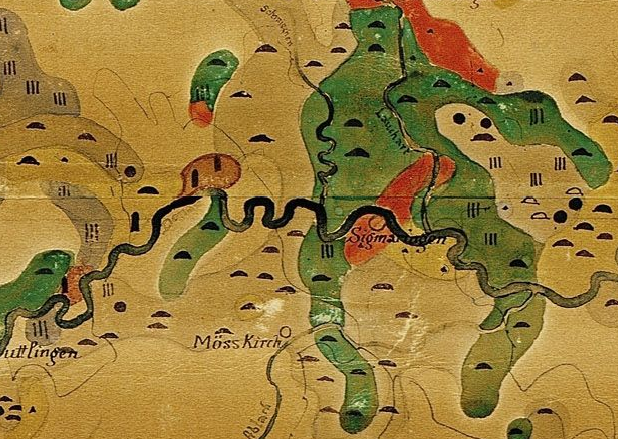
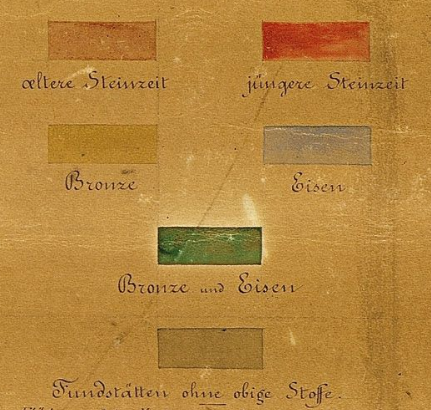
Prähistorische Karte von Südwestdeutschland und der Schweiz, 1879

(Protohistoric and Prehistoric Discoveries …)

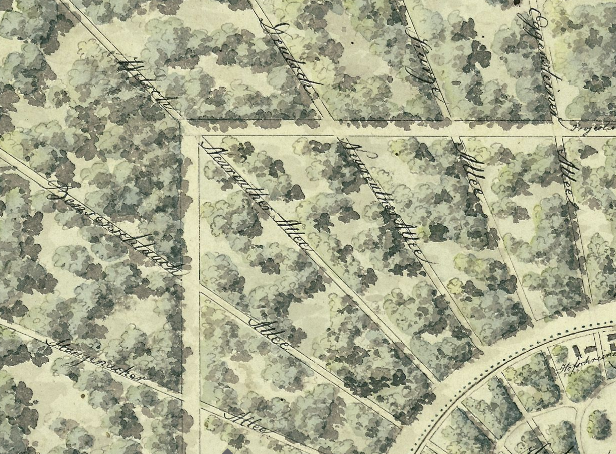
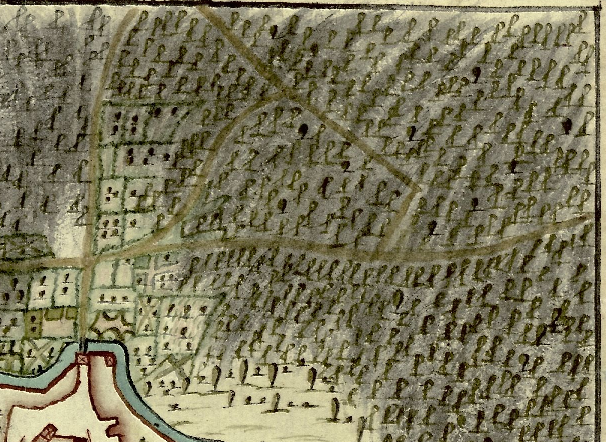
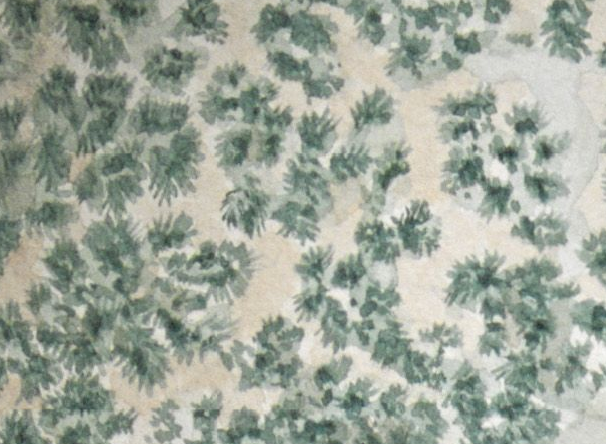
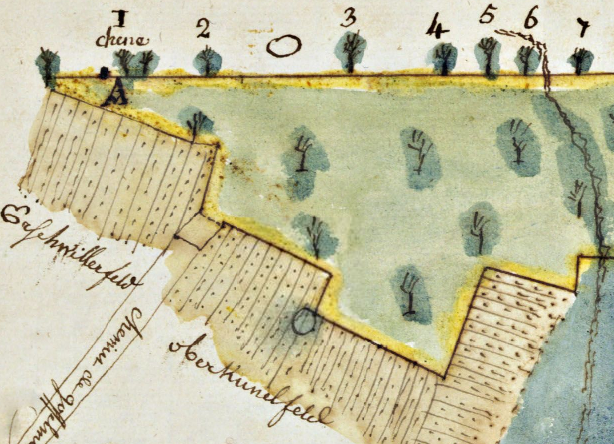
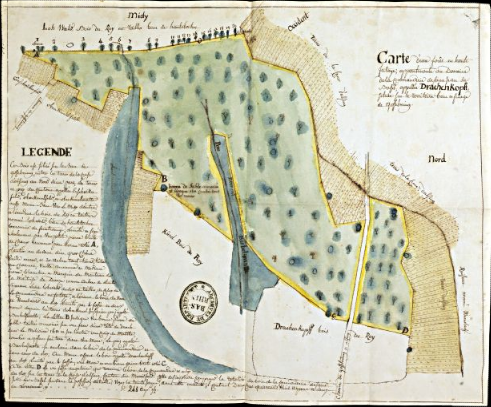
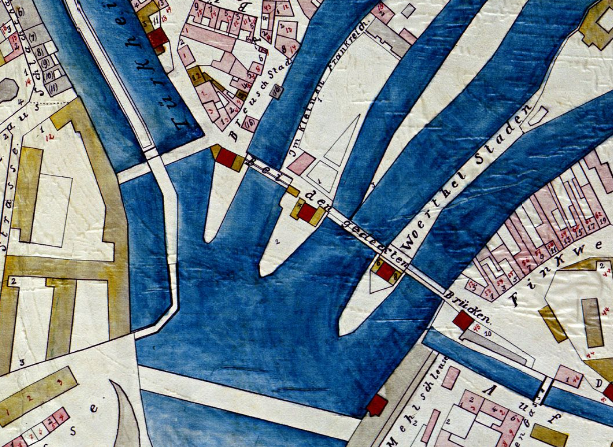
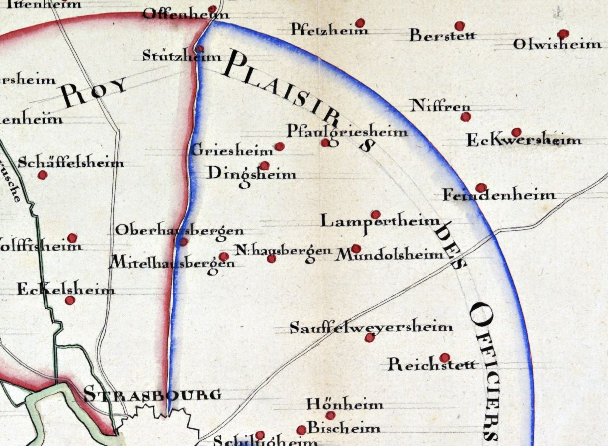
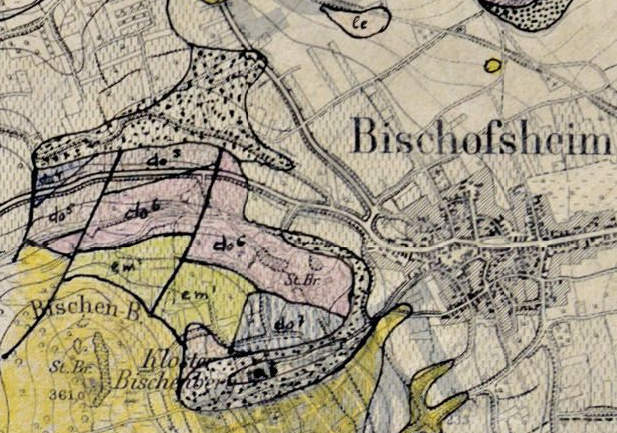
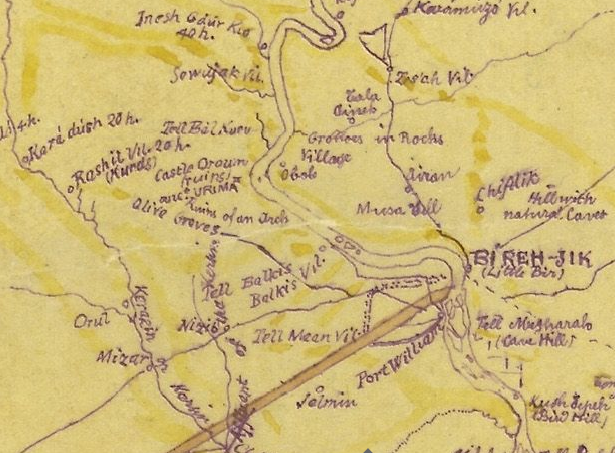
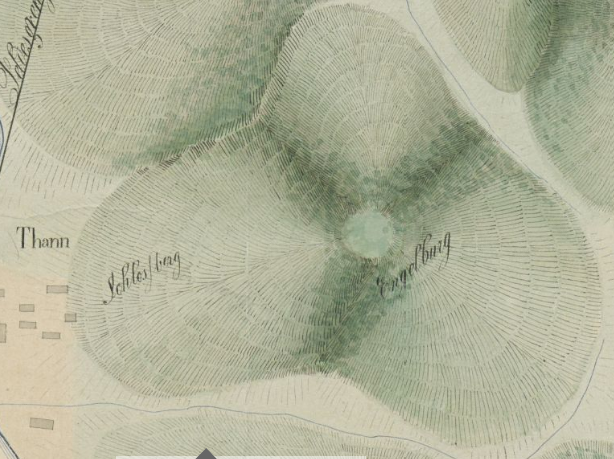
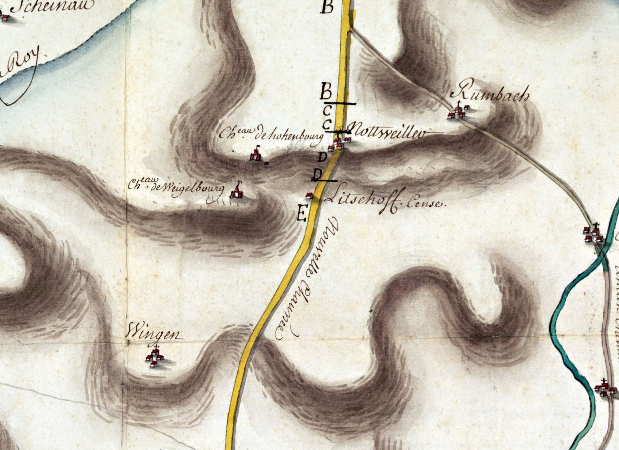
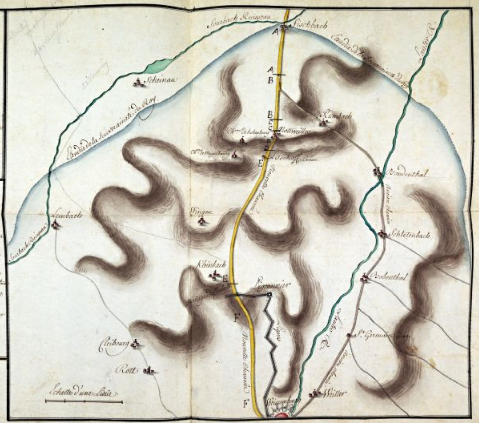
Looking at working maps – manuscripts, field sketches, and provisional maps – reveals a diversity of symbolization and design which are lost in the monoculture of finished, standardized maps.

HistCarto brings together more than 4000 17th-19th century French manuscript maps.  All are working maps, and most are hand drawn.  Most contain signs of assessment:

These “signs of assessment” include textual commentaries or the addition of symbols, which provide some indication of the ways the maps were made or the uses to which they were put in an administrative or military capacity.

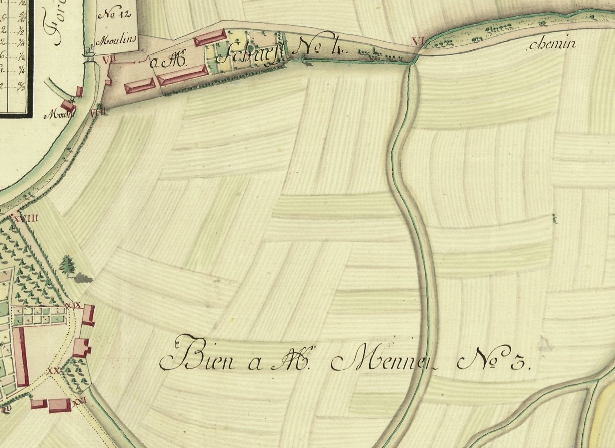
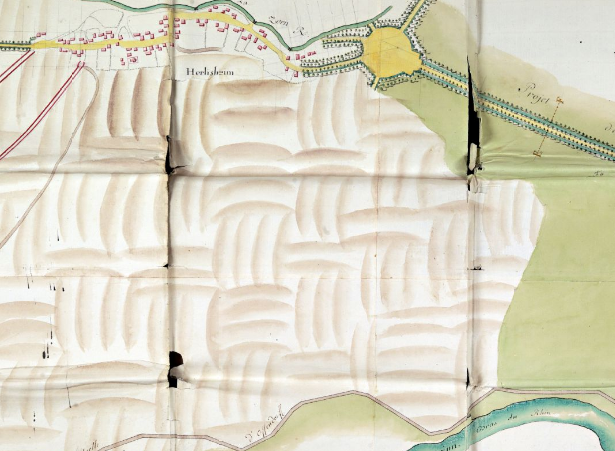
Map symbols and topics shown here include prehistoric sites, farm fields, trees and forests, rivers, hunting grounds, geology, terrain, and property parcels.

The site is in French.  Once at the site, click on the Acces a la base link on the right.  Then select Recherche (on the left) and Simple.  I tried to link each of the maps below to its page at the HistCarto site, but you must be logged into the site for the links to work.  Not optimal!  So I removed the links.  To find the maps, just search the site using the map’s title (below each map).

•••

Detail, farm fields near Neuhof forest (1787):

neuhof

Plan de la forêt du Neuhof

•••

Detail, farm fields near Poppenreuth (1795):

poppenreuth

Mappa Geographica Parochiae Poppenreutensis

•••

Detail, farm fields near Strasbourg (no date):

fields1

Carte des environs de Strasbourg

•••

Detail, farm fields near Herlisheim (1760):

gambsheim_1760_2

Projet d’une nouvelle route entre Gambsheim et Drusenheim

•••

Details, trees,  Château de Karlsruhe (no date):

karlsruhe

Plan du château de Karlsruhe

•••

Detail, forests near Molsheim (no date):

molsheim1

Plan de Molsheim

•••

Detail, forests near Mont Sainte Odile (1810):

odile

Les environs du Mont Sainte-Odile

•••

Detail, forests near Thann (1815):

thann1

Lever à Vue de la Ville de Thann et des Montagnes qui l’environnent

•••

Drachenkopf Forest, detail and full map (no date):

drachenkopf_1

drachenkopf_2

Forêt de Drachenkopf

•••

Detail, map of Strasburg (1765):

stras_water

Plan de Strasbourg en 1765

•••

Hunting grounds in the vicinity of Strasbourg, reserved for the king and officers (1739):

strasbourg_1

Terrains de chasse aux environs de Strasbourg

•••

Revision on Geologic Map, Barr Region (no date):

barr

Région de Barr: Carte Géologique

•••

Detail, hand-drawn map of Euphrates (no date):

euphrates

The river Euphrates with the Cilician Taurus and Northern Syria

•••

Detail, terrain near Munster (no date):

belfort

Carte des Vosges depuis Belfort jusqu’à Landau

•••

Detail, terrain on map of mining concessions near Thann and Dauendorf (1705):

thann

Concessions minières dans les environs de Thann et de Dauendorf

•••

Map showing two roads linking Wissembourg and Fischbach and a new road (in yellow) (no date):

wissembourg_2

wissembourg_1

Deux routes reliant Fischbach et Wissembourg

•••

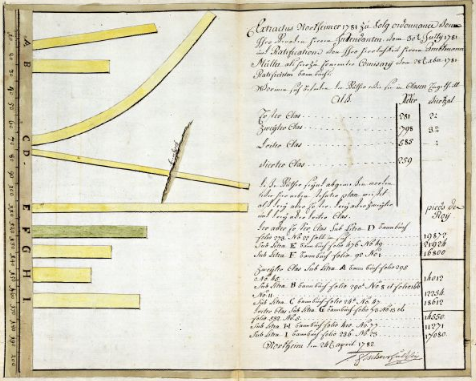
Parcels in a portion of municipal Nordheim (1782):

nordheim_1781

Portion du communal de Nordheim

bambi

Making maps kills baby animals!

Ok, they are claiming the frightened yet adorable faun fawn didn’t die.

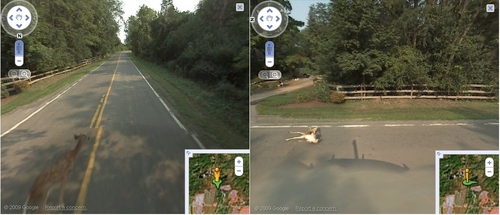
A car making images for Google Map’s Street View wacked a faun fawn in upstate New York.

…As some people have noticed, one of our Street View cars hit a deer while driving on a rural road in upstate New York. Due to several user requests using the “Report a concern” tool, these images are no longer available in Street View.

The driver was understandably upset, and promptly stopped to alert the local police and the Street View team at Google. The deer was able to move and had left the area by the time the police arrived. The police explained to our driver that, sadly, this was not an uncommon occurrence in the region.

No word yet if the faun fawn has contacted a lawyer.

Via The Daily What.

beerdom_map

“In the morning they come out with queer-looking eyes…”

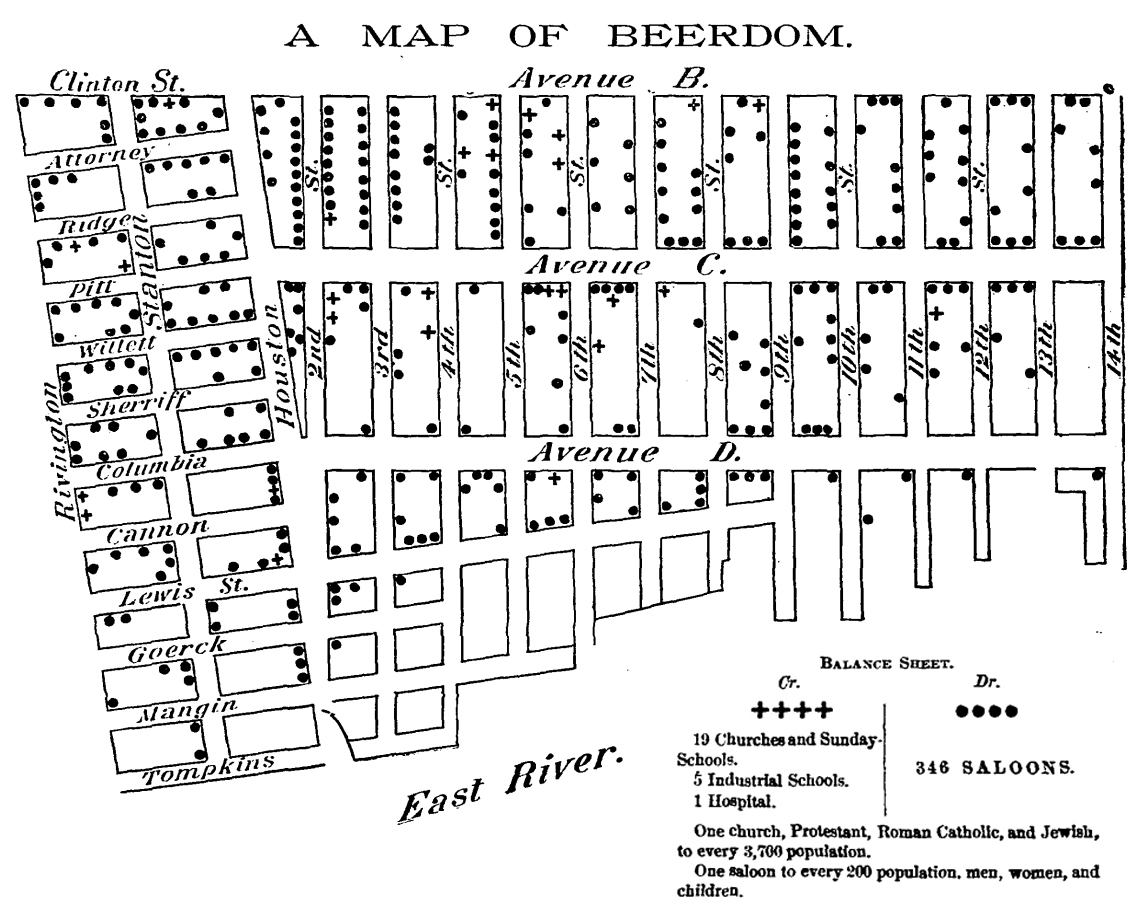
The above map represents one ward of New York City – the Eleventh.

The saloons as put upon this map were ascertained by the reporter of the Christian Union by actual count.

The saloons are largely beer saloons: for the base of the population is German, and a large intermingling of German sounds, German signs, German wares, and German smells generally, prevail.

Pretty much all the available space, after enough room has been taken out for houses and grown people and huckster’s stands, is filled by stout, chubby, healthy-looking children – with here and there a punier waif – of all ages and sizes, mostly young and small, and of all degrees of cleanliness, from comparatively clean to superlatively dirty.

The Ward is reported by the police to be as orderly as any in the city.

The German is peculiar.  Unlike his Irish and Yankee cousins, he does not make a great noise and hurrah over his cups, and wind up with a street brawl.  He gathers unto himself a few kindred spirits, and together they wend their way to the Trink-Halle, where, in a little back room, with closed doors and drawn curtains, they guzzle beer together till none of them can see.  In the morning they come out with queer-looking eyes, but there has been no disturbance in the place.

Said a clergyman to your reporter, “I came into the ward expecting to find nothing but filth and vice.  But I could take you into hundreds of homes where you would find ease and comfort and even culture.

Balance Sheet:

  • 19 Churches and Sunday-Schools, 5 Industrial Schools, 1 Hospital
  • 346 Saloons
  • One saloon to every 200 population.

Christian Union, February 19, 1885.  PDF of entire article and map is here.

russian_forest_symbols_5

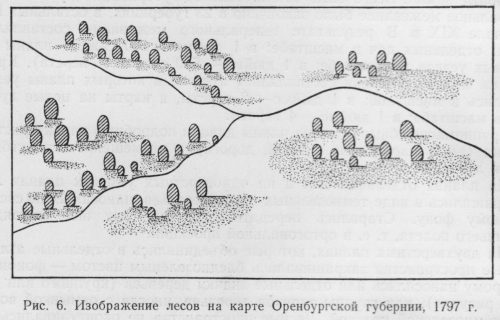
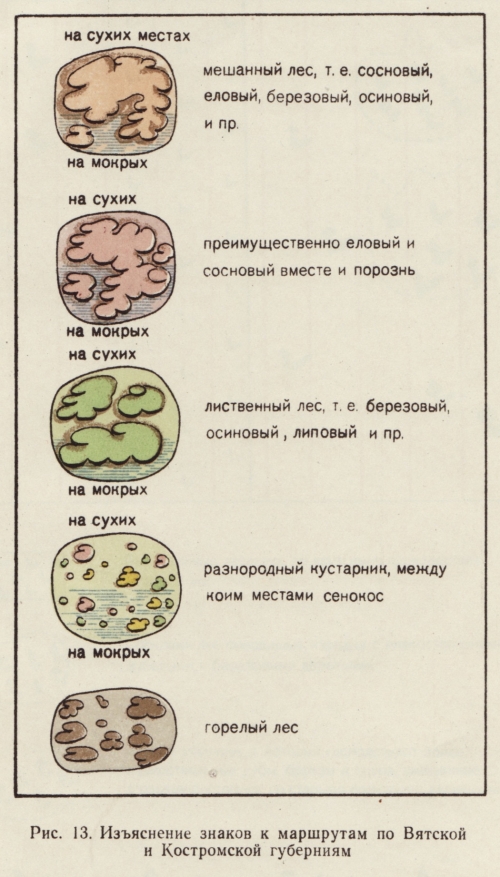
Examples of map symbols used to show trees and forests on old Russian maps (1700s & 1800s) are documented in Izobrazhenie Lesa Na Kartakh by Liudmila Andreevna Shaposhnikova.  The title is roughly translated to “How Forests are Depicted on Maps.” The book was published in Moskva, former USSR, in 1957.

russian_forest_symbols_4

russian_forest_symbols_6

russian_forest_symbols_7

russian_forest_symbols_8

russian_forest_symbols_12

russian_forest_symbols_13

russian_forest_symbols_14

1/22/09: Tree symbols from these maps inspired a new role-playing map by Chgowiz – very cool!  Click on the close-up below to get the entire map:

rpgmap

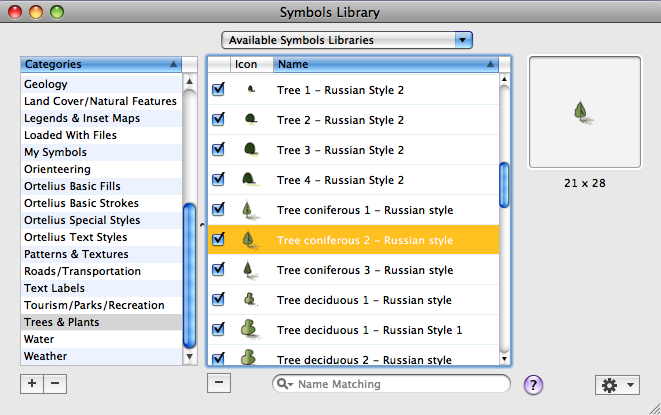
4/8/09: Tree symbols from these old Russian maps have also been incorporated in the soon to be released Ortelius map illustration software for Macintosh:

image

salt-pepper-map-side

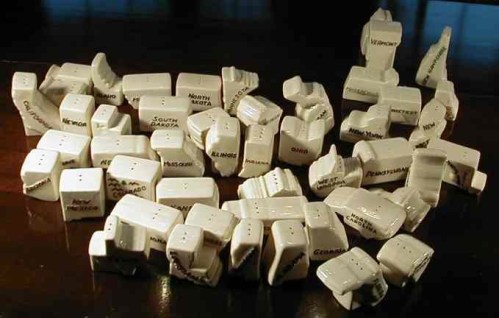
A set of salt and pepper shakers, one each for the 48 contiguous U.S. states.

salt-pepper-map-up

Photographs from the Jigsaw Puzzles Based on Maps page of PuzzleHistory.com.

wood_natures_maps1

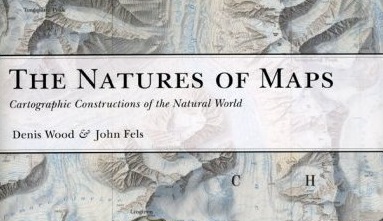
Denis Wood & John Fels’ new book The Natures of Maps is available now from the University of Chicago Press and many other sources. The lowest price I can find at this time is $29 (at Buy.com). Denis is, of course, co-author of the Making Maps book.

The book is big – almost a foot square – with color maps on almost every page.  The book had a harrowing path to publication.  Originally under contract to ESRI Press, the book was in final galleys (ready to print but for a handful of edits) when ESRI Press decided to cancel it and a dozen other books in process.  Given the expense of producing the book (and the cost of reproduction rights to the illustrations) this seemed to be a peculiar business decision.  The University of Chicago Press subsequently acquired the book, more or less ready to print.

Here’s an “editorial” blurb I wrote for the book:

If Wood & Fels’ The Power of Maps showed that maps were powerful, The Natures of Maps reveals the source of that power. The Natures of Maps is about a simple but profound idea: maps are propositions, maps are arguments. The book confronts nature on maps – nature as threatened, nature as threatening, nature as grandeur, cornucopia, possessable, as a system, mystery, and park – with intense slow readings of exemplary historical and contemporary maps, which populate this full color, beautifully illustrated and designed book.

The careful interrogation of maps reveals that far from passively reflecting nature, they instead make sustained, carefully crafted, and precise arguments about nature. The Natures of Maps shows how maps establish nature, and how we establish maps. The power of maps extends not only from their ability to express the complexities of the natural world in an efficient and engaging manner, but in their ability to mask that they are an argument, a proposal about what they show.

The implications of the arguments in The Natures of Maps are significant, empowering map users and makers. The Natures of Maps shows that neither map users or map creators are passive, merely accepting or purveying reality; they are, instead, actively engaged in a vital process of shaping our understanding of nature in all its complexity. Map users have a critical responsibility, the power to accept, reject, or counter-argue with the maps they encounter. Map creators have creative responsibility, the power to build and finesse their arguments, marshalling data and design for broader goals of understanding and communicating truths about the world. Rethinking how maps work in terms of propositional logic, with its 2000-year history and vast methodological and theoretical foundation, promises to be one of the most profound advances in cartographic theory in decades, and The Natures of Maps shows the way in a captivating manner.

Considering maps from the perspective of propositional logic provides a rigorous foundation for a theory of the map that transcends disciplinary boundaries. Scholars from the humanities, social sciences, and natural sciences will find Wood and Fels’ The Natures of Maps intellectually sound, methodologically useful, and deeply engaging. But the beauty of The Natures of Maps is that it is not merely an academic book. Wood and Fels’ The Natures of Maps is a powerful, beautifully illustrated and engaged argument about maps as arguments that will appeal to map lovers, map makers, map users, and map scholars.