Feeds:
Posts
Comments

Archive for November, 2010

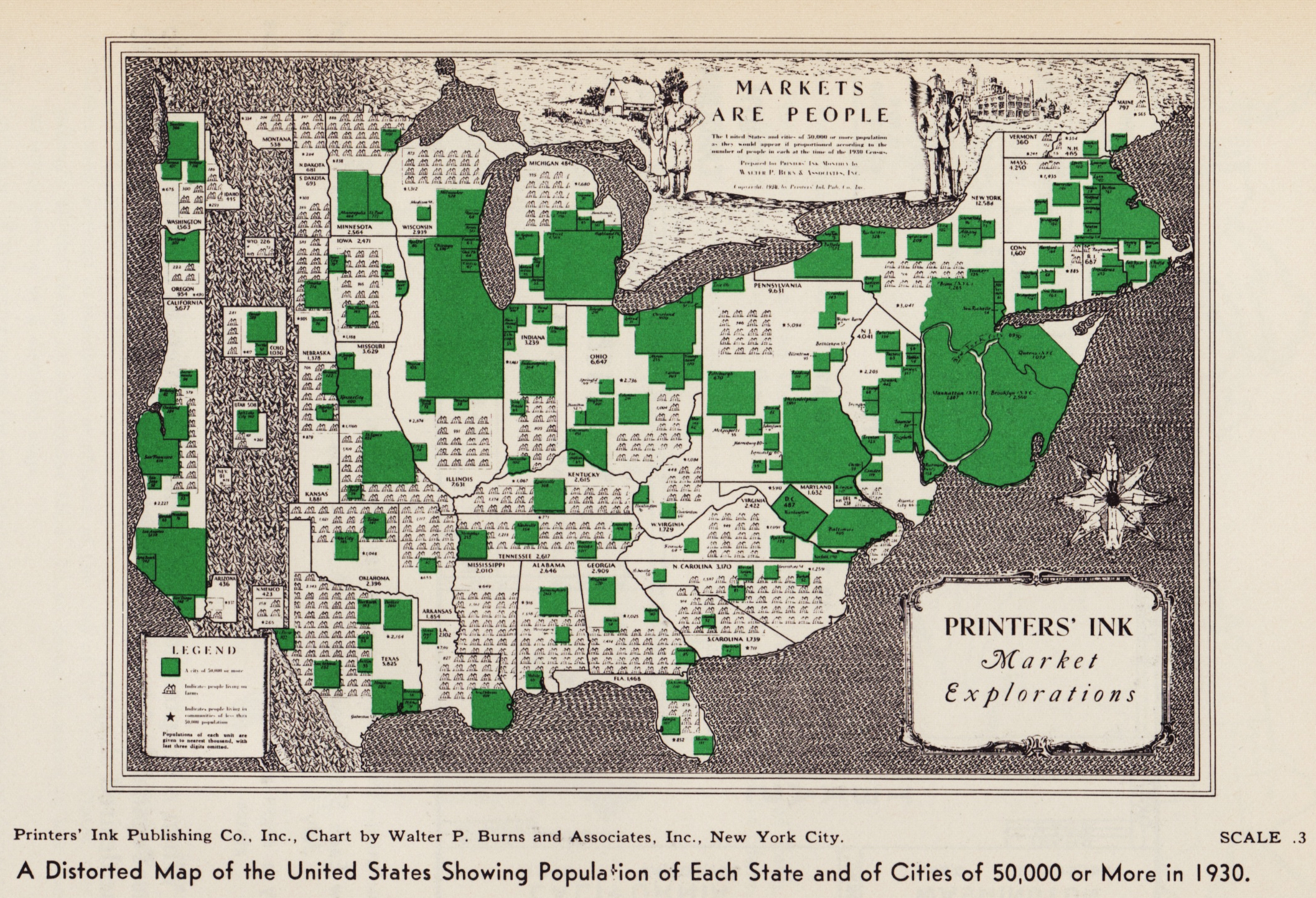
Cartogram, 1930: “A Distorted Map of the United States Showing Population of Each State and of Cities of 50,000 or More in 1930” (Printers’ Ink Publishing Co., Inc., Chart by Walter P. Burns and Associates, Inc., New York City)

A cartogram scales geographic areas to some value other than geographic area. In two previous blog posts, 1911 Cartogram: “Apportionment Map” and 1923 Patented Cartogram, a few old-school cartograms were resurrected from musty old publications. Here find eight more cartograms published between 1921 and 1938.

This post opens with a peculiar item – the U.S. states as well as the areas of major cities are scaled to population, in essence two cartograms together. Symbols representing “people living on farms” are scattered about, each symbol equal to a number (undisclosed) of persons. Weird.

From the Literary Digest in 1921:
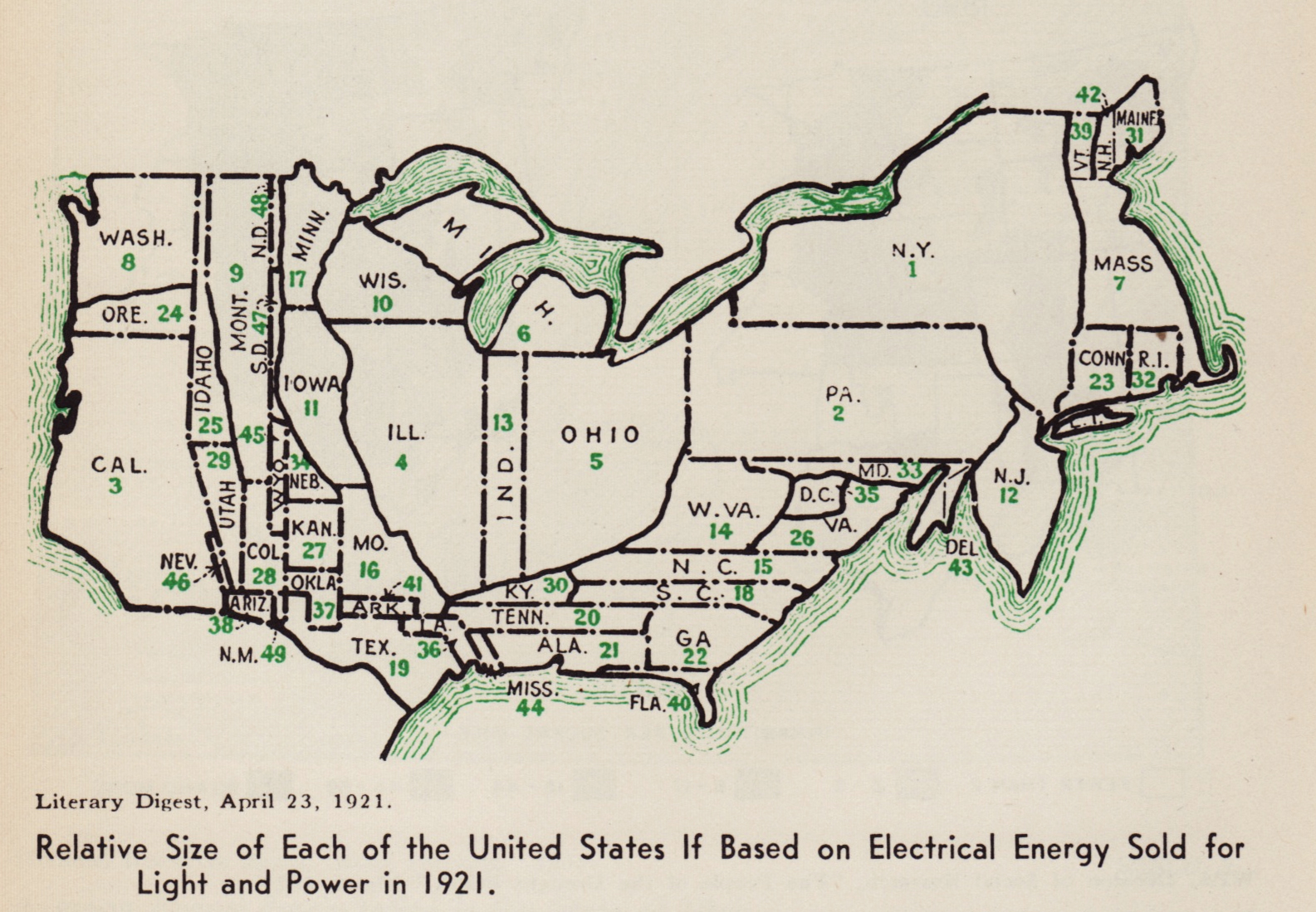
Cartogram, 1921: “Relative Size of Each of the United States if Based on Electrical Energy Sold for Light and Power in 1921” (Literary Digest, April 23, 1921)

•••••••••••••••

Cartogram, 1931: “The United States With the Area of the States Proportional to the Urban Population of 1930” (The Dartnell Corp., Chicago, Ill., 1931)

•••••••••••••••
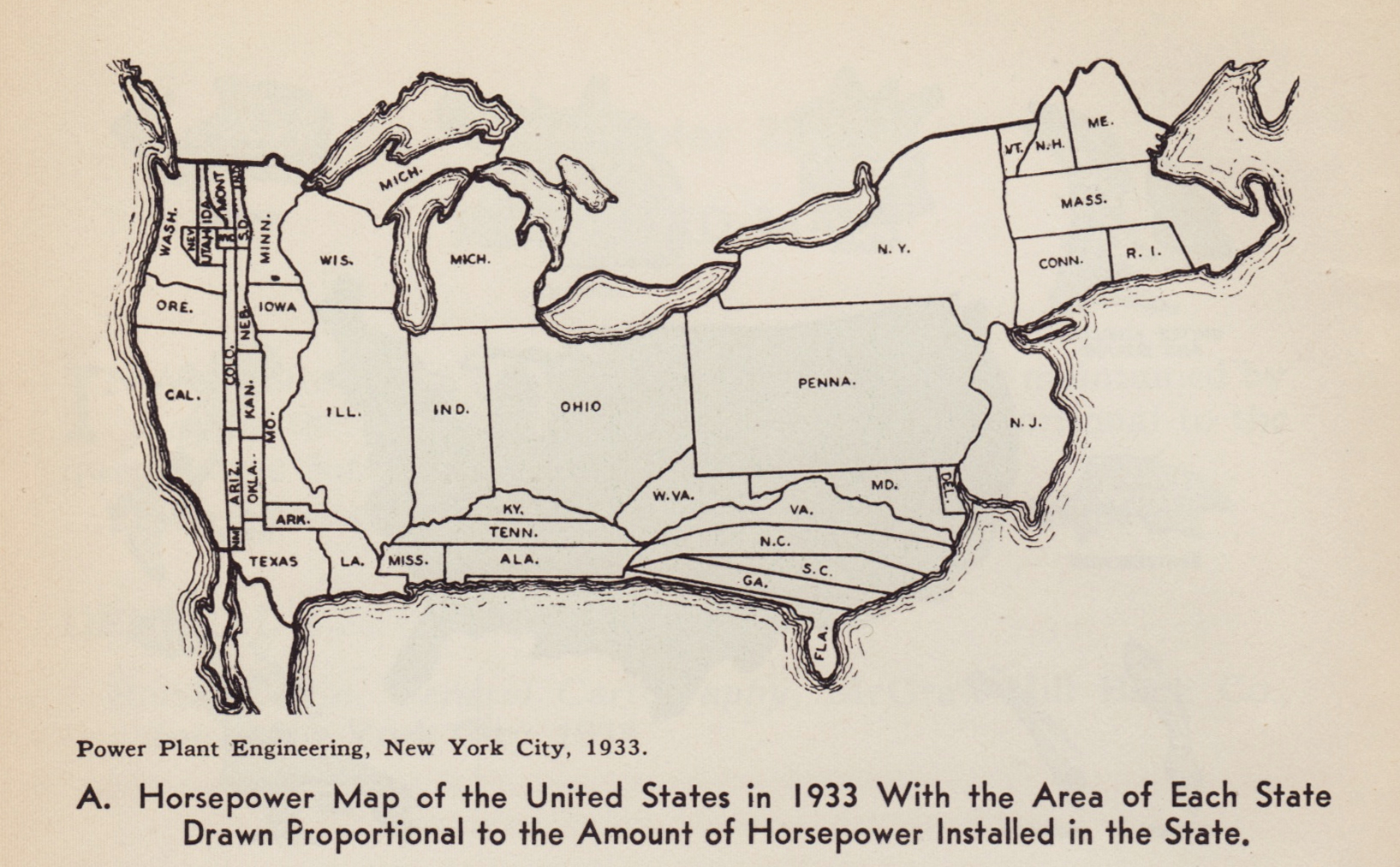
Cartogram, 1933: “Horsepower Map of the United States in 1933 With the Area of Each State Drawn Proportional to the Amount of Horsepower Installed in the State” (Power Plant Engineering, New York City, 1933)

•••••••••••••••

I had an old slide of the following cartogram but did not know its source: turns out it is from an advertisement for The Mutual Broadcasting Network, showing that 80% of business in the U.S. is transacted in states east of the Mississippi – MBN’s broadcasting area:
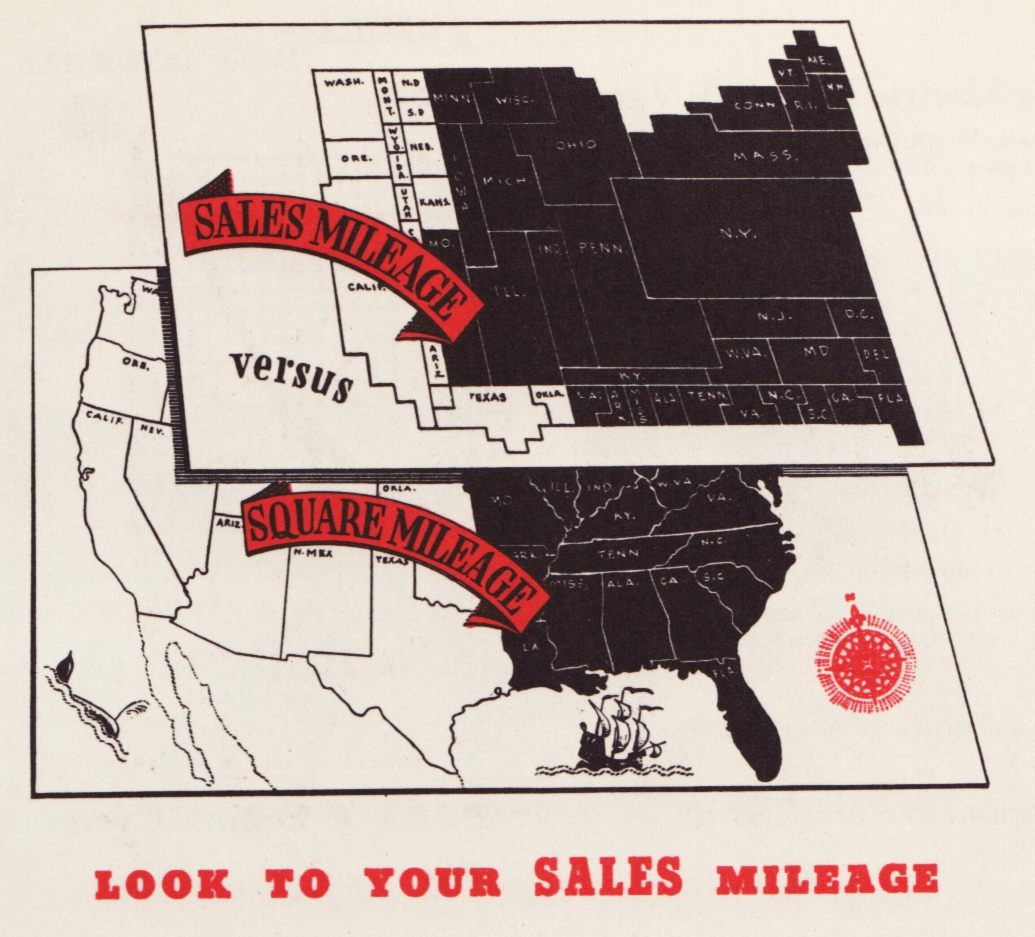
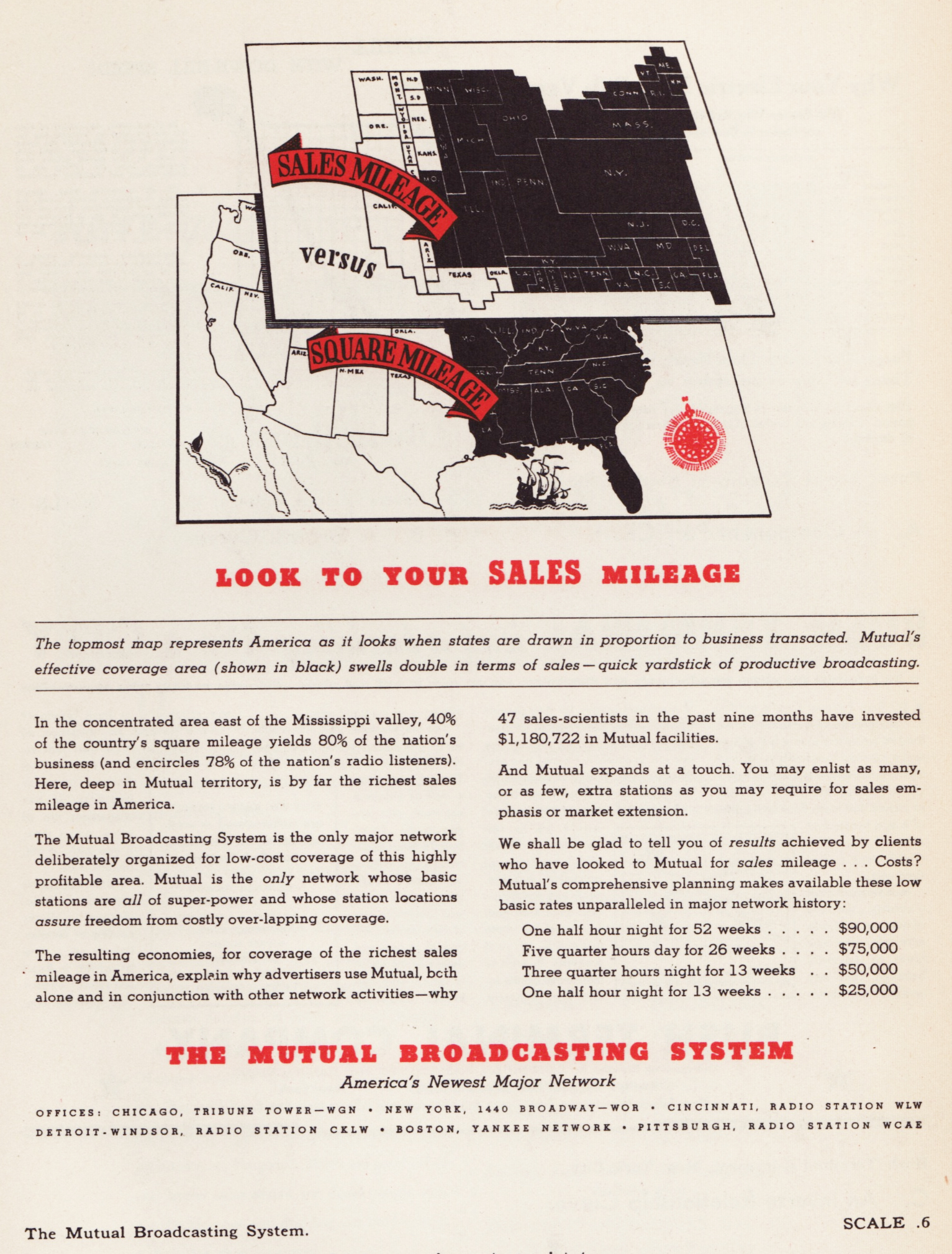
Cartogram, date unknown (1930s): “Look to Your Sales Mileage” advertisement (The Mutual Broadcasting System).

•••••••••••••••

A very diagram-ish cartogram which places an un-cartogrammed map of the US in the background:

Cartogram, 1937: “The United States With the Areas of the States Proportional to Their Manufacturing Output in 1935” (Business Week, June 12, 1937, New York City)

•••••••••••••••
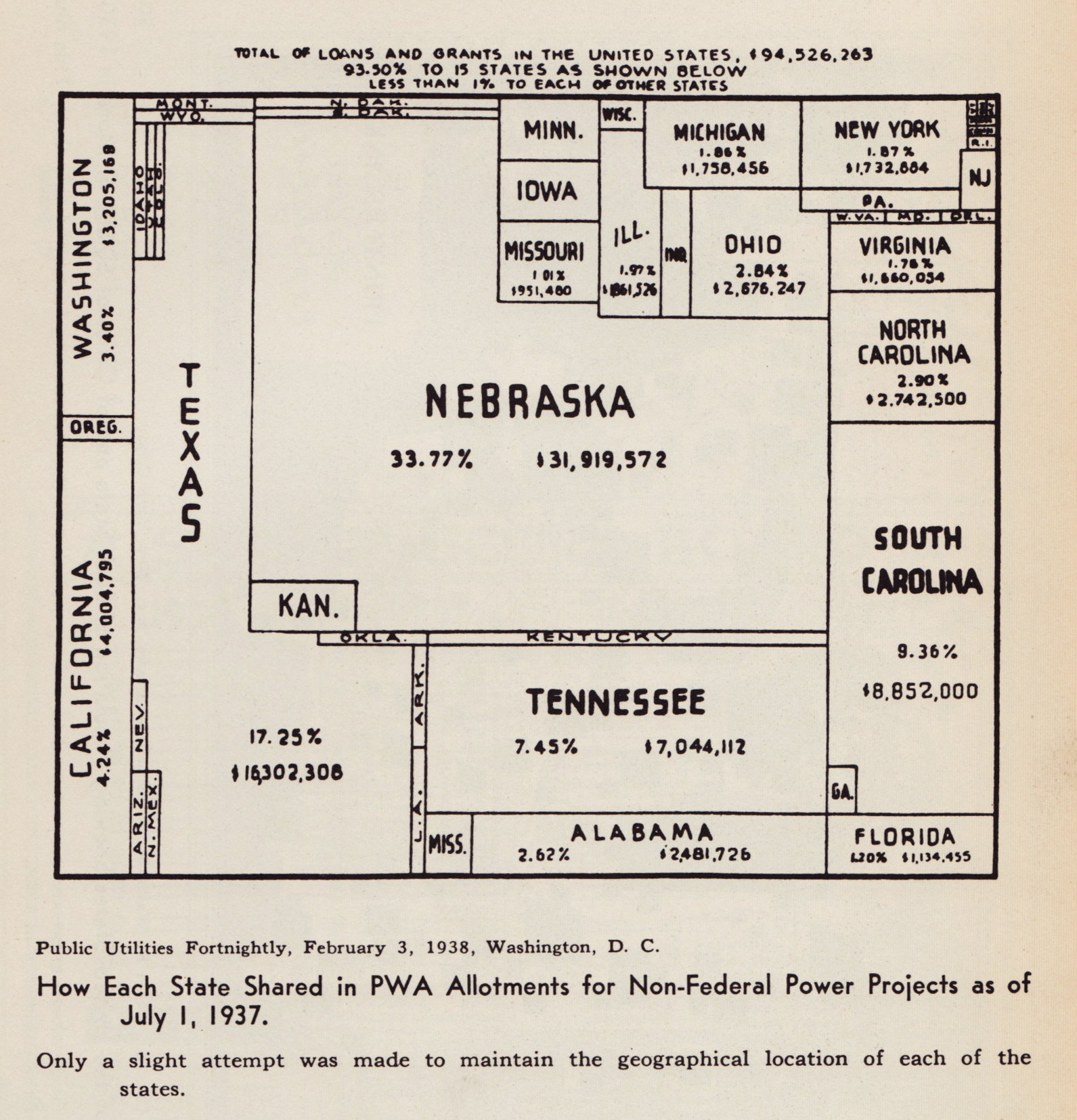
brinton_gp_cartograms_1938

Cartogram, 1938: “How Each State Shared in PWA Allotments for Non-Federal Power Projects as of July 1, 1937” (Public Utilities Fortnightly, February 3, 1938, Washington DC)

•••••••••••••••

Reproduced from Willard C. Brinton’s Graphic Presentation (1939).
Read Full Post »

From a slouching, unkempt, uncouth, shambling, horrid boy, he emerged into being a respectable, neat, tidy, order-loving, painstaking, and industrious young man.

– Miss Winthrop, 1888

I had an ugly, unruly boy in my room, and be gave me more trouble than all the rest of the class. When I inherited him I felt as if Nemesis had overtaken me, and just how to control him and secure any kind of work from him was a problem I long wrestled with.
For several weeks he was the terror of the room, and my reputation for good order and dignity was, I felt, fast disappearing. The boy would not obey unless he felt like it, and punishments had no effect on him. Every plan I evolved for the regeneration of the boy proved abortive. He wouldn’t reform. Finally, by accident, I stumbled on the cure.
I discovered that he was interested in his drawing, or rather was interested in sketching odd bits of scenery, or objects in the room, not even omitting his respected teacher, who was a typical schoolmarm and wore glasses. I resolved to make the most of this one talent – if talent it was – and so one day, when I was in my best and sweetest mood, I asked the terror if he would not draw a plan for some shelves I wanted put up in my closet. He assented, and the sketch was neatly and accurately made. There was a new look in his eyes and a new expression on his face when he gave me the paper on which his drawings were made.
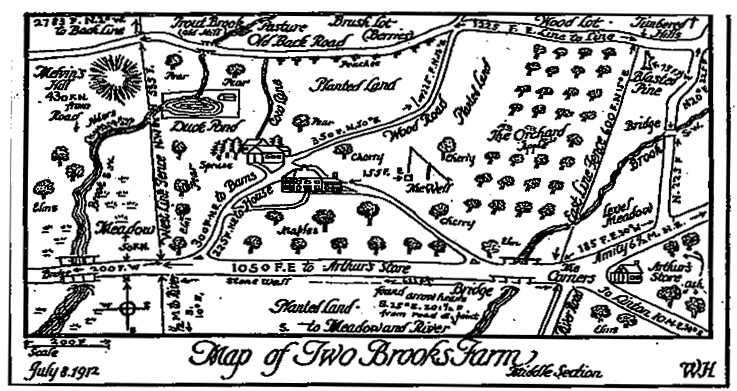
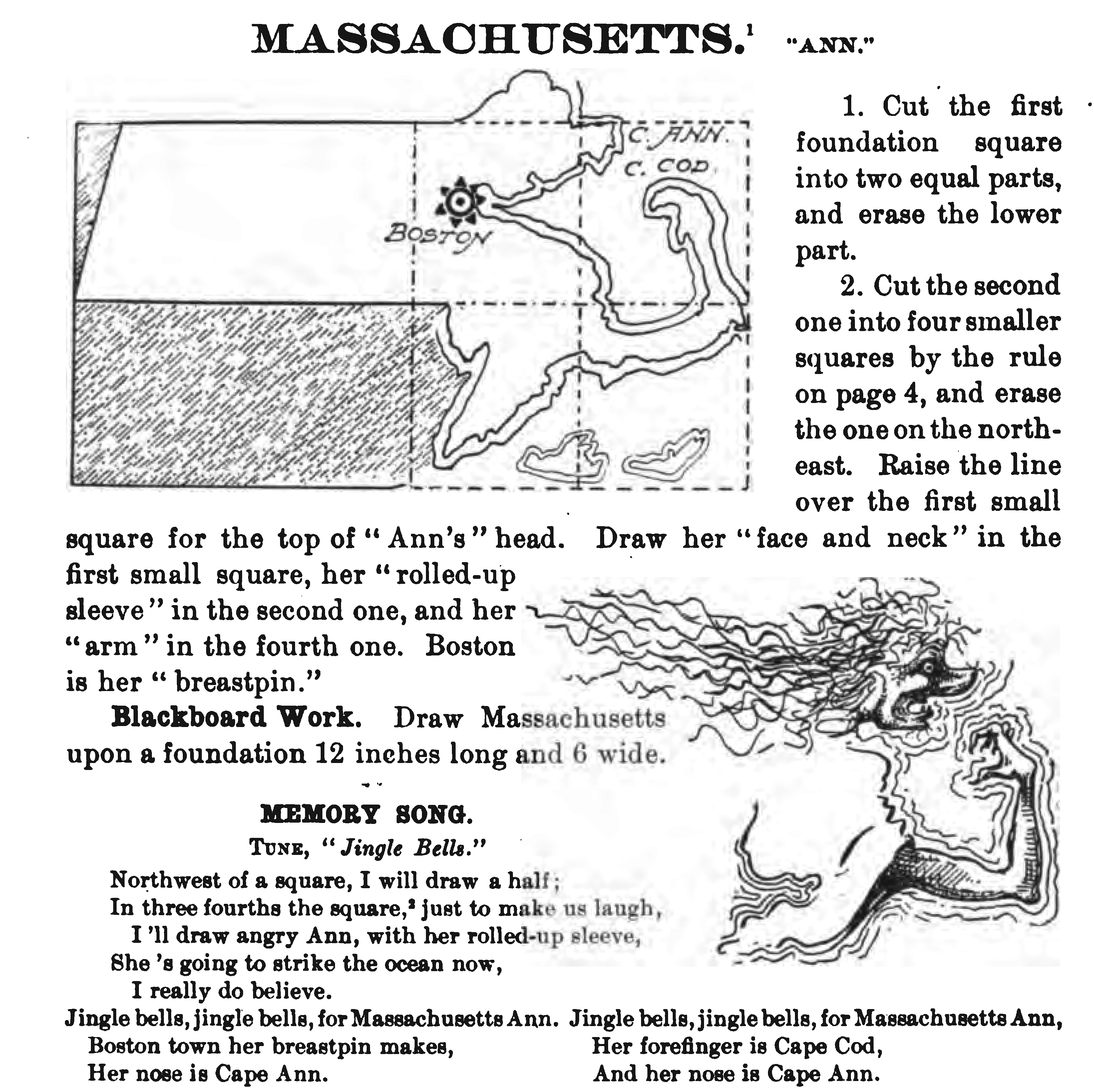
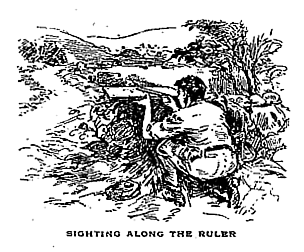
Then I advanced slowly and cautiously. I needed some maps made, following a new invention of mine in cartography, and again I employed the terror, and again the result was encouraging. The maps were models of neatness and precision. I judiciously praised him, and exhibited the maps to the class.
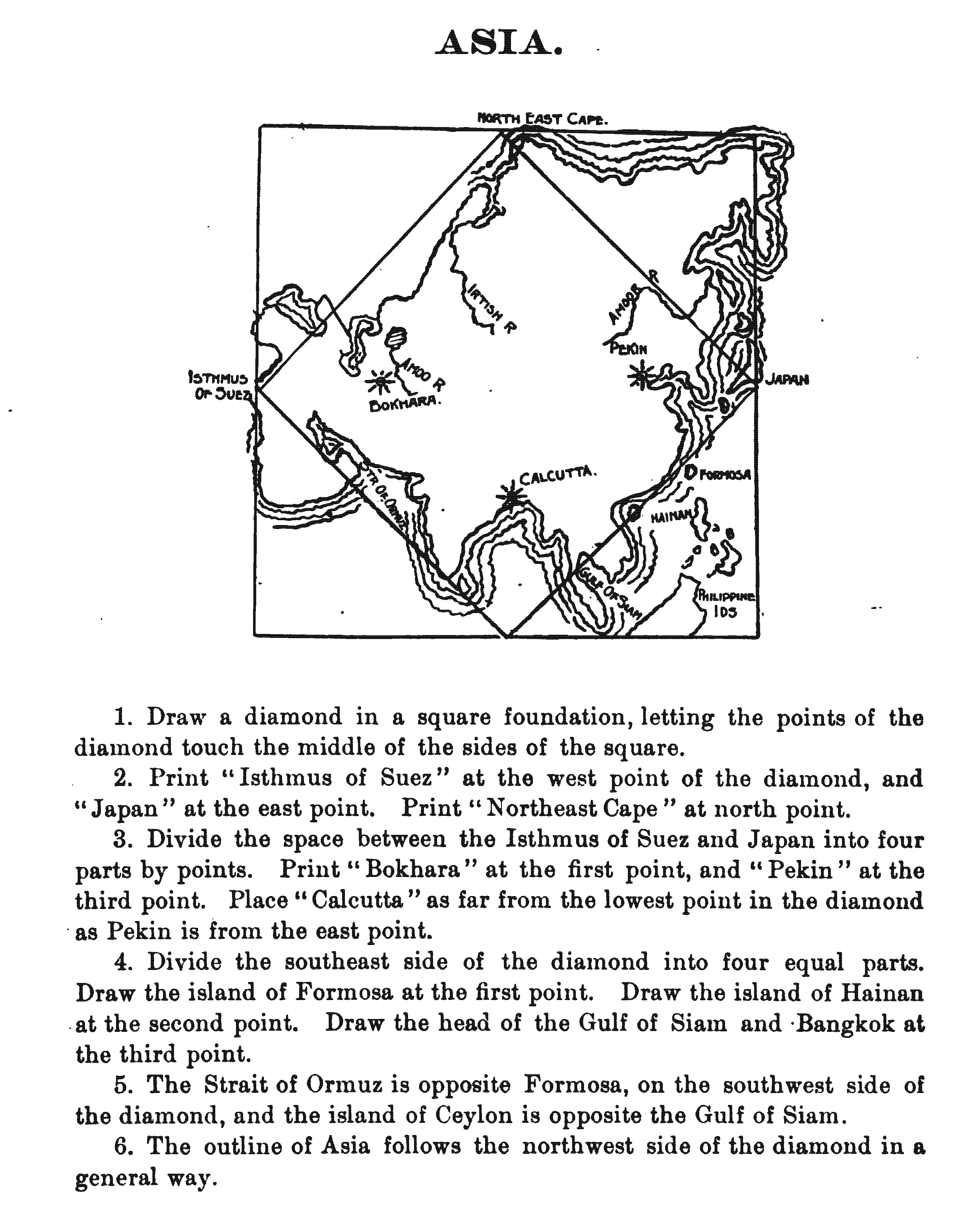
We were studying the continent of Asia, and the terror never had his geography lesson learned; but when I suggested that if he were to keep up his reputation in drawing he must draw the details of the county he was sketching, geography became a new study to him, and he easily wade excellent progress in this branch.
The terror came out of his chrysalis state a new creature. His old ways were left, and he readily adopted the better method of doing and living. From a slouching, unkempt, uncouth, shambling, horrid boy, he emerged into being a respectable, neat, tidy, order-loving, painstaking, and industrious young man.
•••••••••••••••••••••••••••••••••••••••••••••••••••••••••••••••••••••••••••••••••••••
Text:
  • Miss Winthrop, “A Crooked Stick Straightened,”  American Teacher, 1888 (reprinted in Scientific American, November 26, 1887, Vol. LVII., No. 22., pg. 346)
Illustrations:
  • Sighting Along the Ruler: The Youth’s Companion, August 8, 1918
  • Map of Two Brooks Farm: The Youth’s Companion, Aug 12, 1915
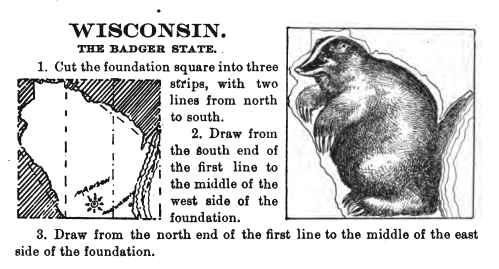
  • Wisconsin, Massachusetts, Asia: Lenore Congdon Schutze, Schutze’s Amusing Geography and System of Map Drawing (San Francisco, 1900)

Read Full Post »

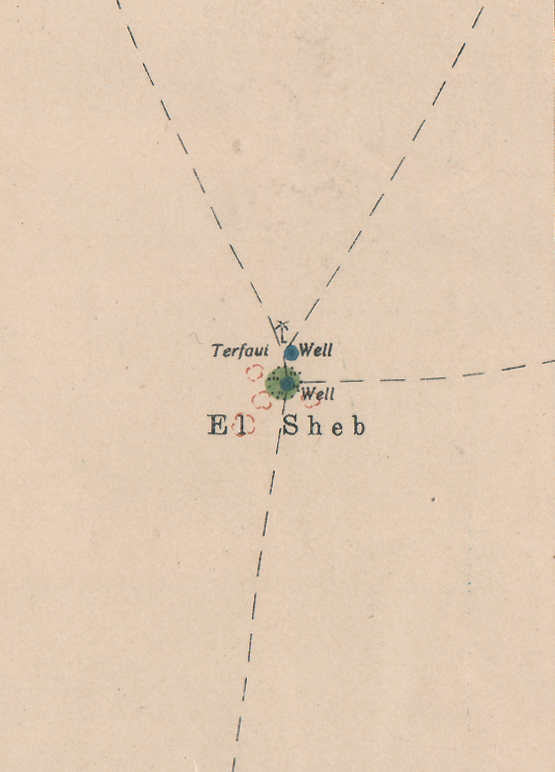
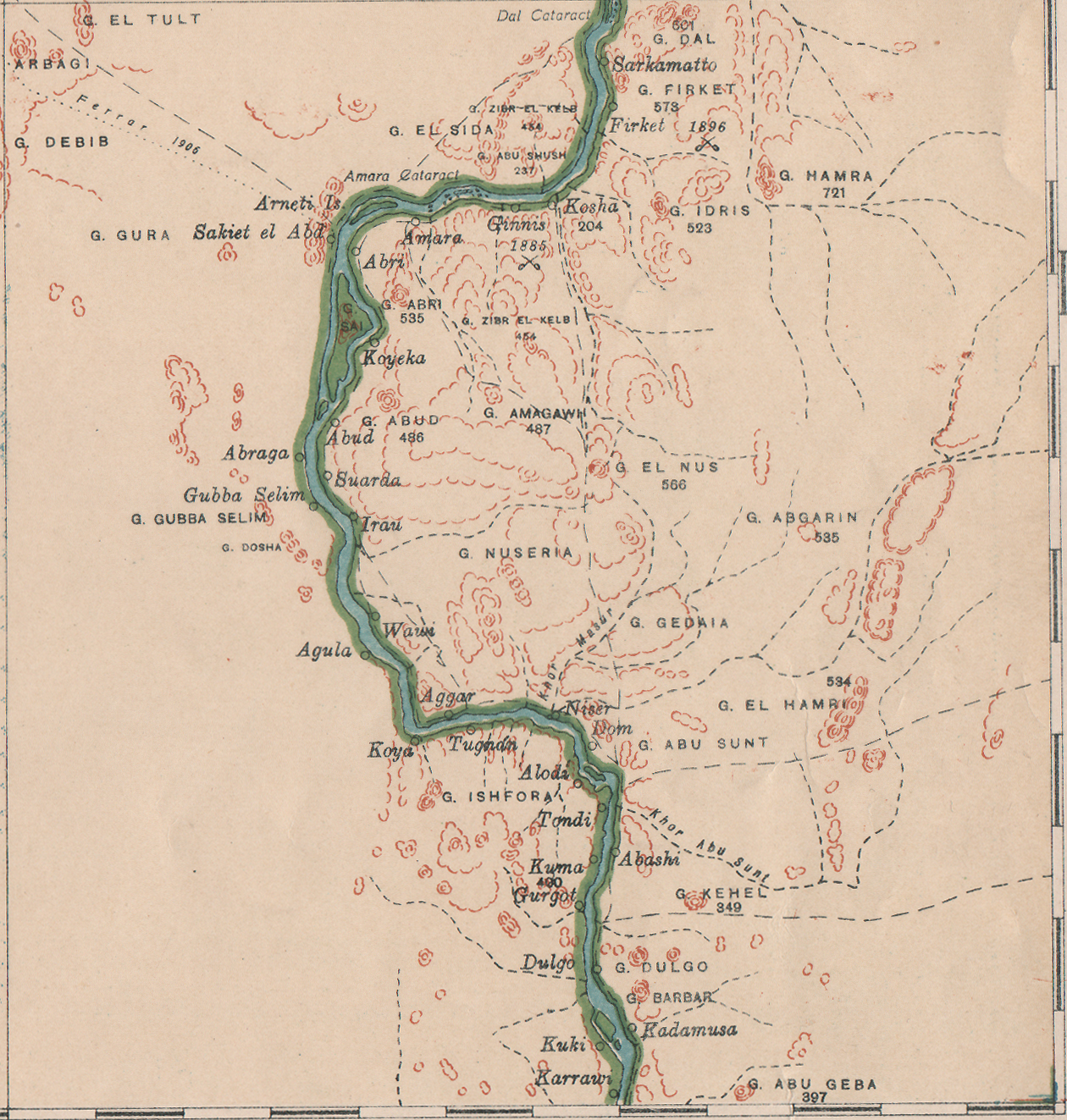
The Survey of Egypt, 1910, 1:1,000,000, Sheet 5 (detail 1, close-up)

•••

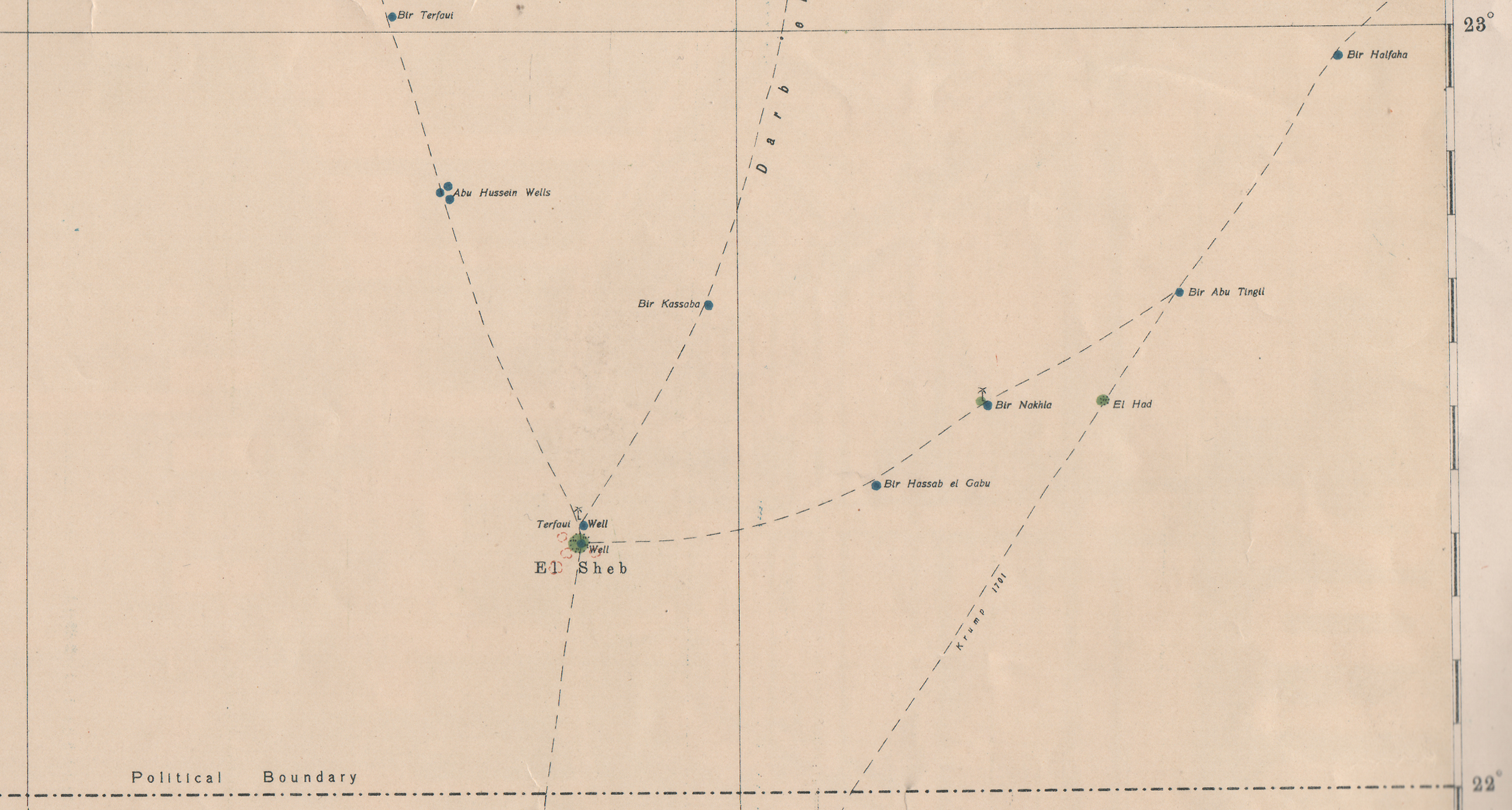
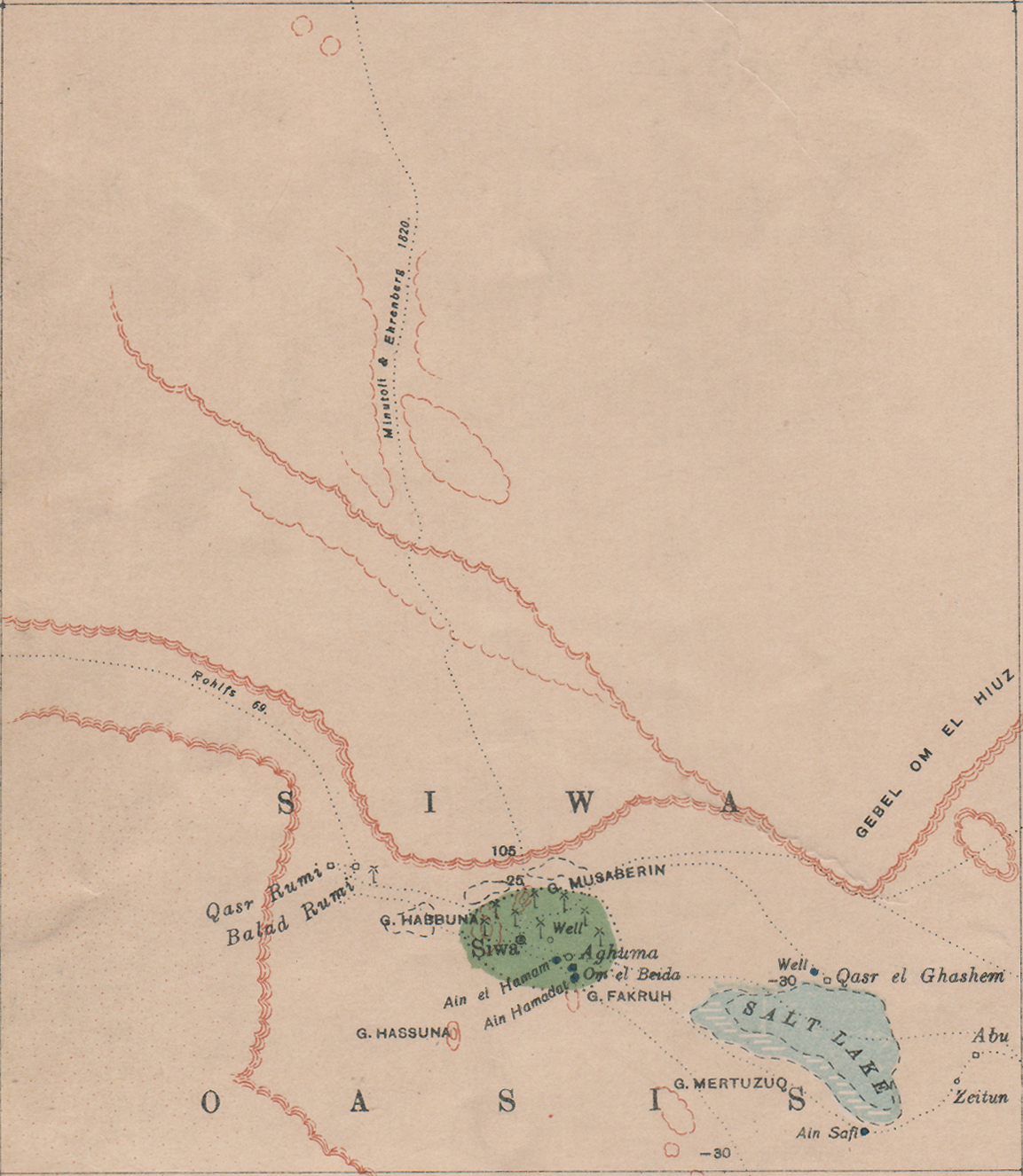
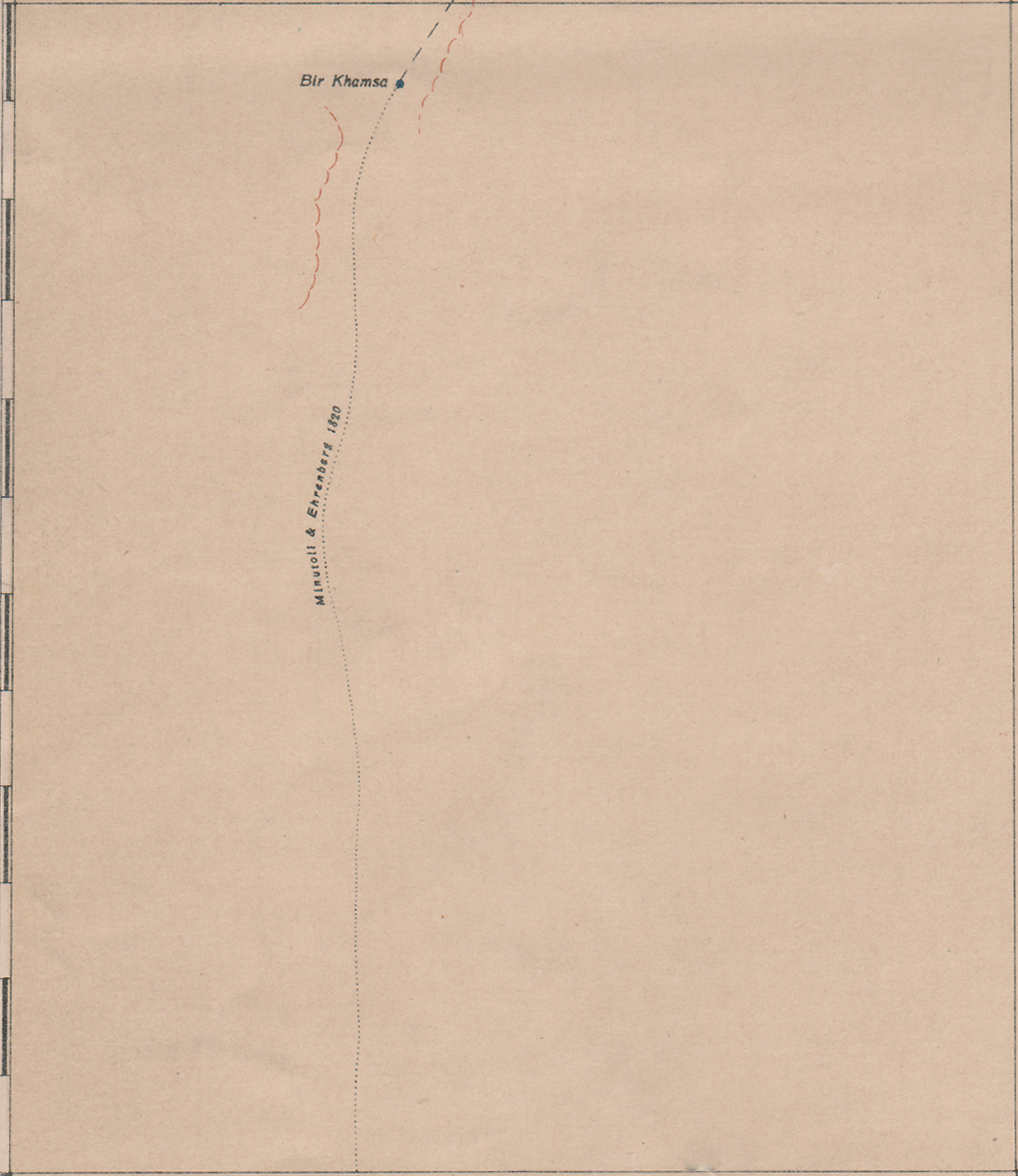
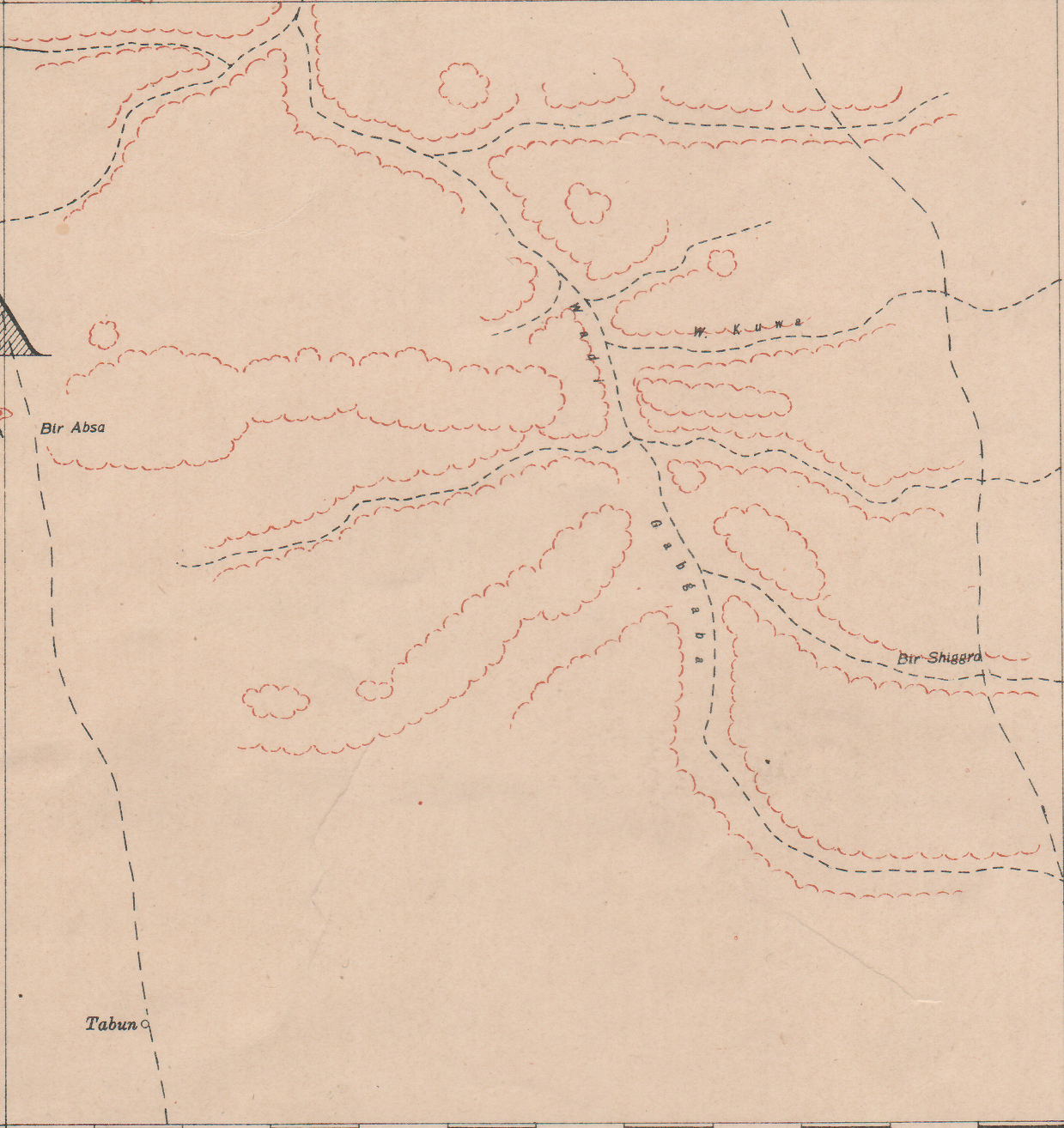
Found while cleaning out an old map cabinet: oceans of just about nothing, punctuated by signs of a minimal landscape. Soiled, creased, tears, dusty. Thumb-print and fading pencil marks, from someone who stared at this map a long time ago.

Details from a topographic map of Egypt in 6 sheets, published by The Survey of Egypt in 1910, scale 1:1,000,000.

Click on any map for a larger version of the scan.

•••

The Survey of Egypt, 1910, 1:1,000,000, Sheet 5 (detail 1)

•••

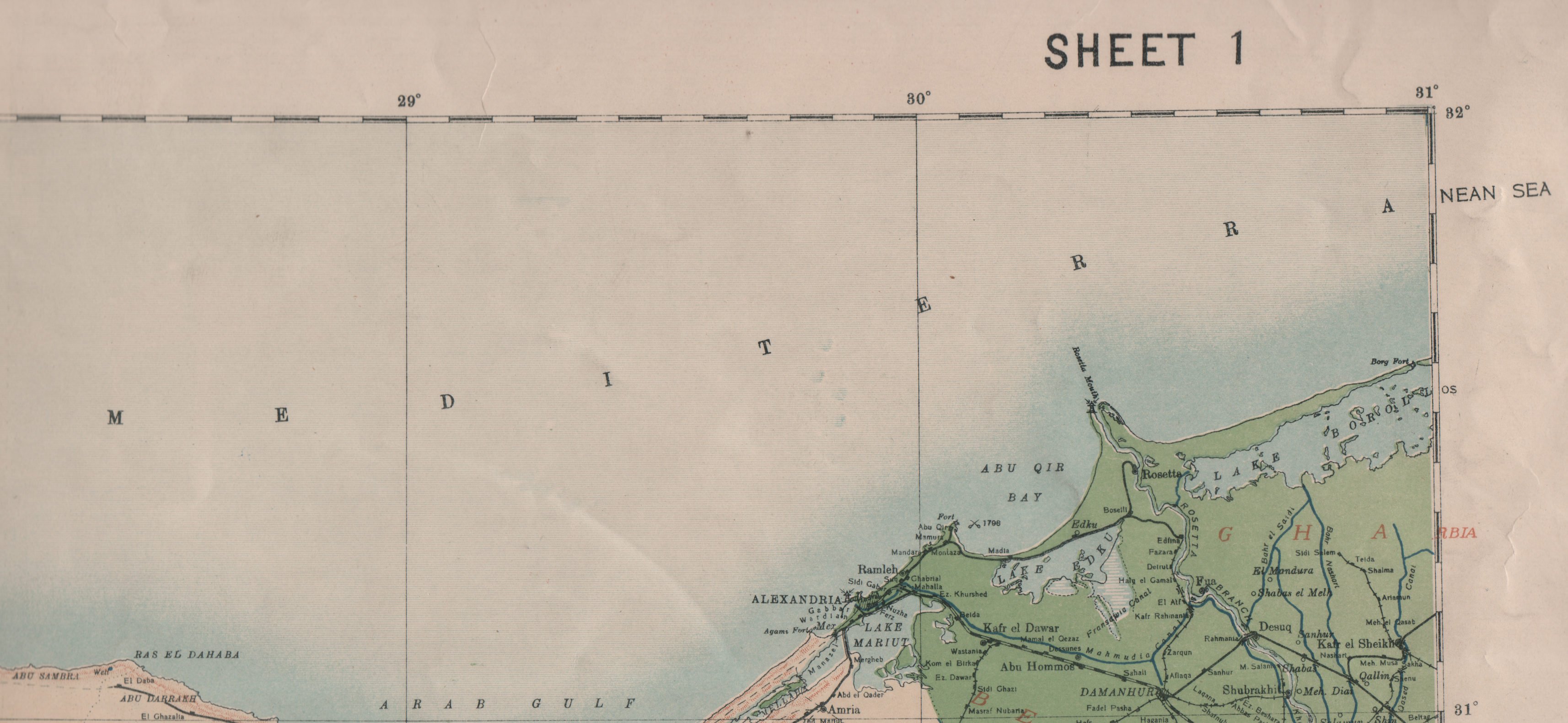
The Survey of Egypt, 1910, 1:1,000,000, Sheet 1 (detail 1)

•••

The Survey of Egypt, 1910, 1:1,000,000, Sheet 1 (detail 2)

•••

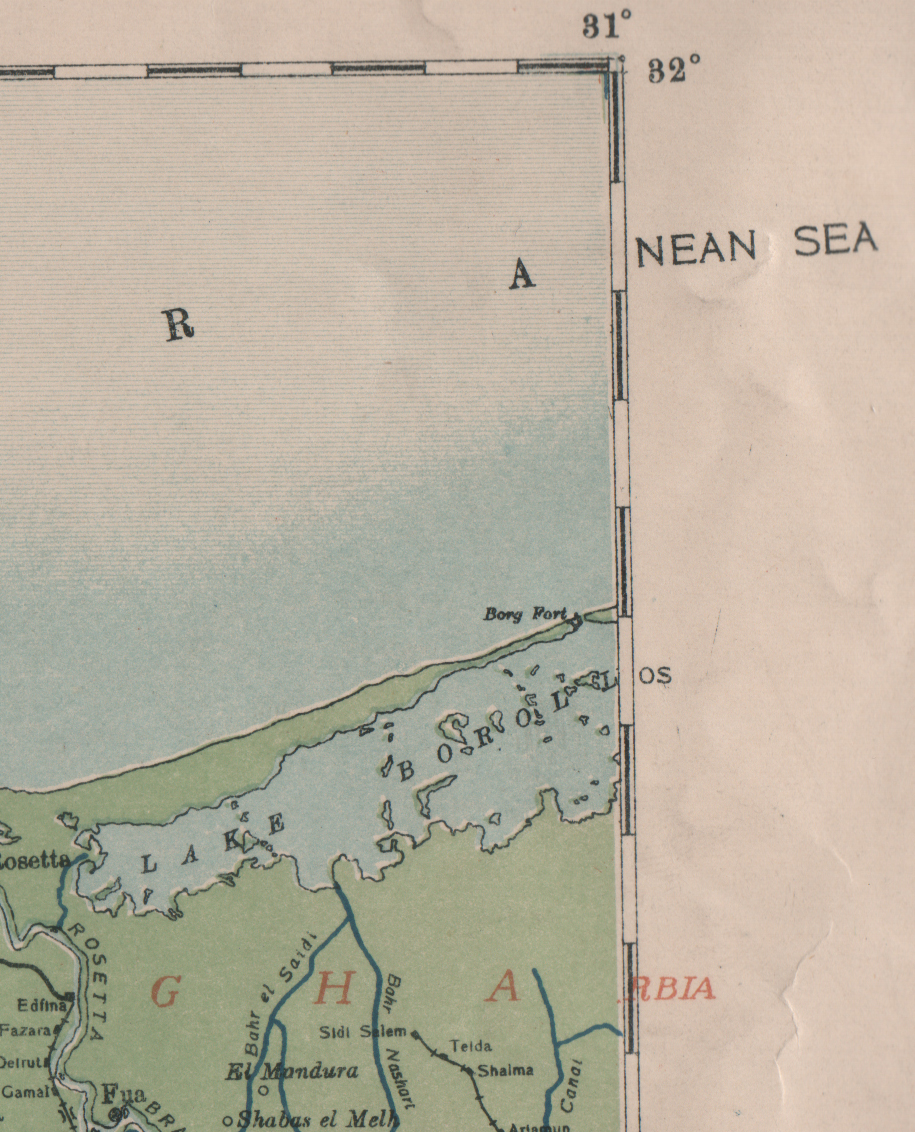
Note the type leaking over the map border (Mediterranean, Lake Borollos, Gharbia)

The Survey of Egypt, 1910, 1:1,000,000, Sheet 1 (detail 3 – close-up)

•••

Note the type leaking over the map border (Mediterranean, Lake Borollos, Gharbia)

The Survey of Egypt, 1910, 1:1,000,000, Sheet 1 (detail 3)

•••

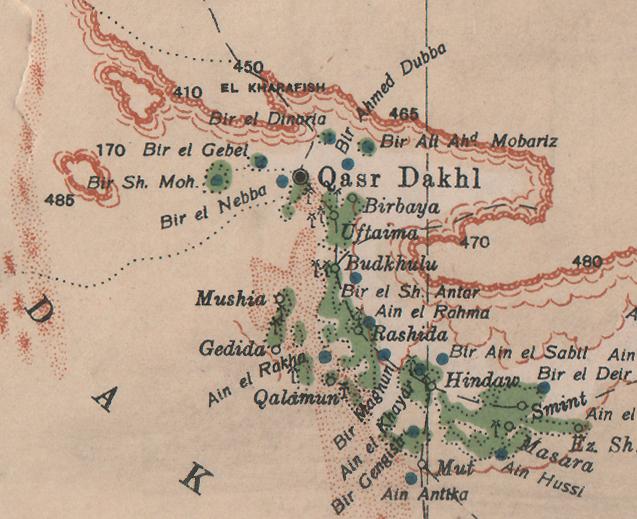
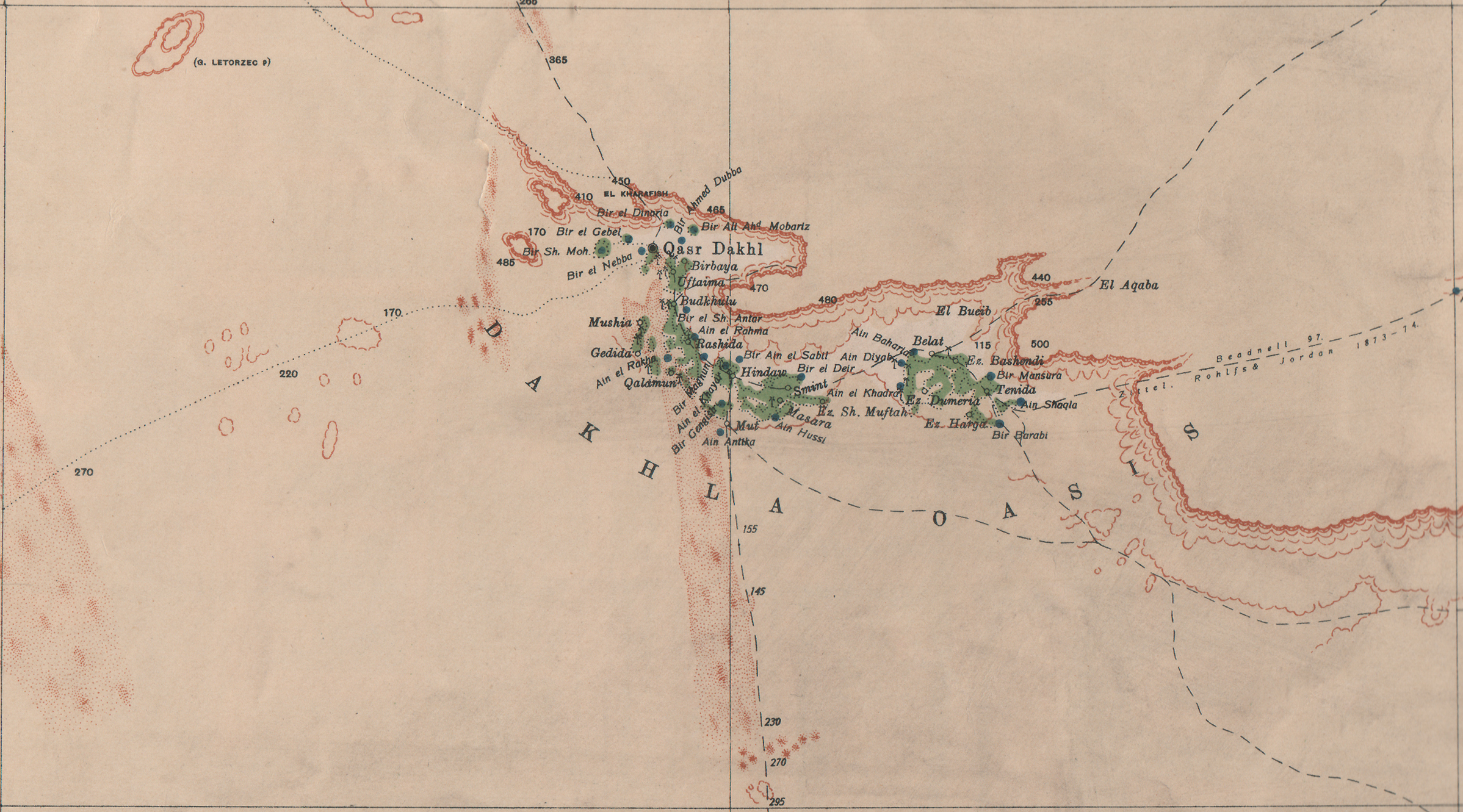
The Survey of Egypt, 1910, 1:1,000,000, Sheet 3 (detail 1 – close-up)

•••

The Survey of Egypt, 1910, 1:1,000,000, Sheet 3 (detail 1)

•••

The Survey of Egypt, 1910, 1:1,000,000, Sheet 5 (detail 2)

•••

The Survey of Egypt, 1910, 1:1,000,000, Sheet 6 (detail 1)

Read Full Post »