Feeds:
Posts
Comments

To understand map design, and how maps work, it is useful to see how map design concepts play out on a real map.

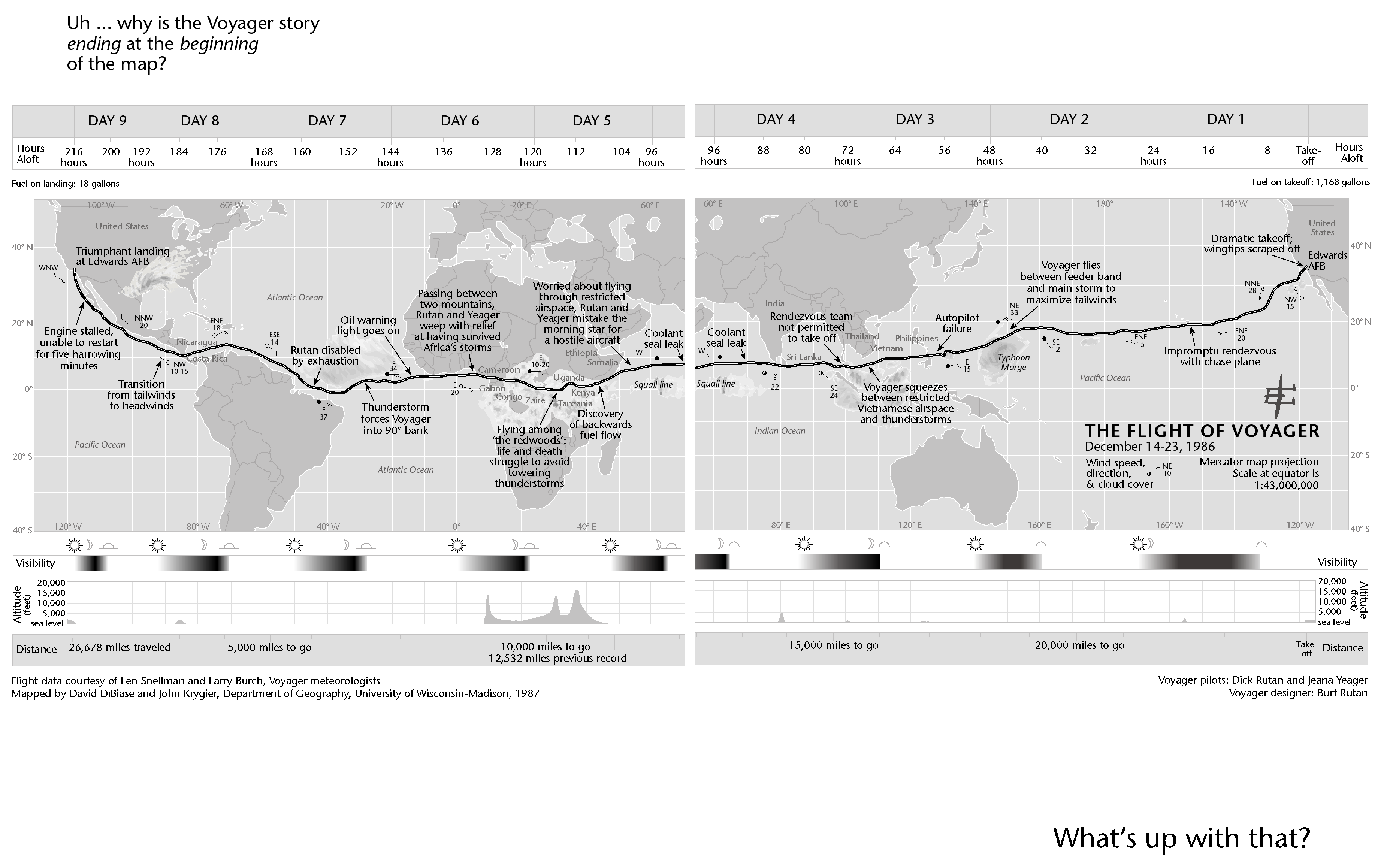
One of the significant updates to the 2nd edition of Making Maps was the inclusion of a map of the 1986 trans-global flight of the experimental aircraft called Voyager. This map, originally designed and created by David DiBiase and I back in 1987 for David Woodward’s map design course (and in the University of Wisconsin Cartographic Lab), is repeated thirteen times in seven of the chapters, annotated to show how the concepts and ideas in these chapters play out on the map.

The repeatedly annotated Voyager map serves as an example of map design in practice, but also a guide to “reading” a map from the perspective of map design.

Martin Dodge suggested the annotated maps be available together, for instructional purposes. A good idea! So here they are. Each individual map on this page is a 800k PNG file (click for full size).

A PDF file (8.8mb) with all thirteen higher resolution TIFF images is available here.

The Voyager map project was quite a bit of fun to create back in the day. It won a map design award, was published in the book about the Voyager flight, and printed on paper as part of a promotion for the Waukesha County, Wisconsin Airport. I cannot imagine anything much more exciting than that.

••••••••••

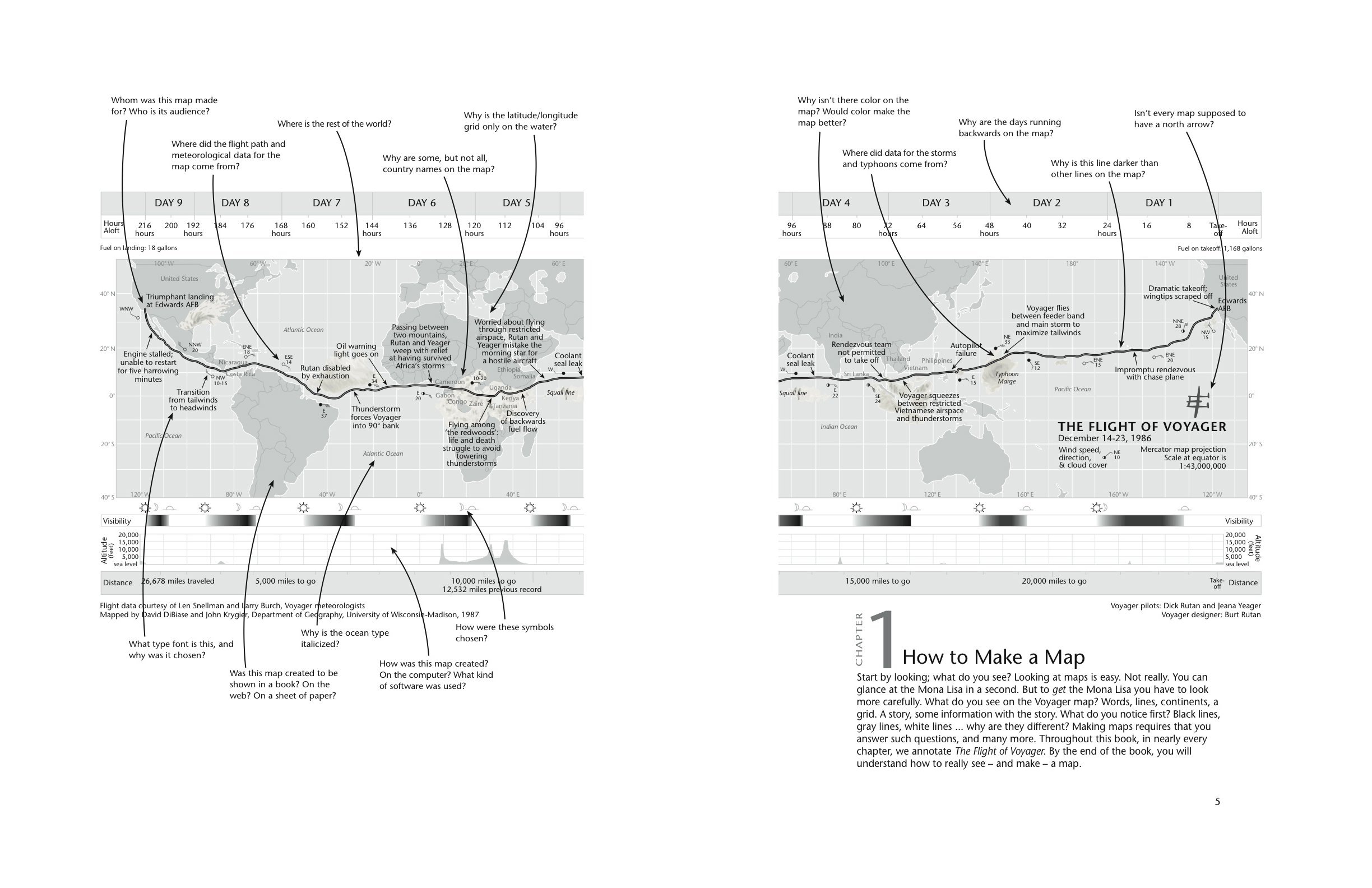
The second map in the series prefaces the initial chapter in Making Maps 2nd edition, and poses a series of questions that will be addressed in future chapters (and annotated Voyager maps):

Chapter 2, What’s Your Map For?, sets the context of the map (and of its re-creation for the book) and how such context shapes the design of the map:
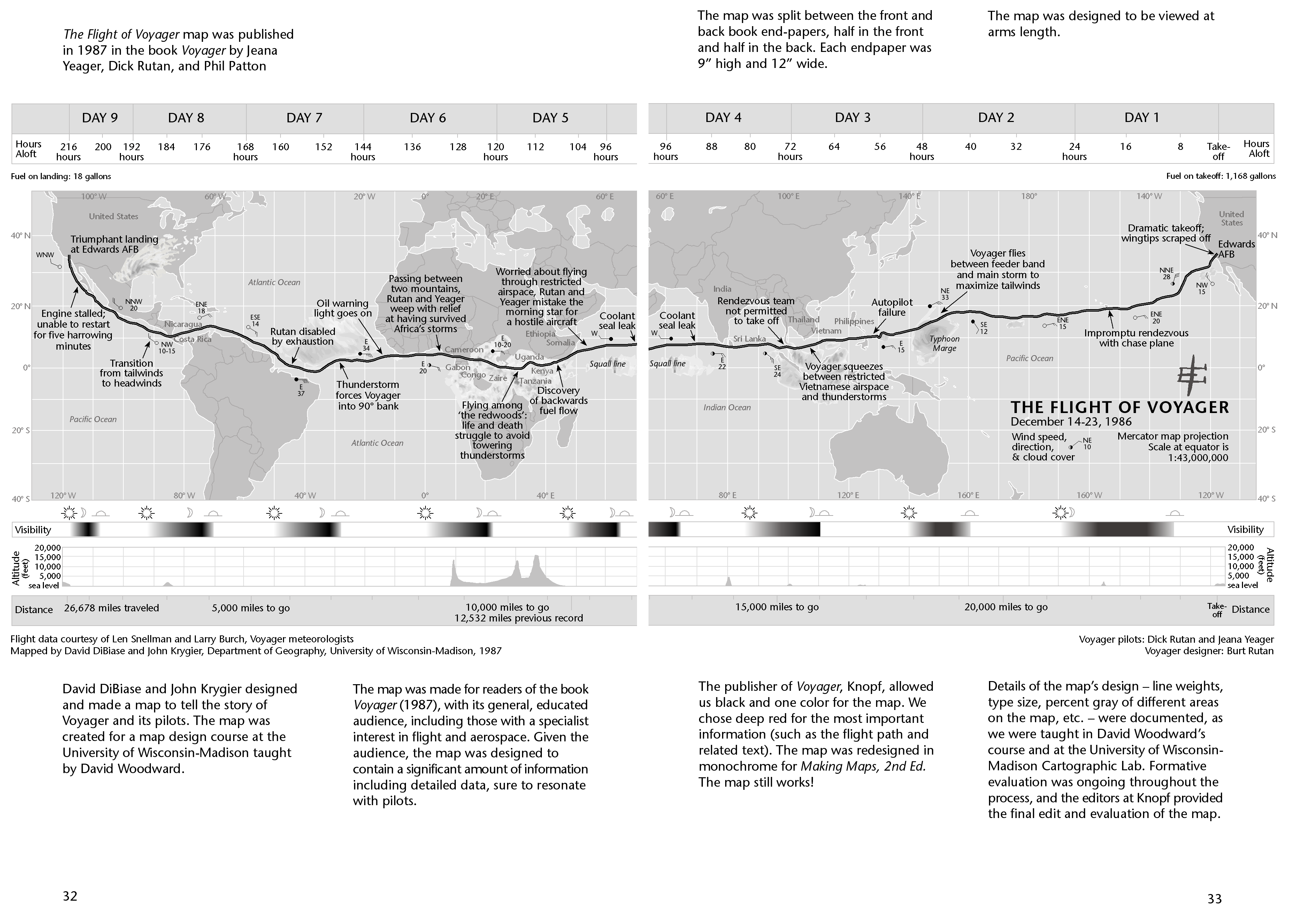
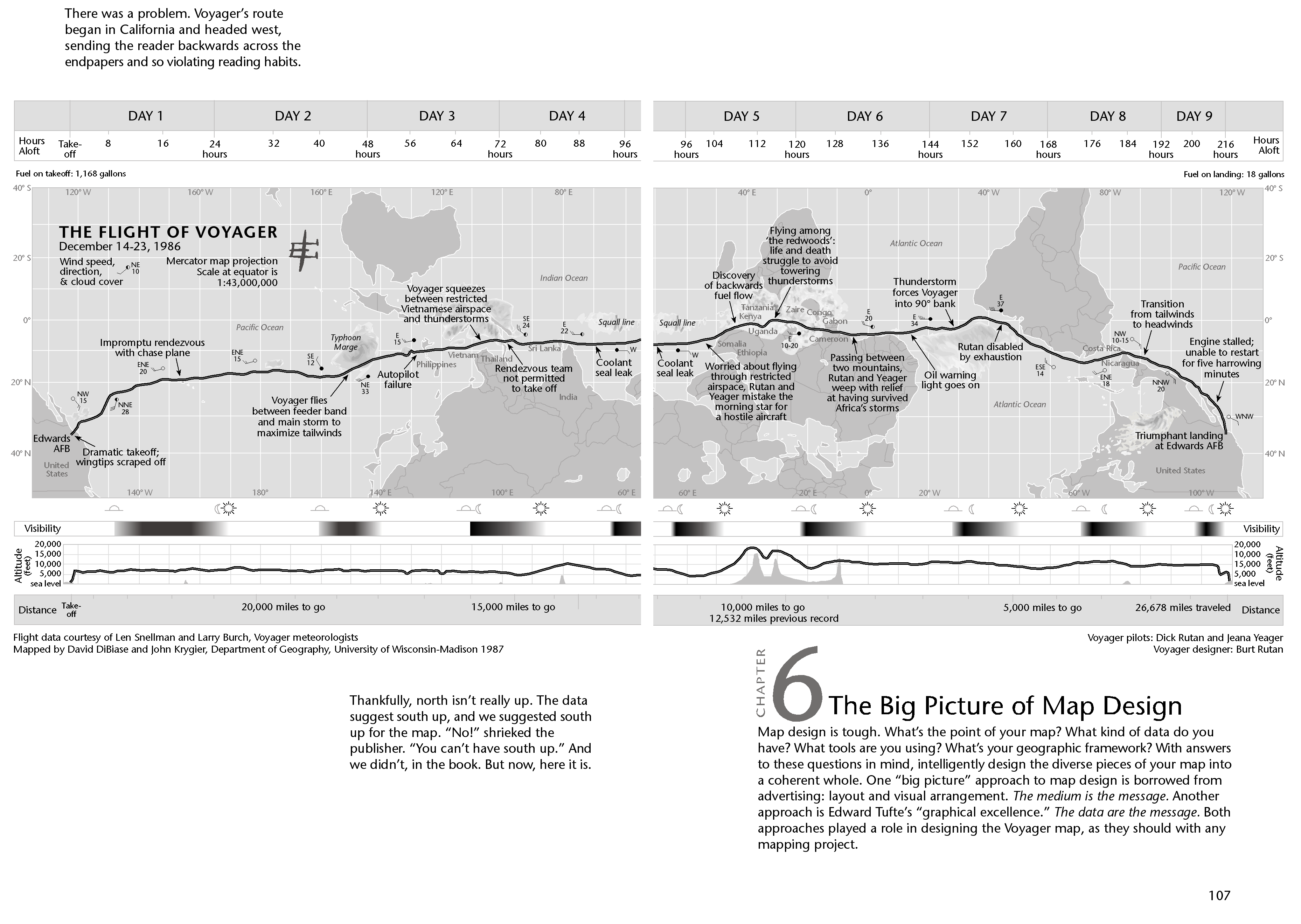
Chapter 6, The Big Picture of Map Design, repeats the Voyager map five times, focusing on the key map design concepts covered in the chapter. This is where the map flips orientation south up (a controversial design choice, according to some reviewers: good! Think about why such a choice is controversial, and if it should be [or ask your students to do so]):
South is now up (so the story reads from left to right):

Annotations about map pieces including title, scale, explanatory text, legend, directional indicator, border, sources, credits, and insets & locator maps:

Annotations about visual arrangement including path, visual center, balance, symmetry, sight-lines, and grids:

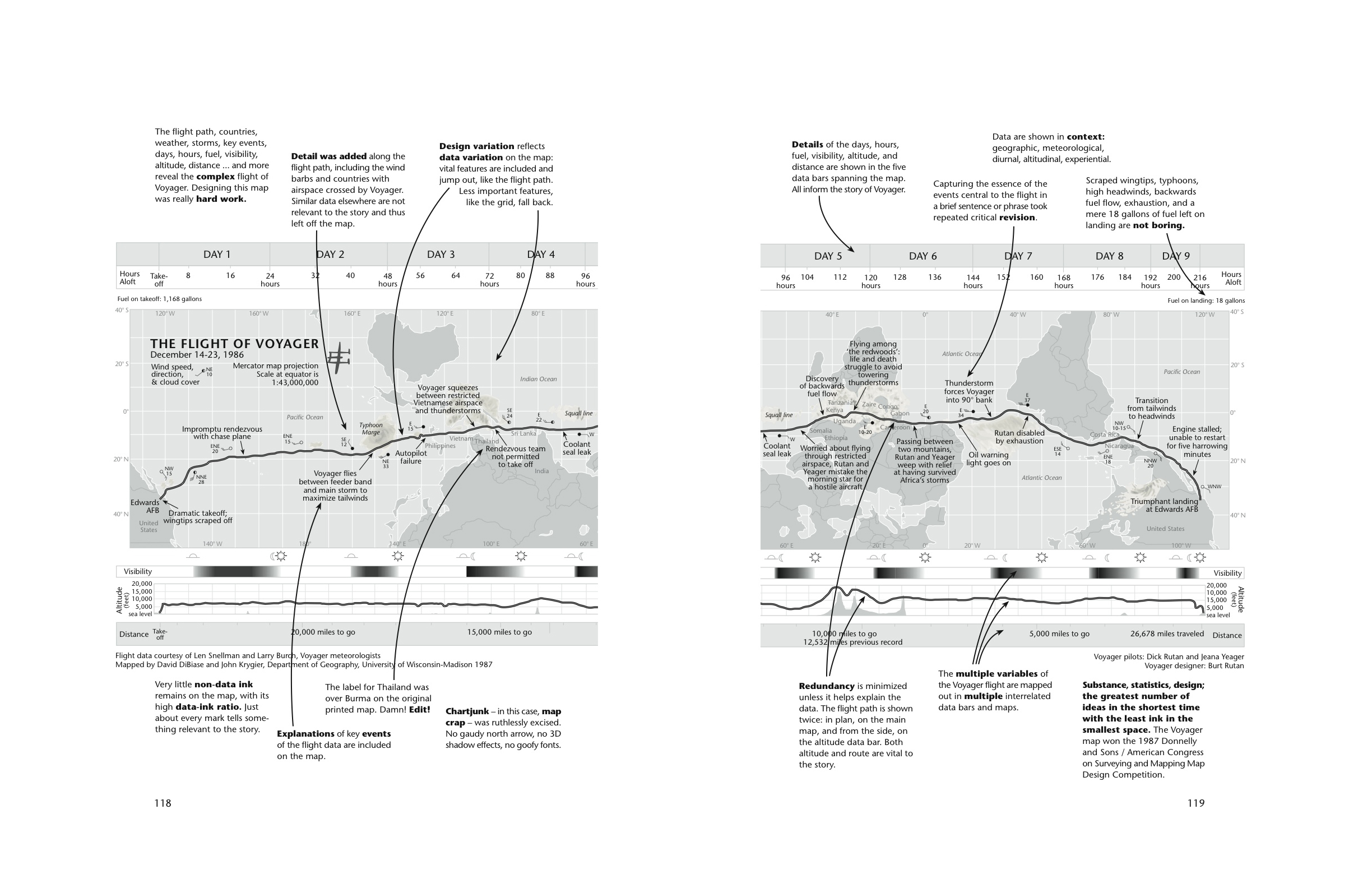
Annotations about graphical excellence, based on Edward Tufte’s ideas, including complexity, detail, design variation & data variation, context, revision, non-data ink, data-ink ratio, explanatory text, editing, chartjunk & map crap, redundancy, and multivariate data:

Chapter 7, The Inner Workings of Map Design, reveals the Voyager map with no visual differences (a confusing mess of lines and type):
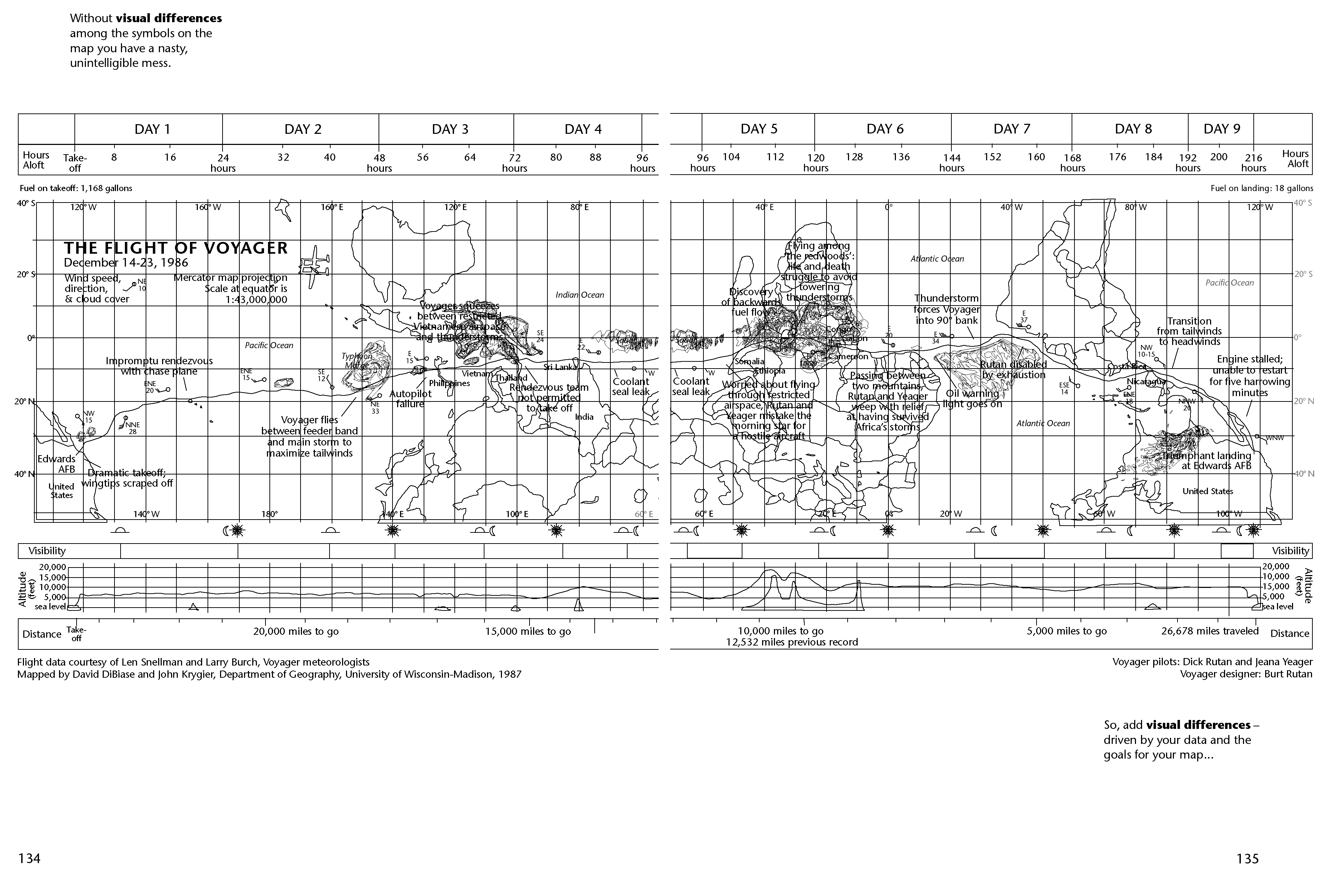
The map with visual differences is then annotated, with regard to key methods for establishing visual differences, including detail, edges, texture, layering, shape, size, closure, proximity, simplicity, direction, familiarity, and color:

Chapter 8, Map Generalization and Classification, annotates the Voyager map in terms of the generalization concepts of selection, dimension change, simplification, smoothing, displacement, and enhancement:
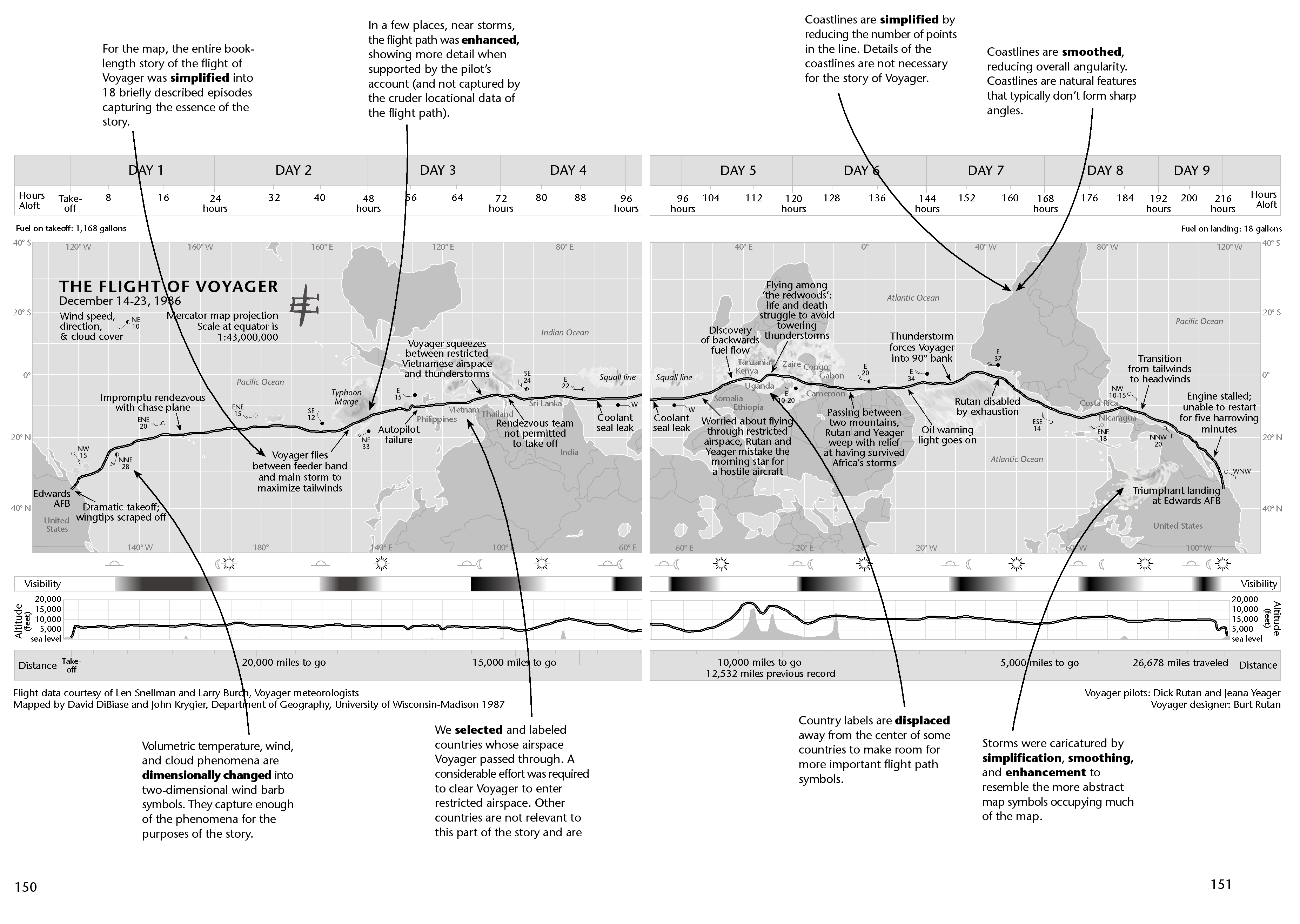
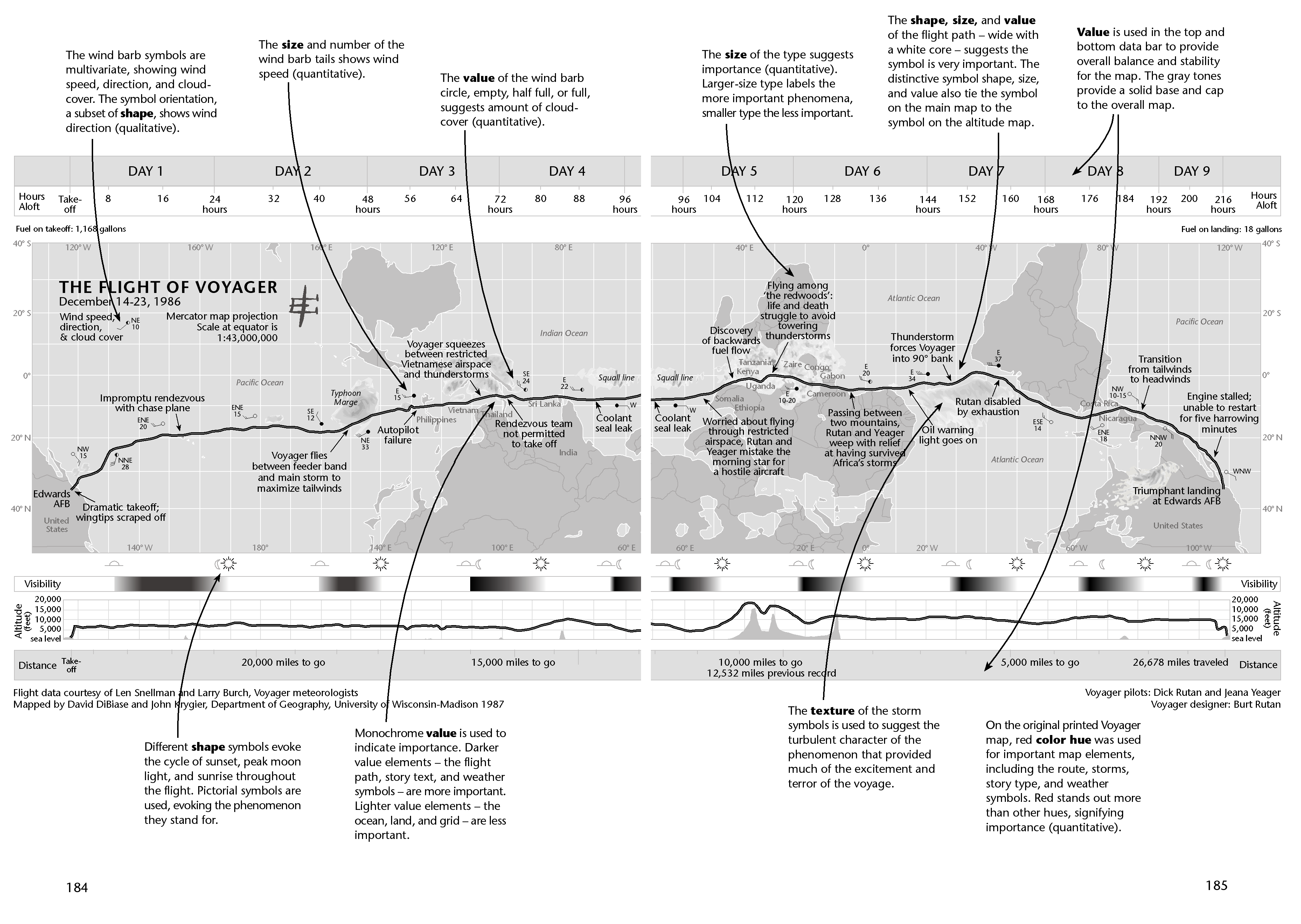
Chapter 9, Map Symbolization, annotates the map in terms of the visual variables: shape, size, color hue, color value, color intensity, and texture:
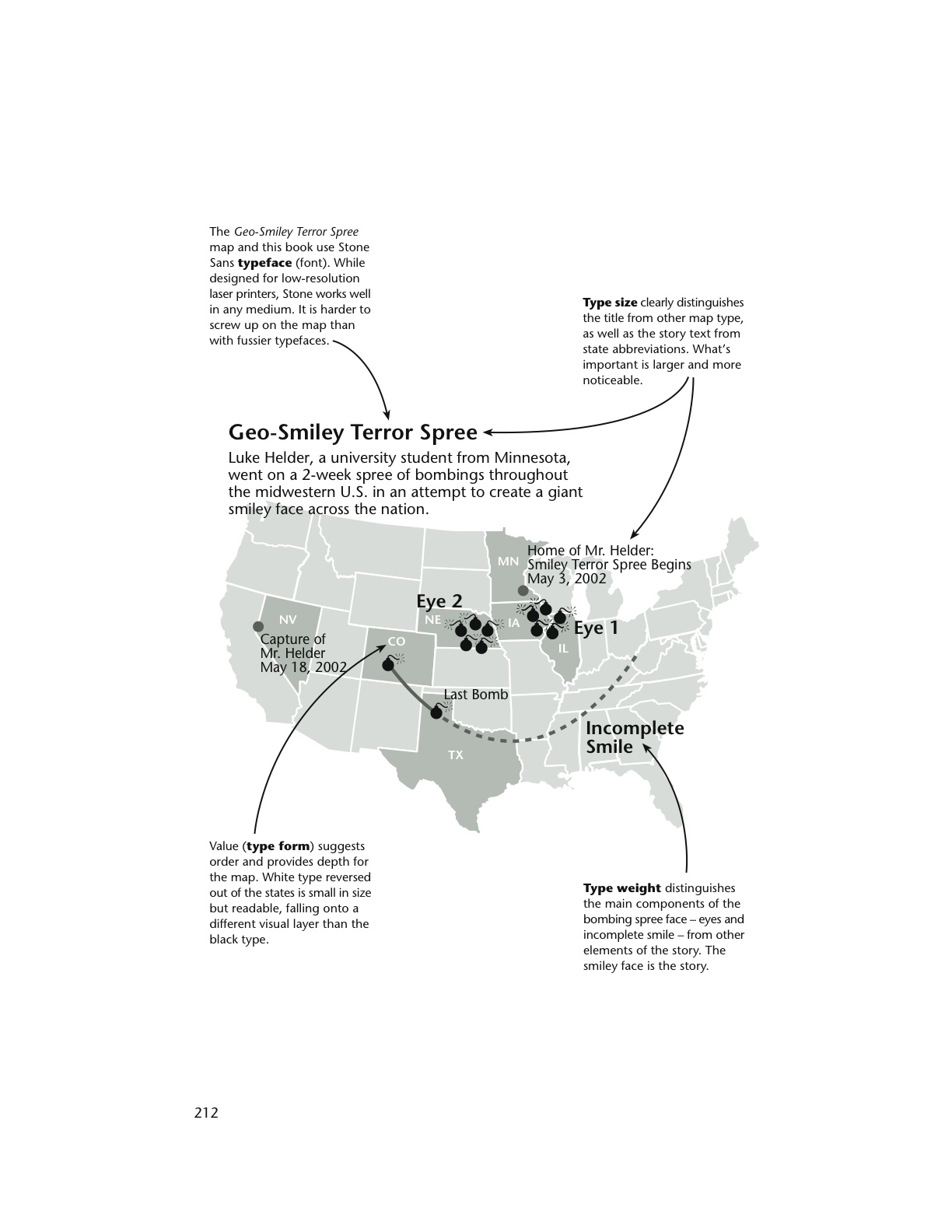
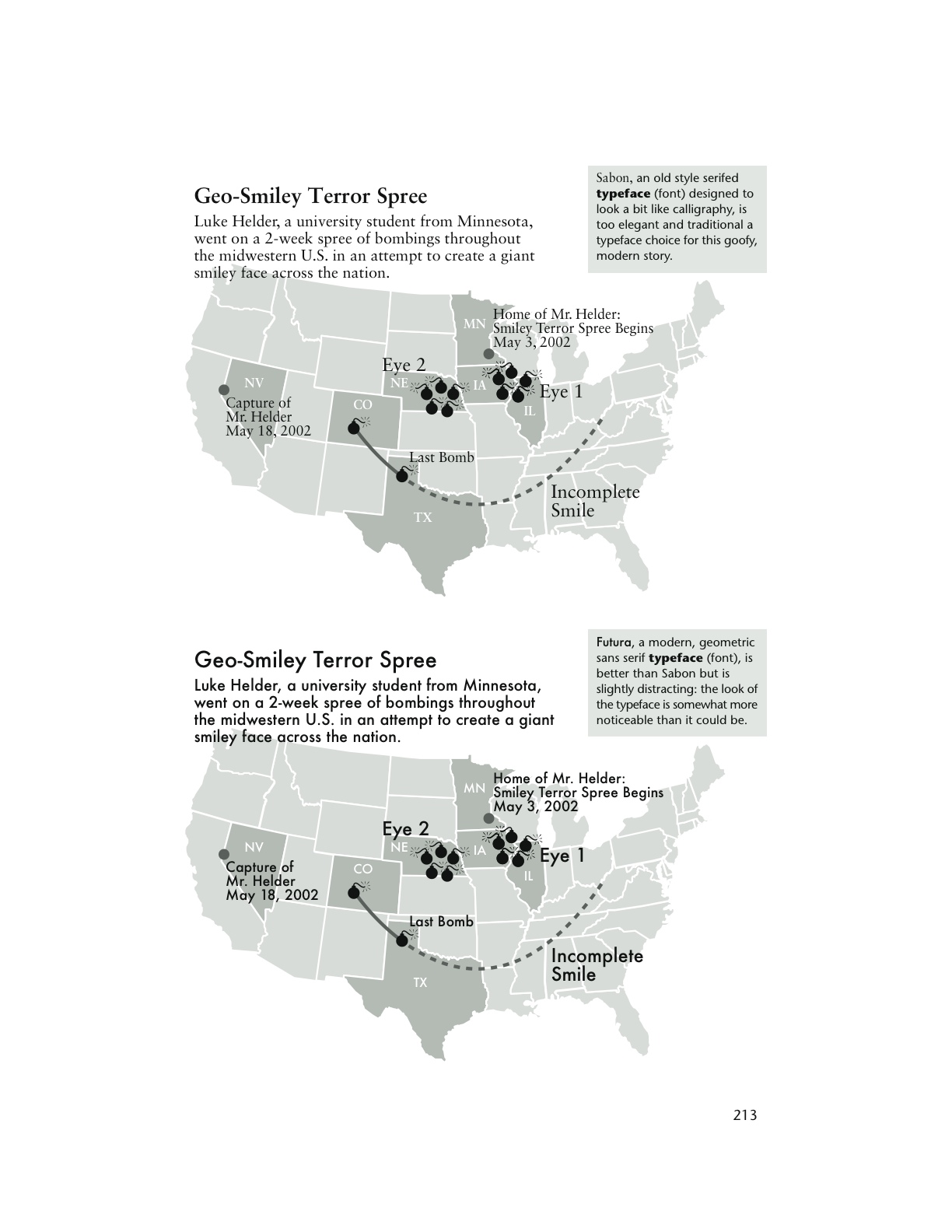
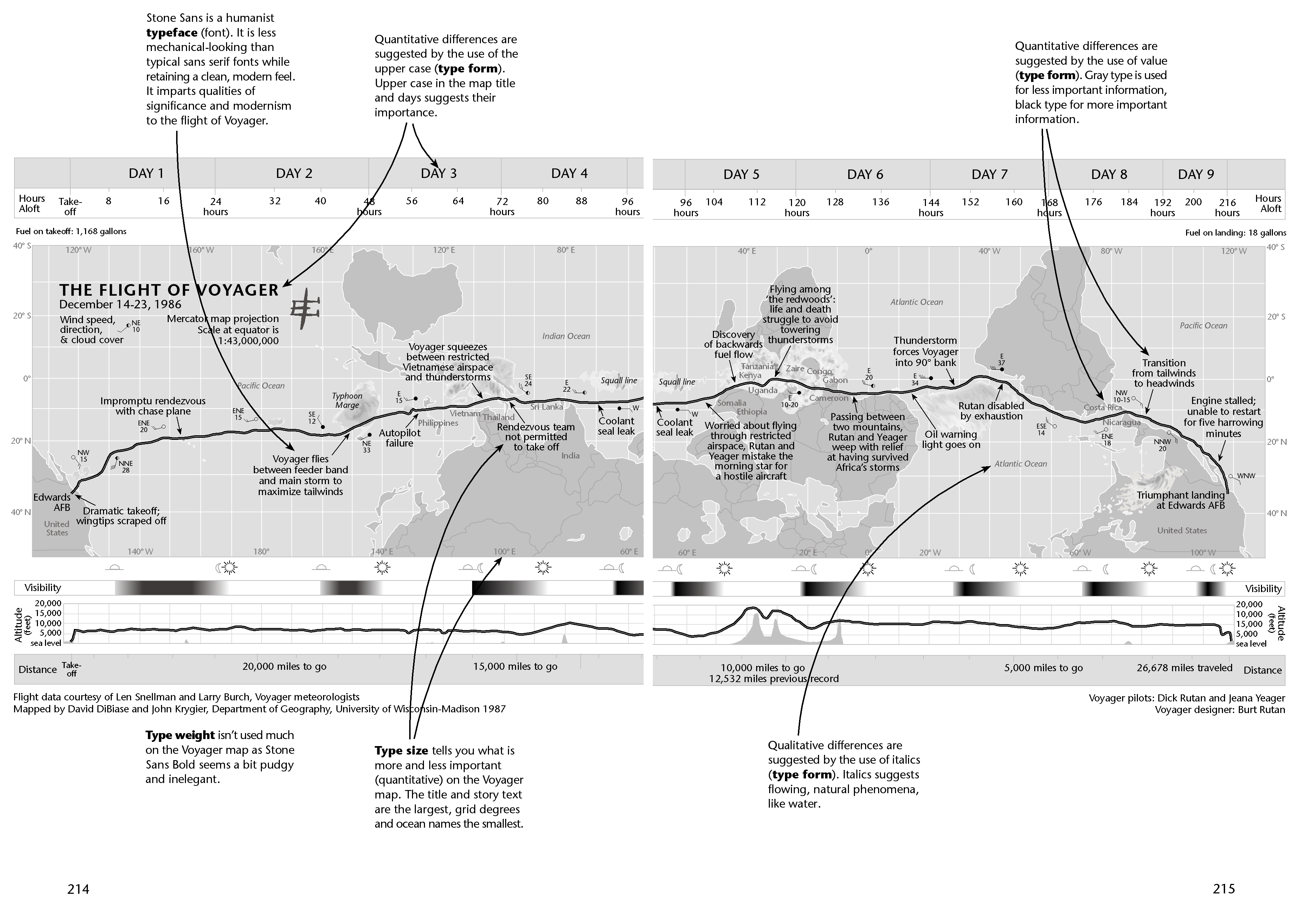
Chapter 10, Words on Maps, annotates the Voyager map with regards to typographic variables including typeface, type form, type weight, and type size:
I have a few ideas for additional annotated Voyager maps (such as a full color map) which I hope to cobble together in the future. If you have any other ideas for variations that might be useful or interesting, let me know.
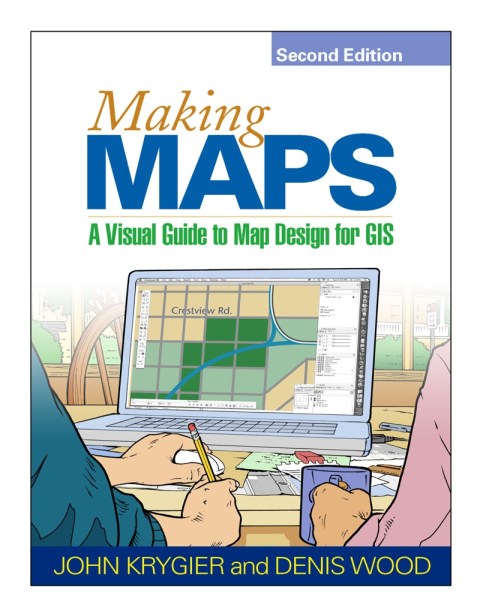
It’s out! Got my copies yesterday. A terrific upgrade from the first edition of the book – larger format, better paper, complete redesign, lots of new content. Shipping from Amazon and other similar sites. Let me know what you think if (when) you get a copy!

A few pre-publication reviews:

James E. Meacham, Senior Research Associate and InfoGraphics Lab Director, Department of Geography, University of Oregon: “Building on their solid first edition, Krygier and Wood have created a new and much richer follow-up. The second edition represents a serious reworking of subject matter and graphics. The book uses extraordinary map exemplars to address the full range of basic cartographic concepts and to demonstrate many subtle and advanced design techniques as well. Addressing current social issues including map agendas, ethics, and democracy, it is the kind of book that will inspire readers and cultivate admiration for the field.”

Paul Longley, Department of Geography, University College London, United Kingdom: “Krygier and Wood’s book should be used by anyone interested in the way the world looks, the way the world works, or the way the world should be. It remains the most accessible yet comprehensive guide of its kind. The second edition meets the needs and expectations of the ‘Google generation’ of map users while remaining true to the guiding principles that govern how maps look, work, and function. The very accessible, extensively illustrated format makes the book easily usable by students at all levels, as well as those taking steps to develop expertise in cartographic design.”

Concerns about the failing nuclear reactors in Japan and the fear of spreading radiation inspired me to share one of my favorite maps. The map shows areas in the United States crossed by two or more radioactive clouds during the era of nuclear testing (1951-1962) in the American Southwest. Click on the map for a larger version.

Richard Miller painstakingly created his map showing where humans, animals, and the environment were contaminated by radioactive fallout, broadly dispersed by weather patterns.

A sublime map, both beautiful and terrifying.

The map is also reproduced in my forthcoming book, Making Maps, 2nd Edition (due any day now).

Source: Richard Miller, “Areas crossed by two or more radioactive clouds during the era of nuclear testing in the American Southwest, 1951-62” in Under the Cloud: The Decades of Nuclear Testing (Two-Sixty Press, 1999), between chapters 4 and 5.

Click map for larger version; full version (7.3 mb PDF) here

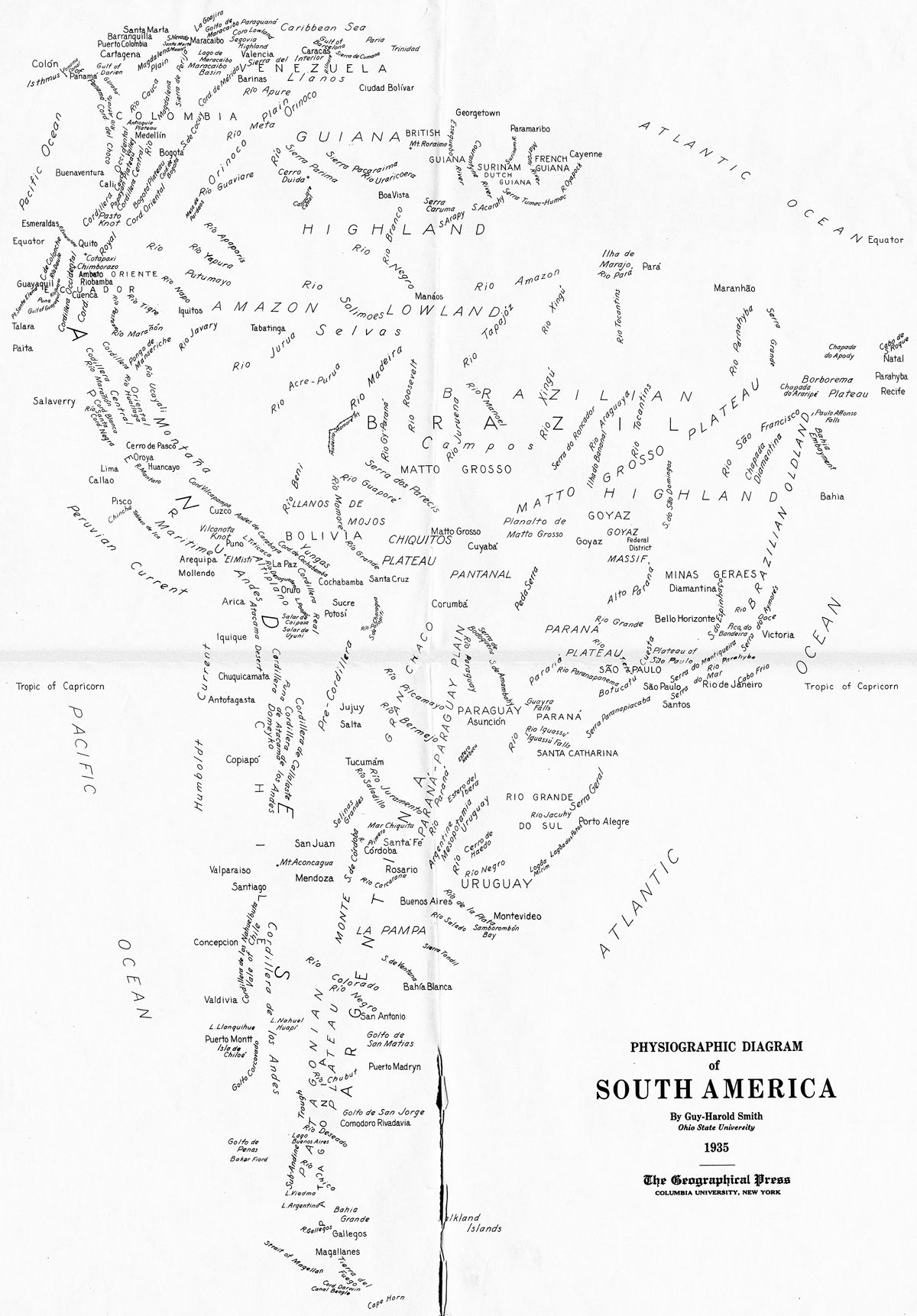
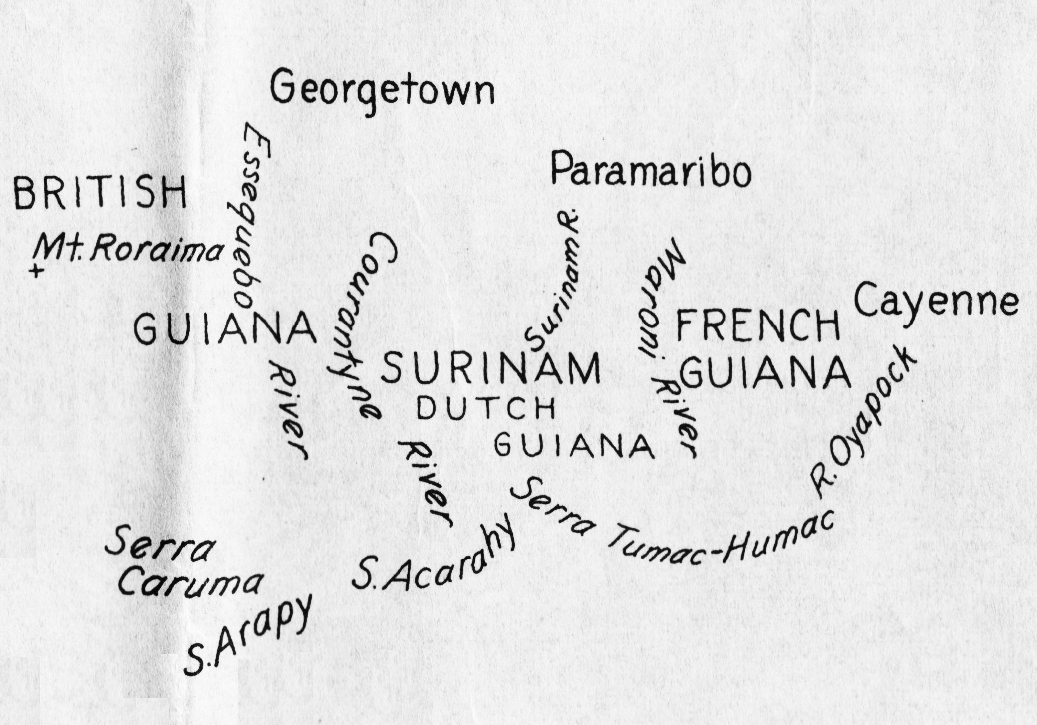
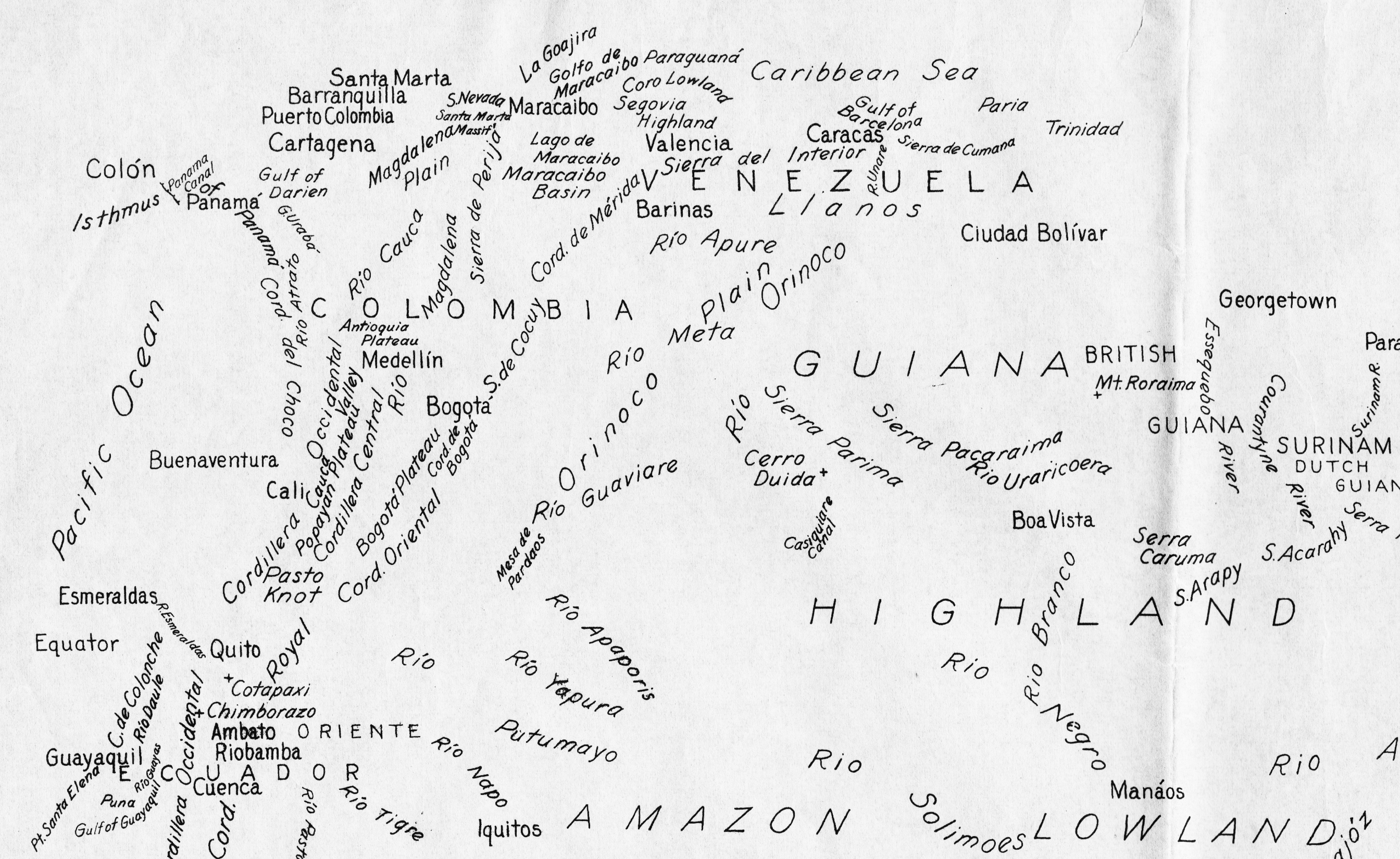
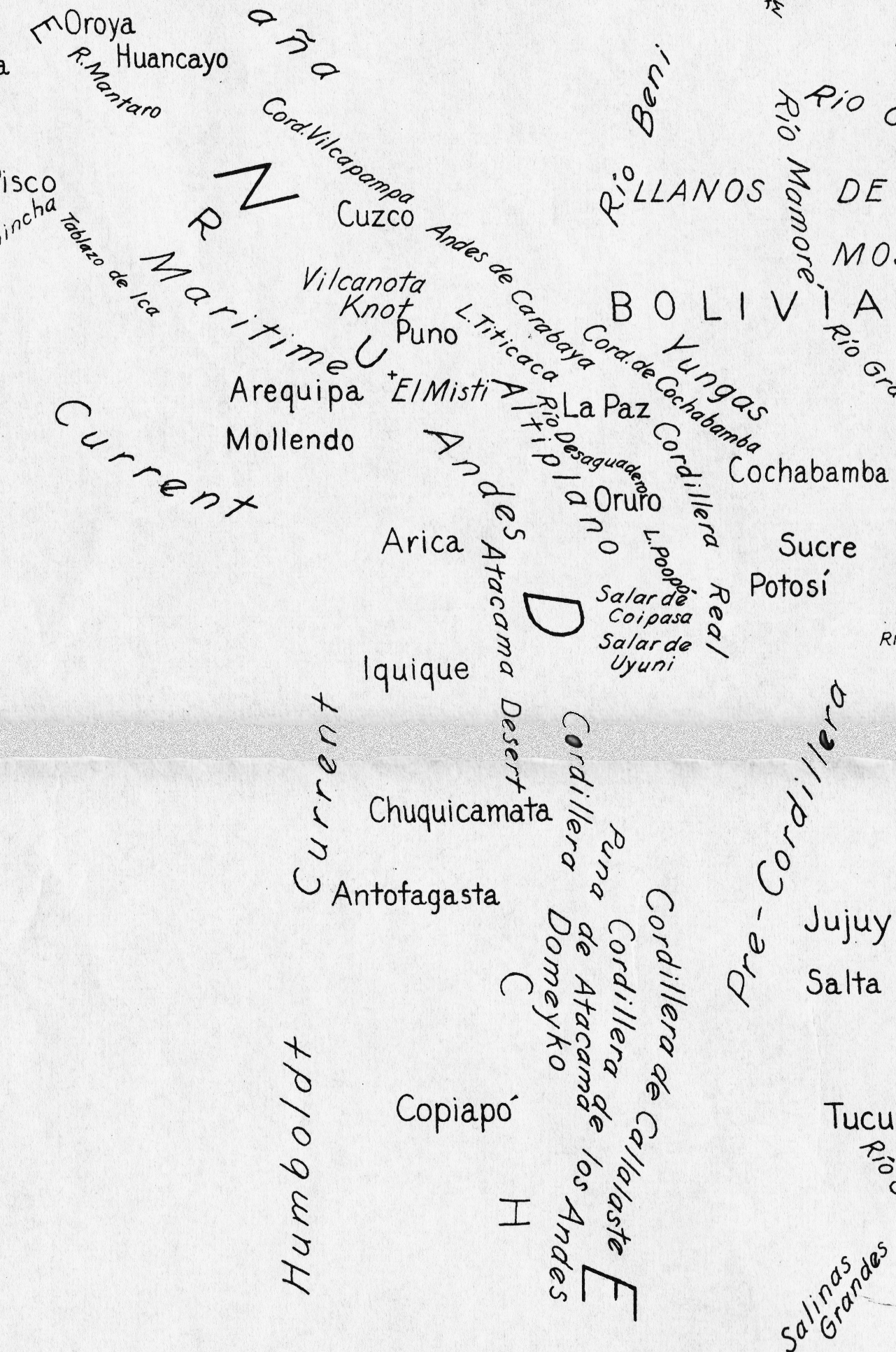
The beauty of words on maps is often not evident, embedded, as they are, in an array of other symbols. A “word map” of South America (above), published by the Geographical Press in 1935, consists entirely of hand-lettered words. The map is supposed to show the labeled landforms of South America; this copy was erroneously printed without the landforms. The map is another find from the dusty old Departmental archives here at Ohio Wesleyan.

The South America word map is not that dissimilar from the word map poetry of Howard Horowitz: below, Manhattan:

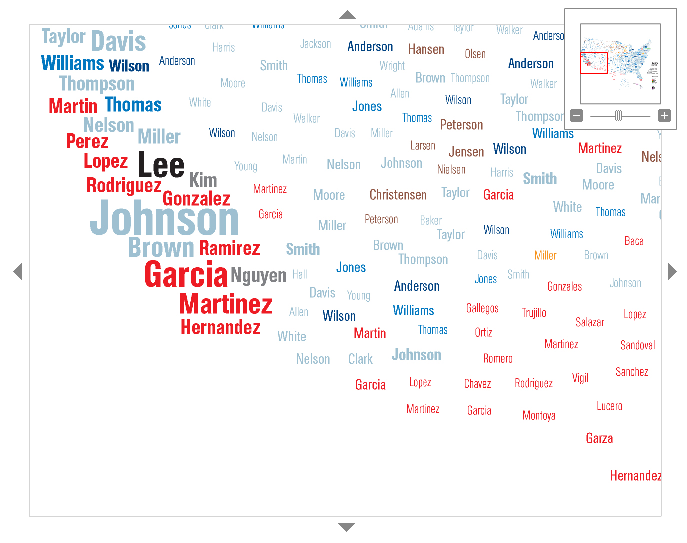
A few examples of “word maps” or “typographic maps” have recently popped up on the internets.

National Geographic’s What’s in a Surname (below) interactive map of the dominant surnames in different parts of the US (upper Midwest, and Southwest) reveal structure (the form of the US is evident) as well as meaning (variations in ethnicity across the US).

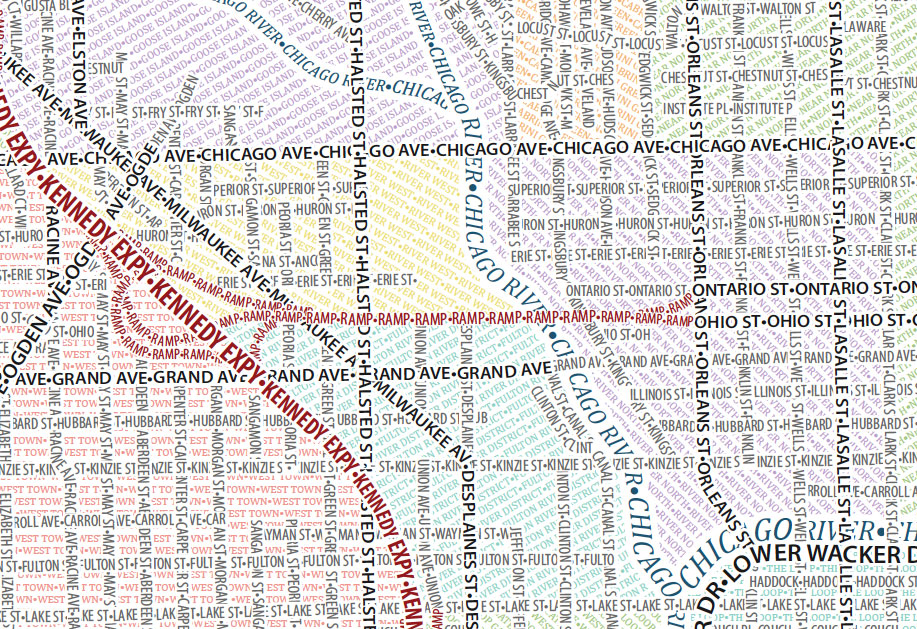
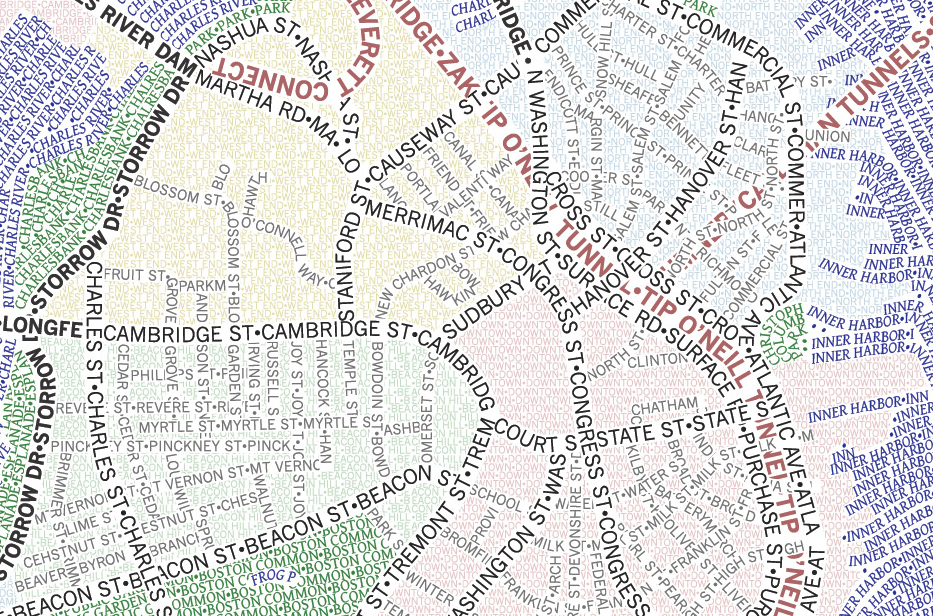
Axis Maps Typographic Map series works in much the same way, but at a different scale and in a bit more complex manner:

Chicago Typographic Map (Axis Maps)


Boston Typographic Map (Axis Maps)

The Axis Typographic Maps use typography as line and area map symbols, providing a nuanced exposition of the geography of these places, the grid of Chicago or the meandering roads of Boston. Again, both meaning and structure are generated by words alone.

But back to the old South America map…

The South American map follows the typical “rules” about type placement, worked out in practice throughout the last few hundred years, and now embedded in cartography texts and in automatic text placement algorithms in GIS software. These rules will, in most cases, make the map easier to read and understand. On the excerpts of the South America map below

  • City names are mixed caps/lower case, roman, and horizontal
  • Country names are upper case, horizontal, and spread out to define the areas
  • Natural features are in the more flowing italics form; if referring to a point, they are horizontal, if they refer to linear or area features (rivers, regions) they are curved to fit the feature.

In practice, placement is complicated, as words cross other words, wrap around each other, and (on most maps) vie for space with other map symbols. The South America map has some neat examples of the art of placing words on maps:

The size of the words varies – suggesting large areas, or places of more importance.

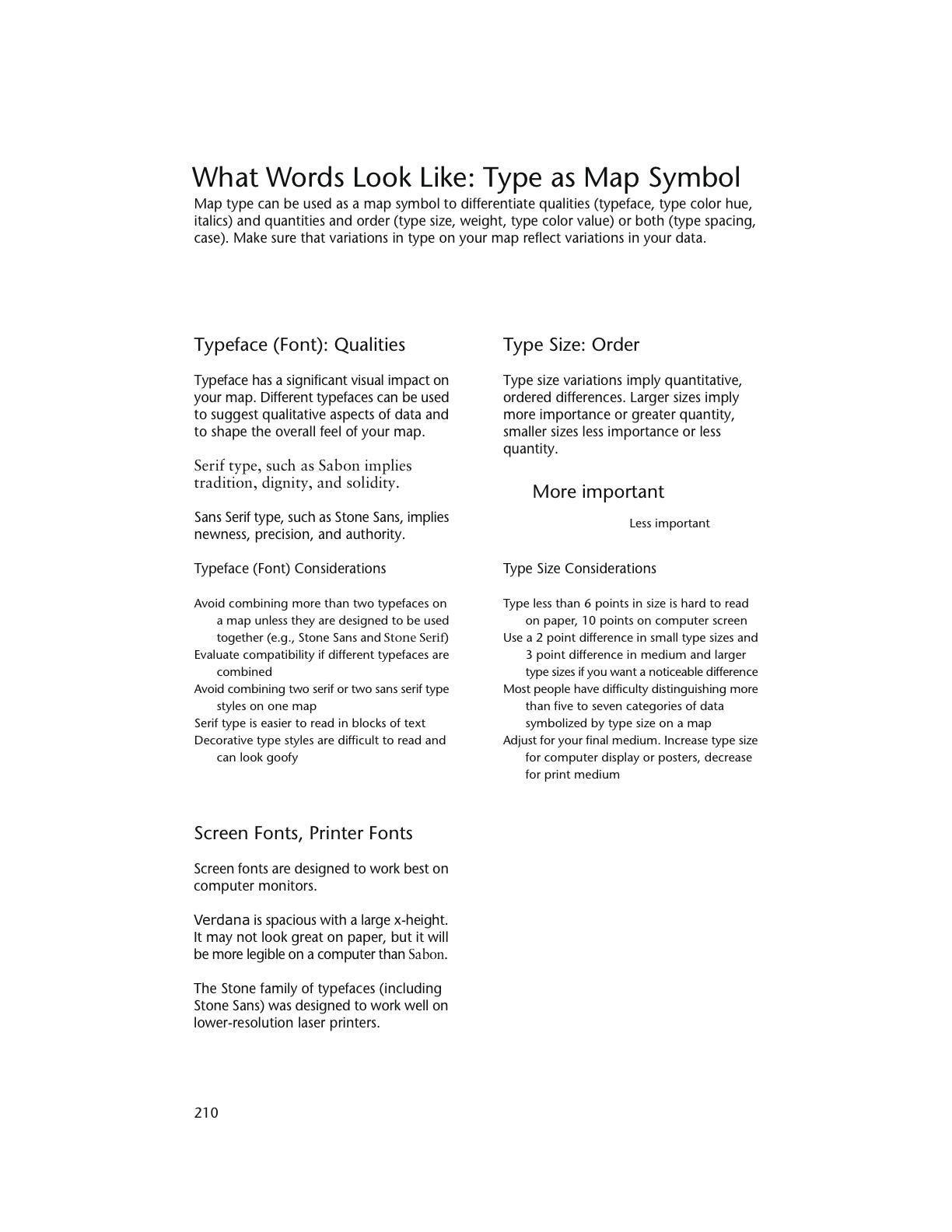
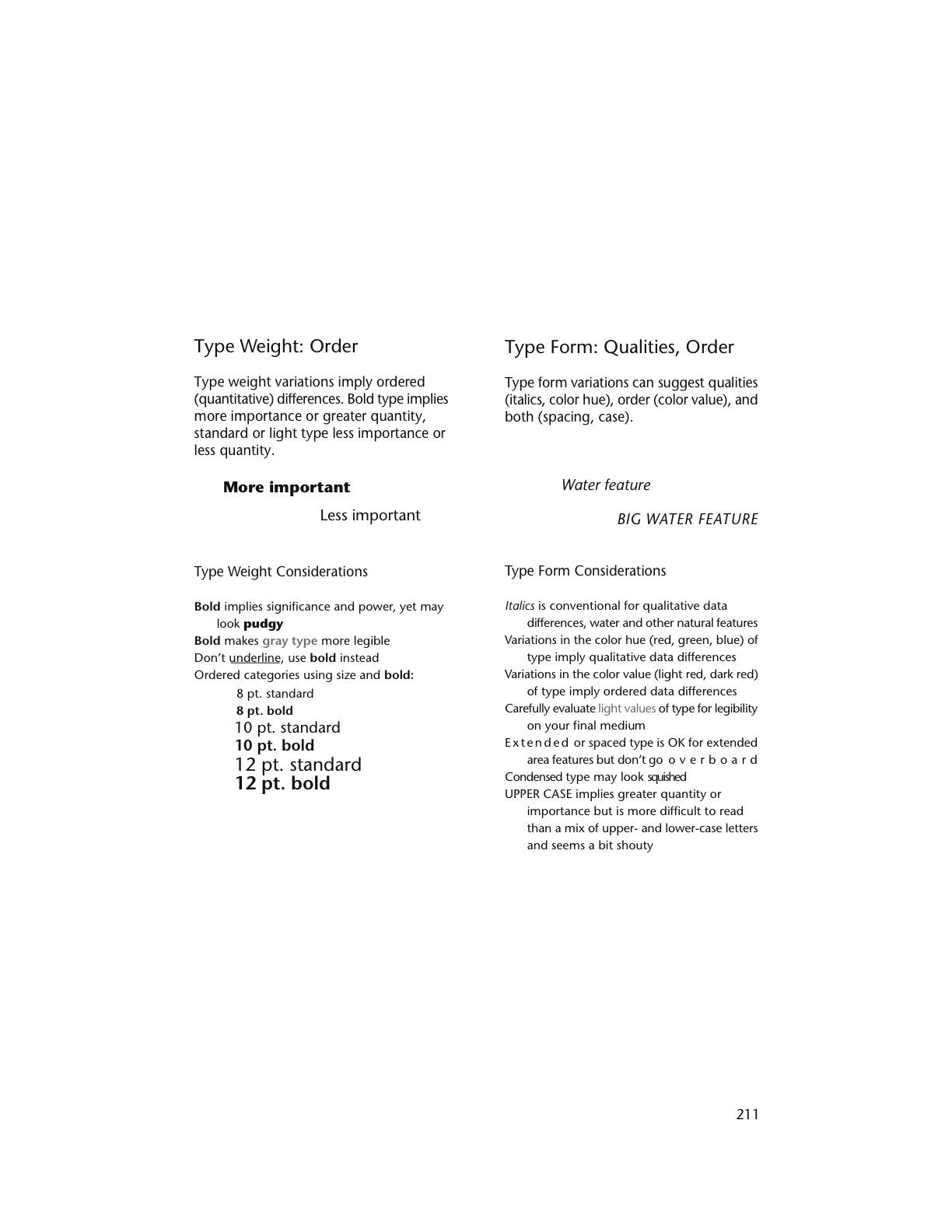
Below find a few pages from the new (2nd) edition of Making Maps (2011) on type as a map symbol. These pages show how typography can be used to express both qualitative and quantitative characteristics of the data they stand for on a map. Typographic guidelines on these pages include typeface (font), type size, type weight, and form (including italics, roman, color, case, and spacing).

Francois de Dainville, in his Le Language des Geographes (1964, p. 162), compiled map symbols for various water crossings from historical European maps (1543-1777).

The symbols include boats (Bac, above), fords (Gué, below)…

…and bridges (Pont, below).

The entire set of symbols in one image:

Cover, Making Maps, 2nd edition (AmazonGuilford)

Krygier and Wood’s book should be used by anyone interested in the way the world looks, the way the world works, or the way the world should be. It remains the most accessible yet comprehensive guide of its kind. The second edition meets the needs and expectations of the “Google generation” of map users while remaining true to the guiding principles that govern how maps look, work, and function. The very accessible, extensively illustrated format makes the book easily usable by students at all levels, as well as those taking steps to develop expertise in cartographic design. Paul Longley, Department of Geography, University College London, United Kingdom.

Building on their solid first edition, Krygier and Wood have created a new and much richer follow-up. The second edition represents a serious reworking of subject matter and graphics. The book uses extraordinary map exemplars to address the full range of basic cartographic concepts and to demonstrate many subtle and advanced design techniques as well. Making Maps is appropriate for beginning to intermediate college cartography students and others who want to tap into the power of map creation. Addressing current social issues including map agendas, ethics, and democracy, it is the kind of book that will inspire readers and cultivate admiration for the field. James E. Meacham, Senior Research Associate and InfoGraphics Lab Director, Department of Geography, University of Oregon.

More than two years in the making, the second edition of the book Making Maps is set for printing. Copies should be available in February or March of 2011. A Korean translation (?!) is planned for 2012.

This is no weenie update: Denis and I ruthlessly reorganized and rethought every bit of content in the book. I then redesigned the entire book and spent the better part of eight months producing it. We both think it’s a much better book.

Denis and I were careful to keep the spirit of the first edition of Making Maps intact while sharpening the overall look, content, and usability of the book. The goal from the beginning was to create a map design text that was different from other map design texts – more visual, creative, critical, engaging, and focused on making maps as well as really understanding how they work. It is a synthesis of what we like most about the academic study of maps and the actual design and production of maps. It is difficult to express how complex and challenging achieving this goal has been. When I look at this new edition, it feels so easy. Why couldn’t we have just done this 8 years ago when I started on the initial edition of the book?

The 2nd edition is larger in size (now 7″ x 10″) allowing more content on each page. In a Tuftean fit of non-data-ink removal, gone are a bunch of pages that didn’t have much content (such as the overview pages near the beginning of each chapter). We did retain ample white space, since absence makes the heart fonder.

We also added new material, including many real mapped examples, yet we are dozens of pages shorter than the first edition. Our goal was a lean book – “the greatest number of ideas in the shortest time with the least ink in the smallest space” – as Tufte put it.

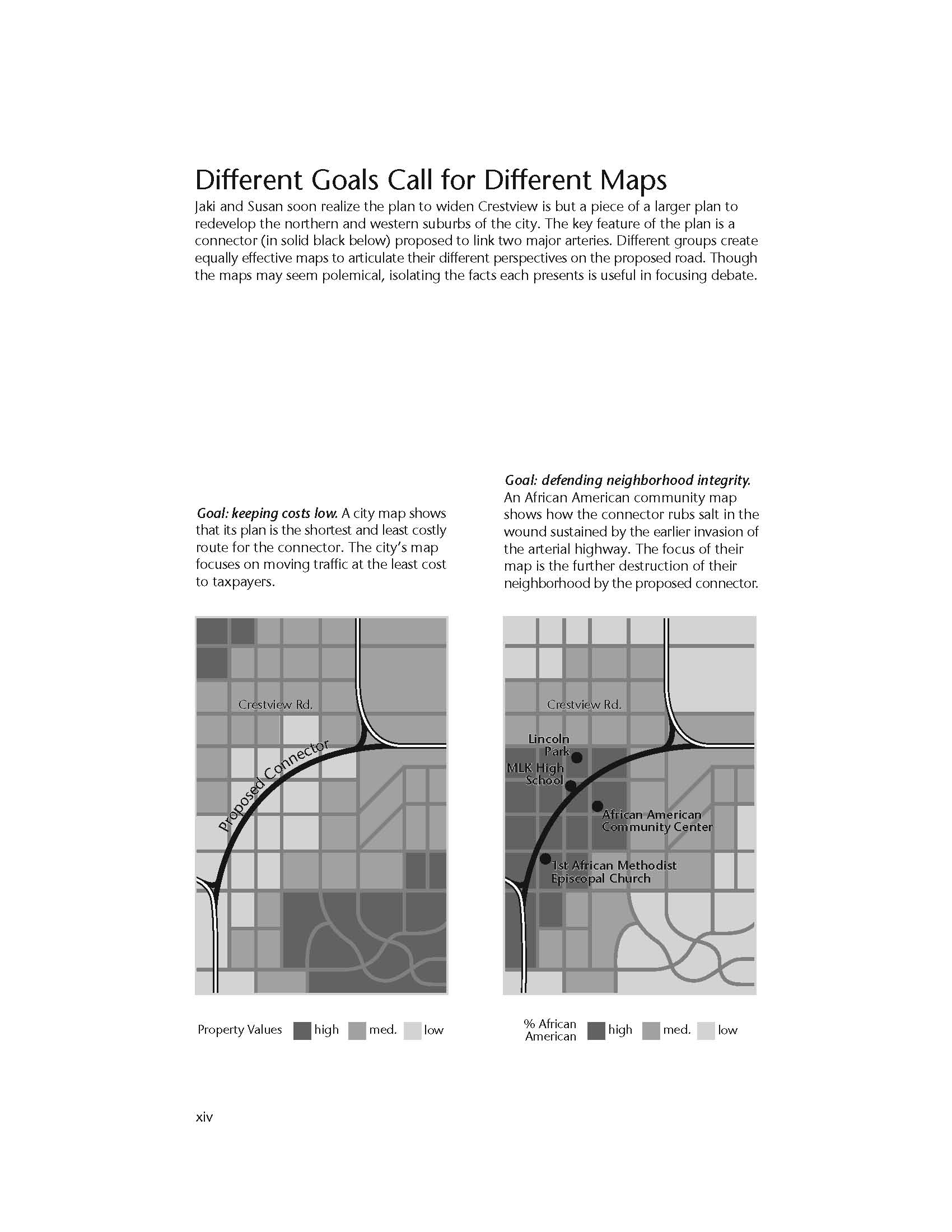
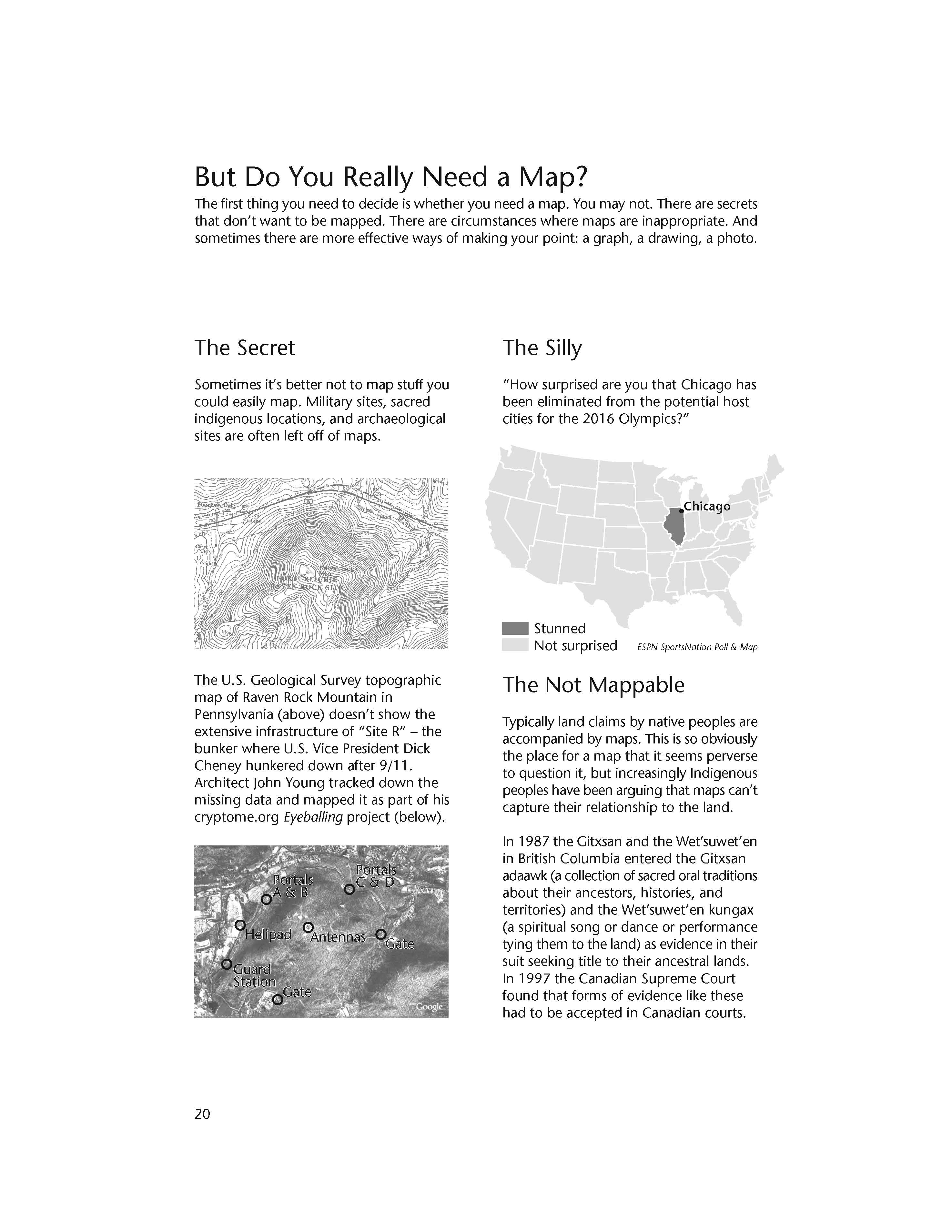
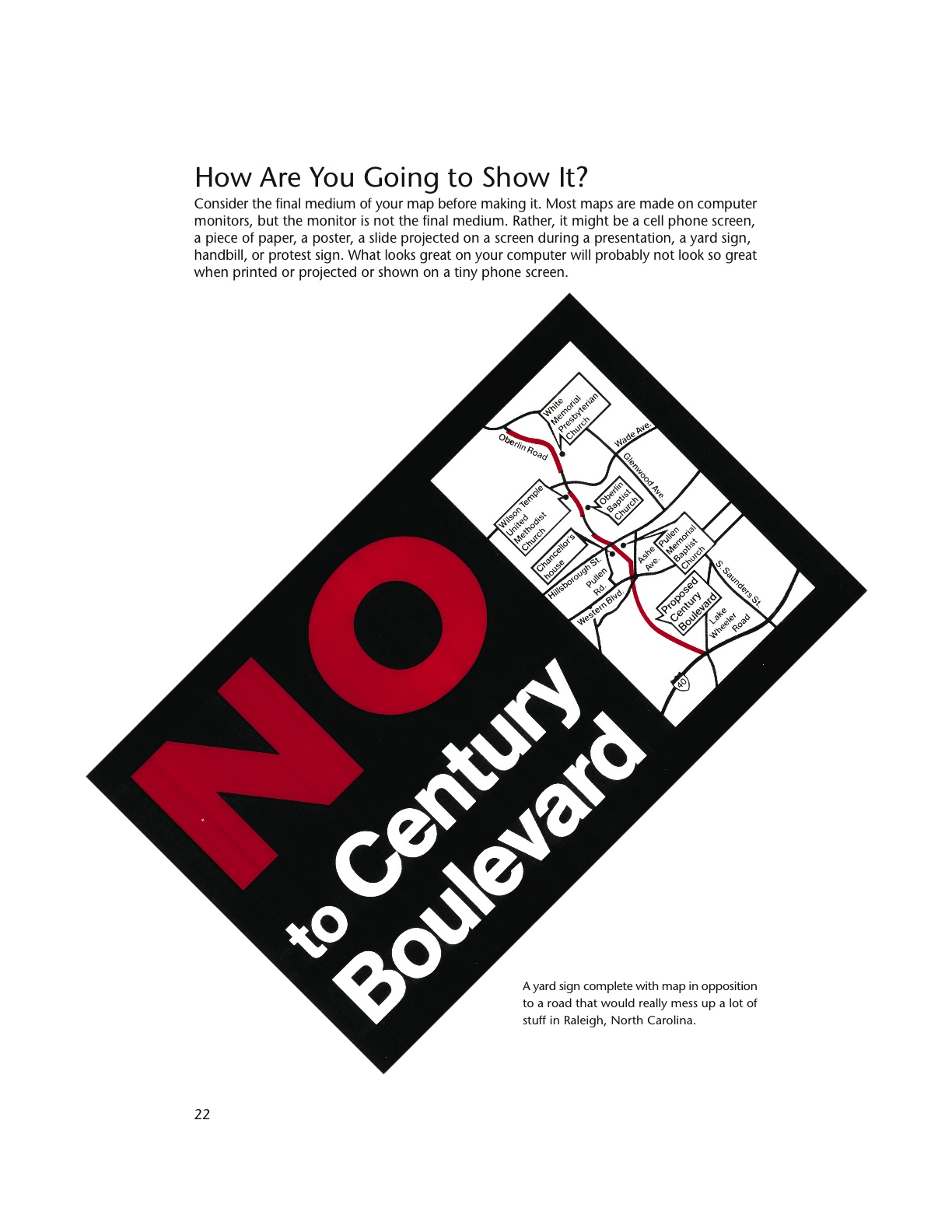
The cover initiates an expanded version of the “road connector controversy” which sets up the point of the book – you make things happen by making maps.

There is a completely new first chapter setting the context for the entire book. It introduces The Flight of Voyager map, which is annotated a dozen times over throughout the book showing how map design concepts in the text play out on an actual map:

The chapters in the book are about the same, with a new first chapter and some recast chapter names:

Introduction

1: How to Make a Map
2: What’s Your Map For?
3: Mappable Data
4: Map Making Tools
5: Geographic Framework
6: The Big Picture of Map Design
7: The Inner Workings of Map Design
8: Map Generalization and Classification
9: Map Symbolization
10: Words on Maps
11: Color on Maps

While some chapters retain a significant amount of the original edition’s material, chapters 6 and 7 were extensively revised.

A makingmaps.net blog posting “How Useful is Tufte for Making Maps?” led me to incorporate Tufte’s ideas in the book in a much more explicit manner than in the 1st edition. See, for example, the Tufte-influenced annotated Flight of Voyager map (2 page spread, chapter 6) below:

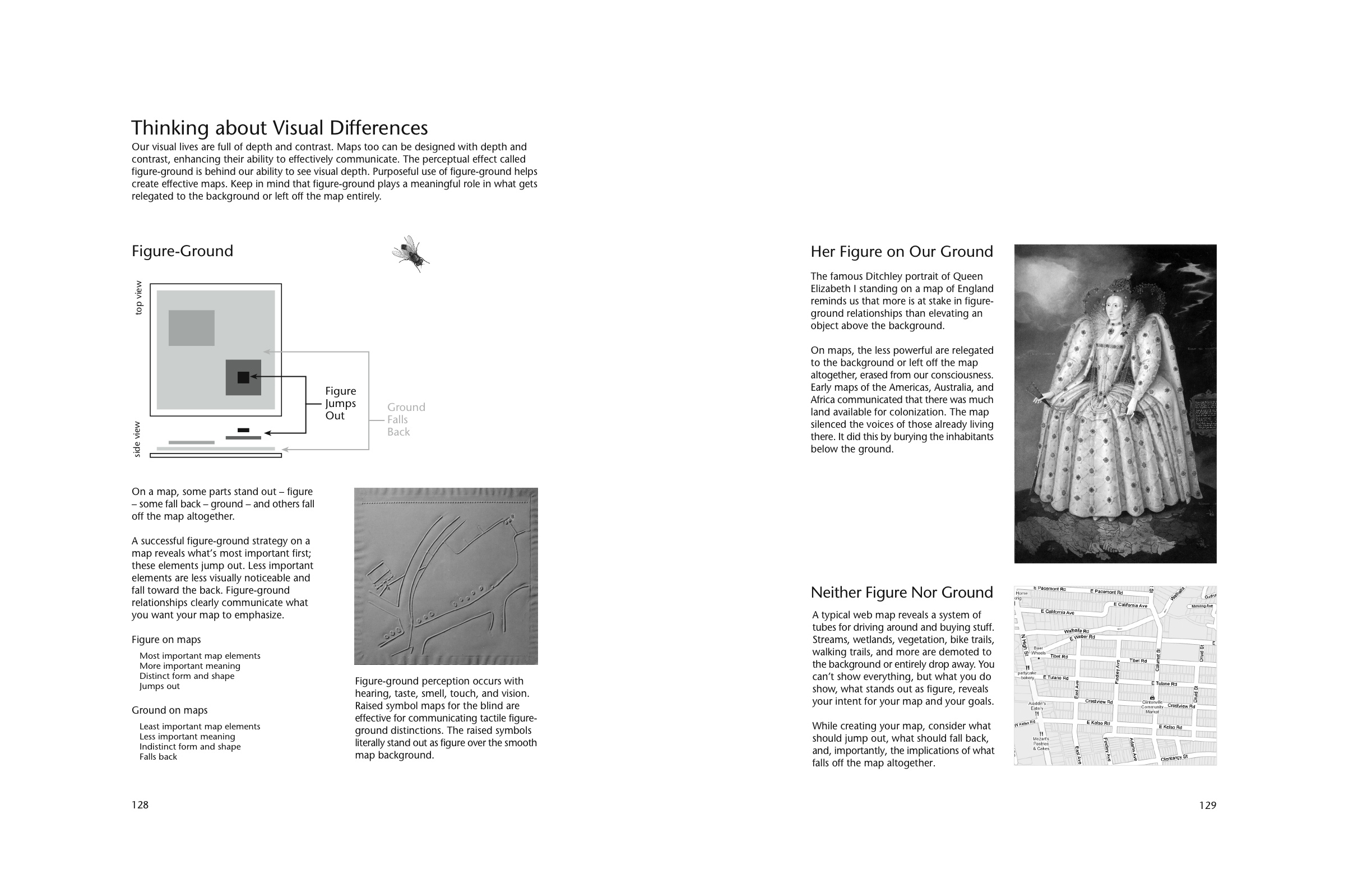
Chapter 7 was revised as “The Inner Workings of Map Design” including figure ground:

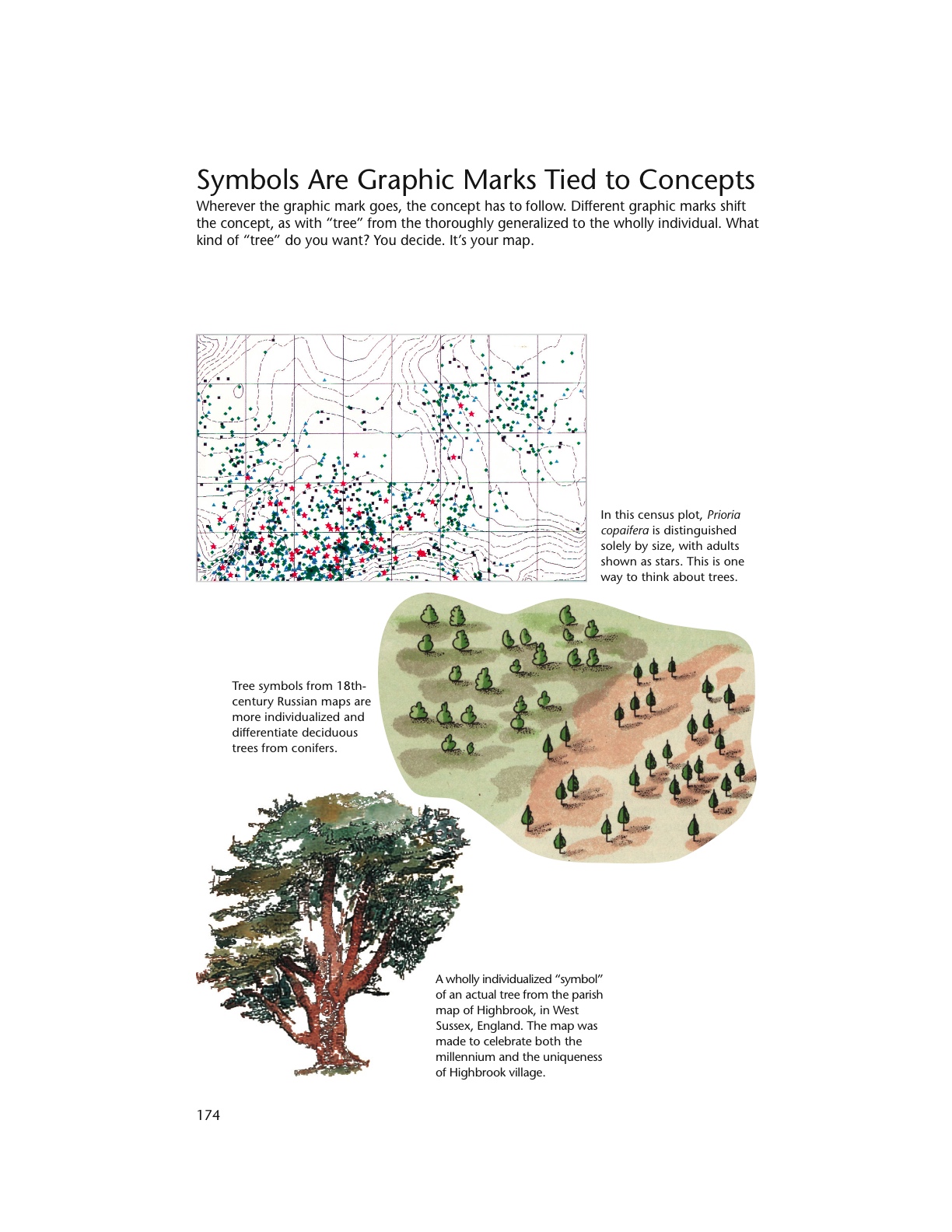
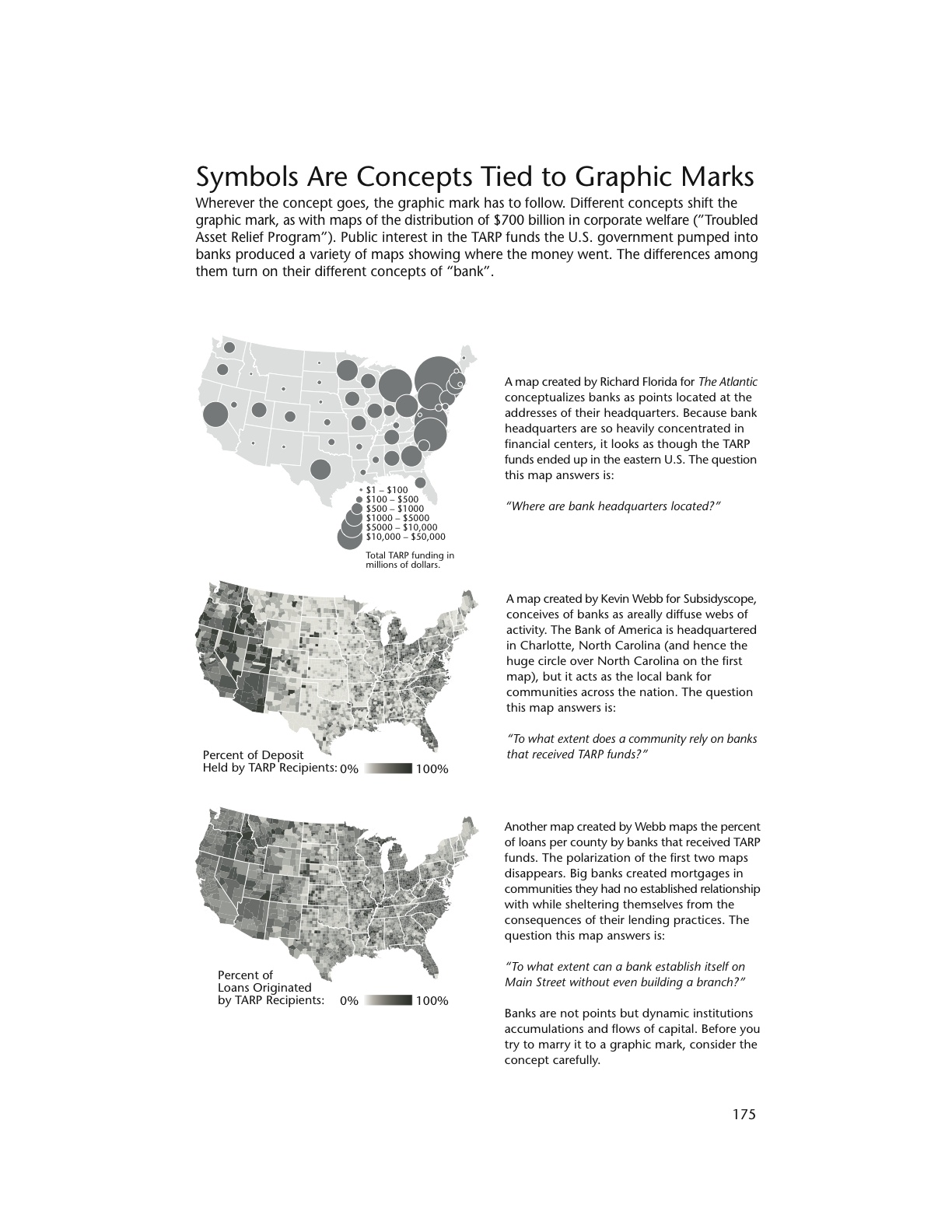
Chapter 9 on map symbols also underwent significant renovations:

•••••••••••••••

Making Making Maps … Second Edition

I am but slightly embarrassed to admit that, once again, I produced the entire book in a 6-year-old version of the now defunct Freehand MX software. My original plan was to shift to InDesign since I was redesigning the entire book, but in the end I just wanted to make the damn book rather than futzing with transferring the maps and graphics from Freehand to InDesign and learning the ins and outs of InDesign. So my plan is to eventually shift the entire book to InDesign assuming a 3rd edition sometime in the future.

The book was produced on my 4-year-old MacBook Pro, which allowed me to work on it at home on the dining room table, at home on the table on our front porch (where Denis and I had earlier sat and pounded through the plan for the 2nd edition), at CupOJoe coffee at the end of the block, at Panera while waiting to pick up Annabelle after her morning pre-school, at soccer practice at some god-forsaken indoor soccer warehouse in the hellish outer suburbs of Columbus, in Raleigh NC whilst visiting Denis to work on the book, at the OSU recreation center with the climbing wall, at the OSU recreation center with the pool (both while waiting for kids to finish various climbey or splashy activities), at my parents house in Waukesha (Wisconsin), the Caribou Coffee in Waukesha, my in-laws in River Hills Wisconsin, and in my office at Ohio Wesleyan.

•••••••••••••••

This is really a labor of love – given the time and brain power expended on the text – and we both hope this new edition lives up to the expectations of the kind and usually enthusiastic readers of the first edition.

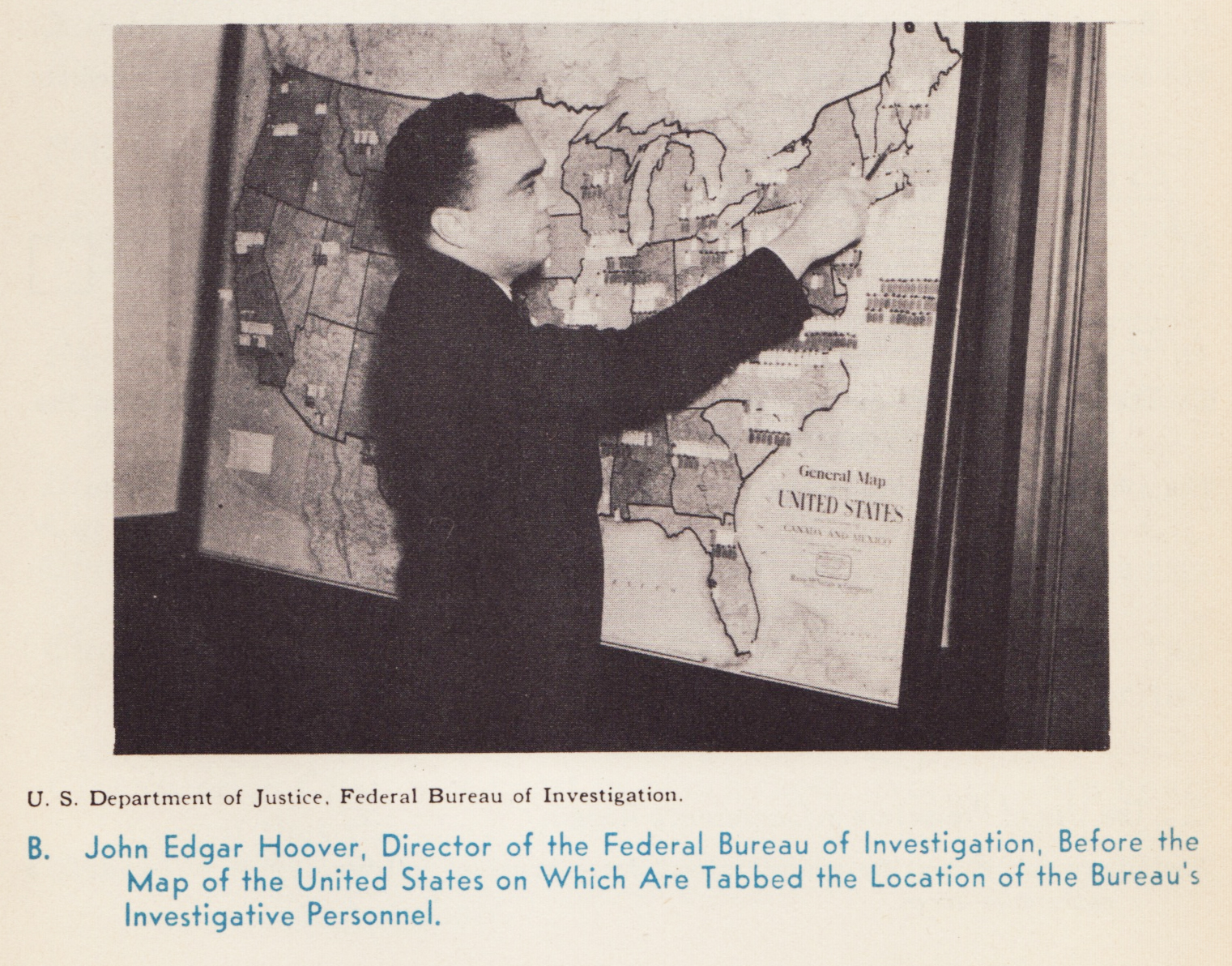
When I compiled a previous post entitled “A Discourse on Map Pins and Pinnage,” largely based on Willard C. Brinton’s Graphic Methods for Presenting Facts (1914) I rather forgot that Brinton had another tome, published in 1939, entitled Graphic Presentation.

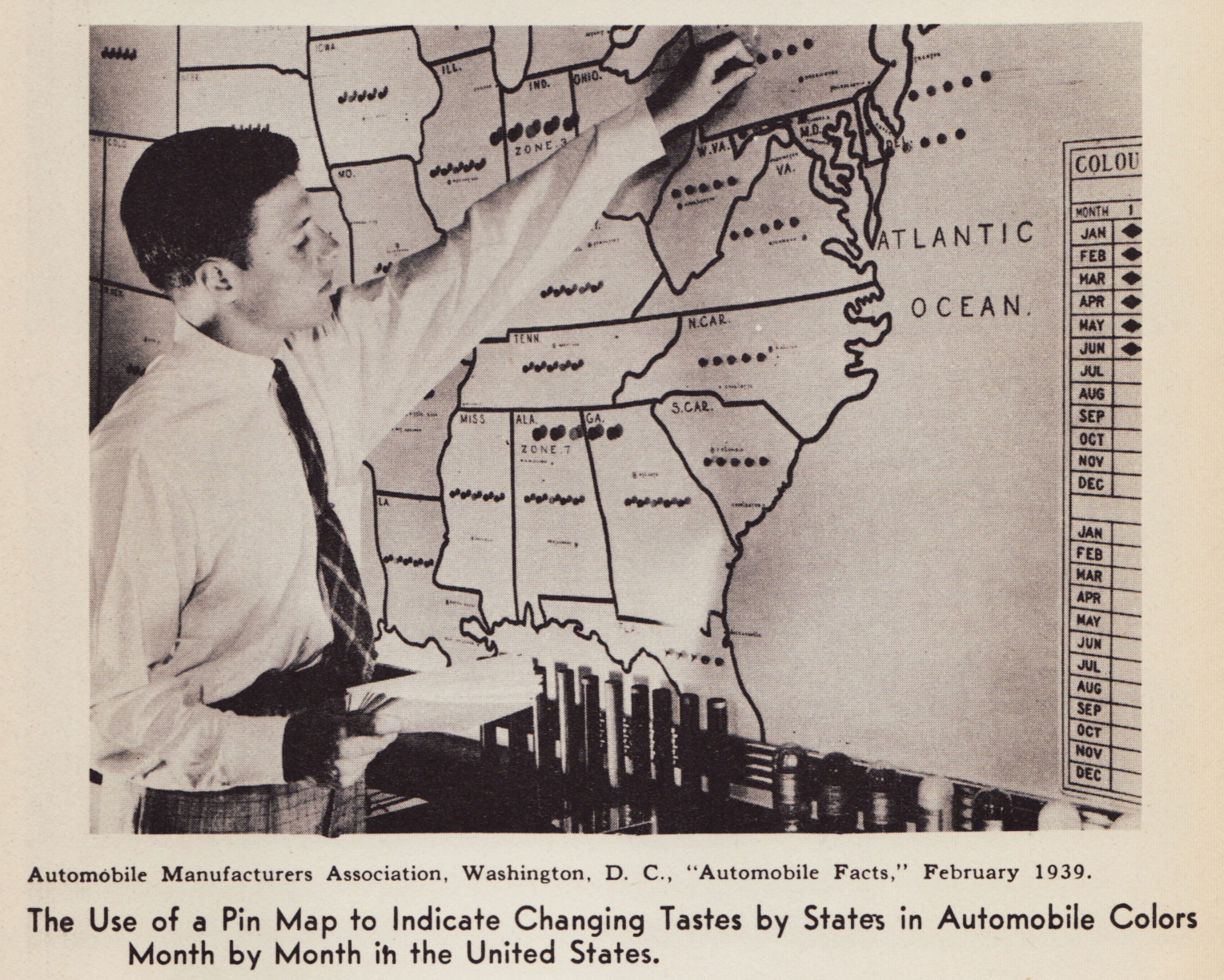
Among the pages of this latter book can be found a few items worthy of note: J. Edgar Hoover pinning a map of FBI personnel (above), and another image of a map being pinned in the wild (most popular automobile colors, by U.S. state, 1939):

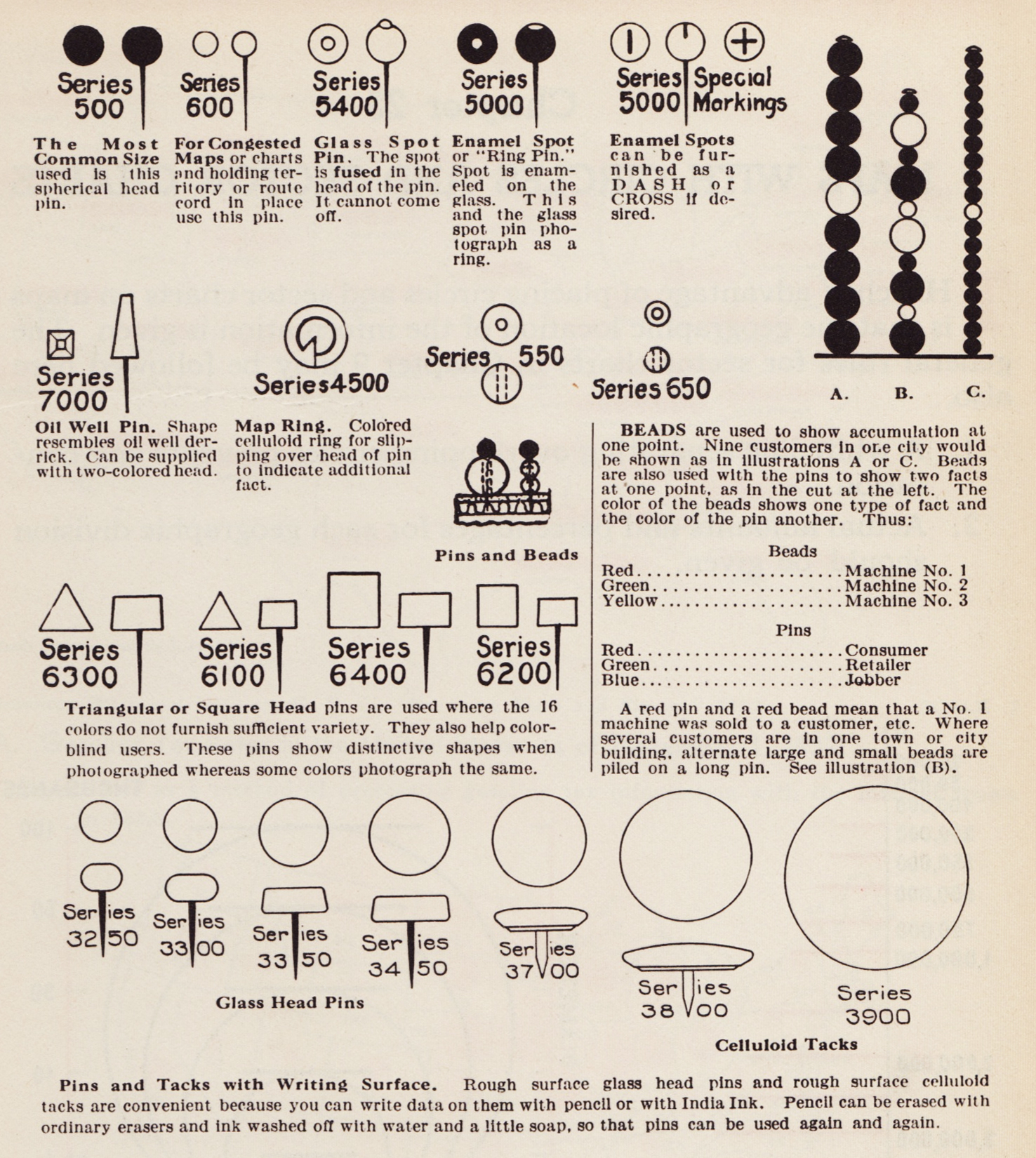
Also, a fine selection of map pins, updated for the demands of map pinners in 1939:

A few other stray map pin items have also come to my attention.

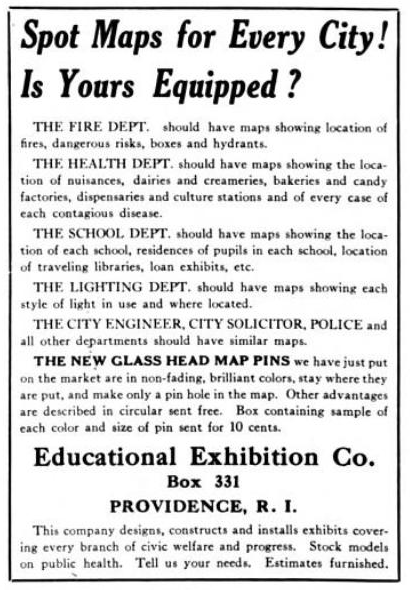
An advertisement in The American City (11, 1914) suggesting pinned maps EVERY city should construct:

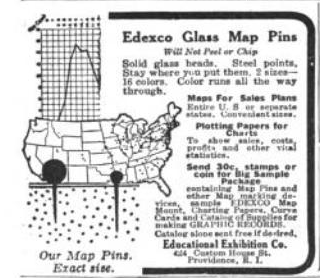
Or one from System: The Magazine of Business (33, 1918):

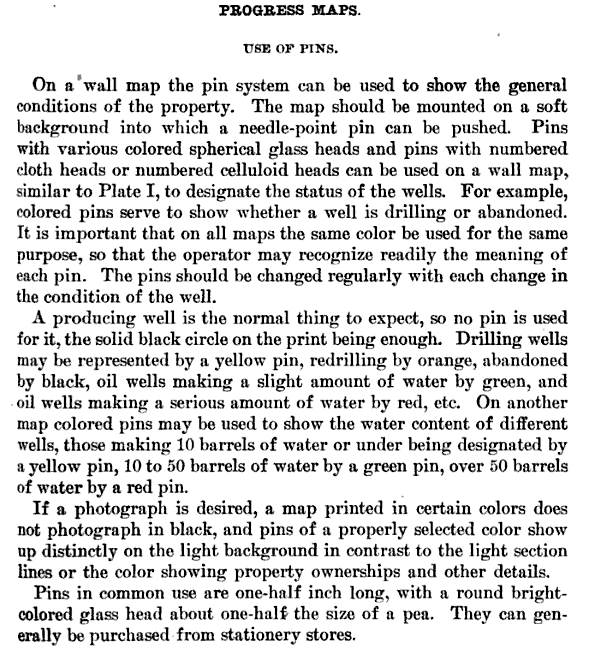
Or a bit of advice on using pinned “progress maps” in oil field work (Underground Conditions in Oil Fields, U.S. Department of the Interior, 1920):

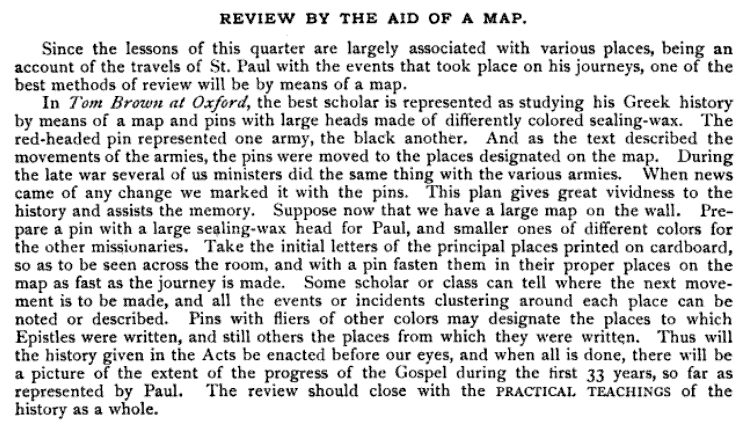
In Select Notes: A Commentary on the International Lessons for 1893 the Rev. Peloubet recalls the use of map pins for Bible study in the novel Tom Brown at Oxford:

Run out of map pins? Your local dealer is all out due to war-time demands? Popular Mechanics (March 1945) has instructions for DIY map pins:

Enough on map pins already.

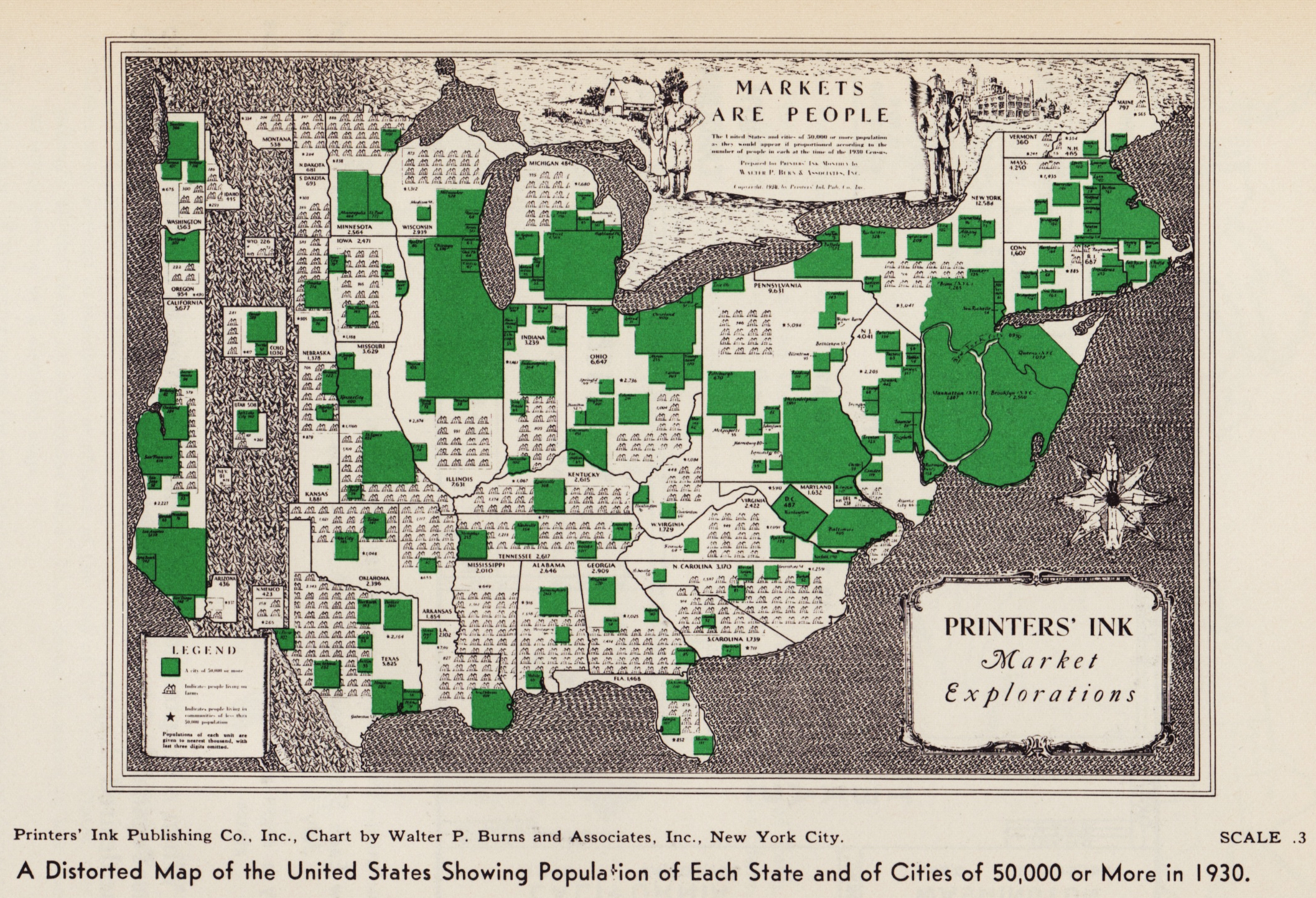
Cartogram, 1930: “A Distorted Map of the United States Showing Population of Each State and of Cities of 50,000 or More in 1930” (Printers’ Ink Publishing Co., Inc., Chart by Walter P. Burns and Associates, Inc., New York City)

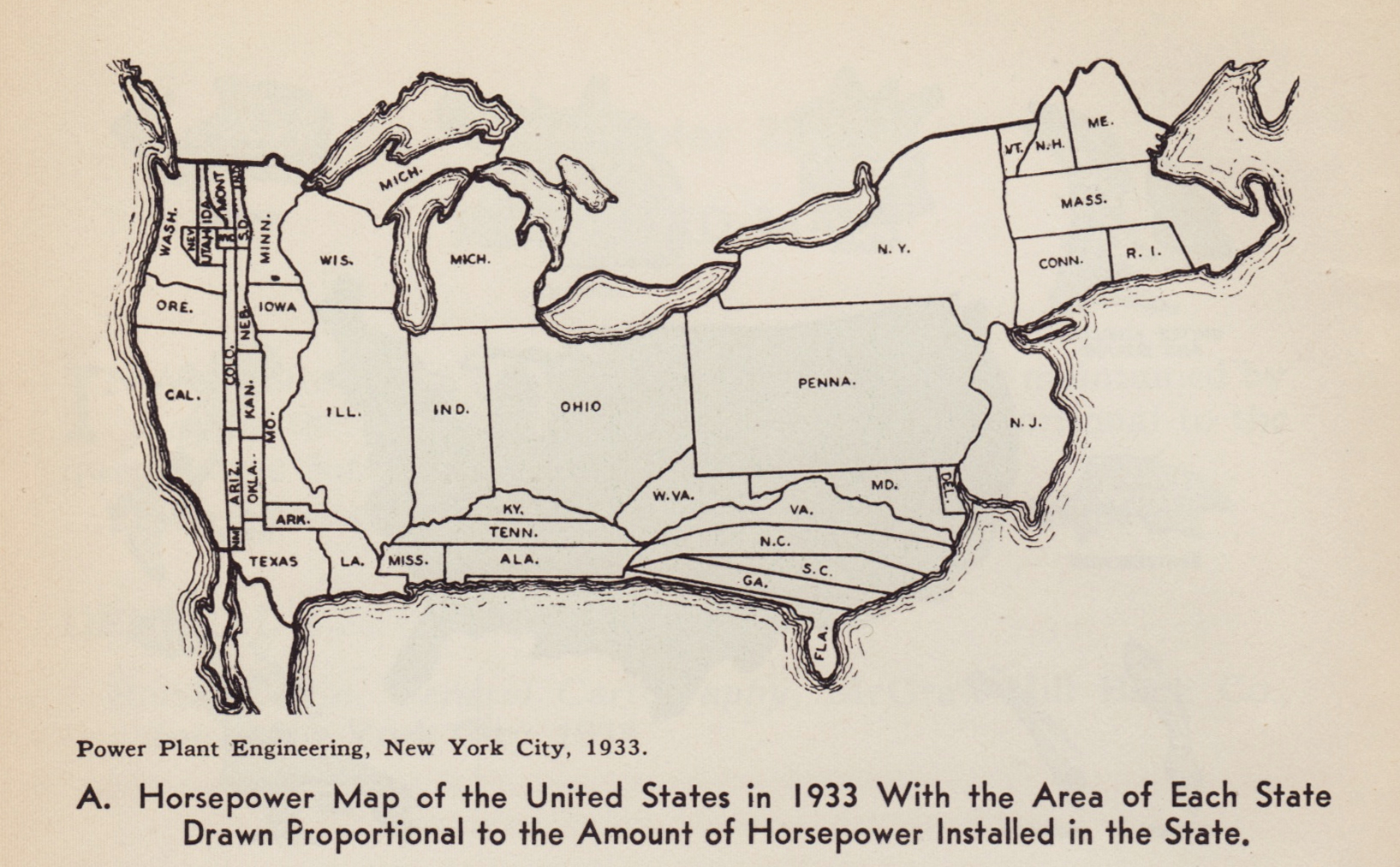
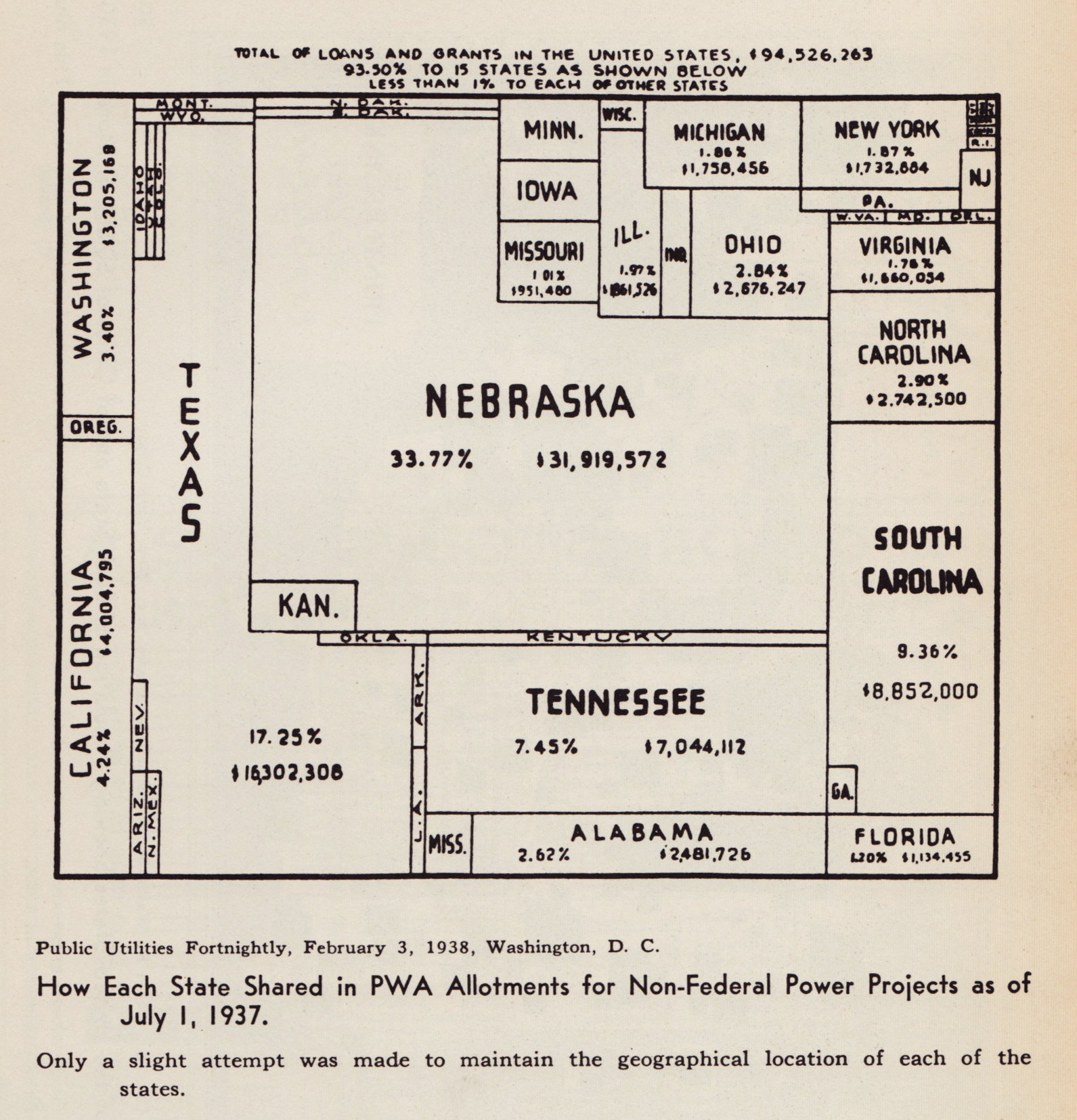
A cartogram scales geographic areas to some value other than geographic area. In two previous blog posts, 1911 Cartogram: “Apportionment Map” and 1923 Patented Cartogram, a few old-school cartograms were resurrected from musty old publications. Here find eight more cartograms published between 1921 and 1938.

This post opens with a peculiar item – the U.S. states as well as the areas of major cities are scaled to population, in essence two cartograms together. Symbols representing “people living on farms” are scattered about, each symbol equal to a number (undisclosed) of persons. Weird.

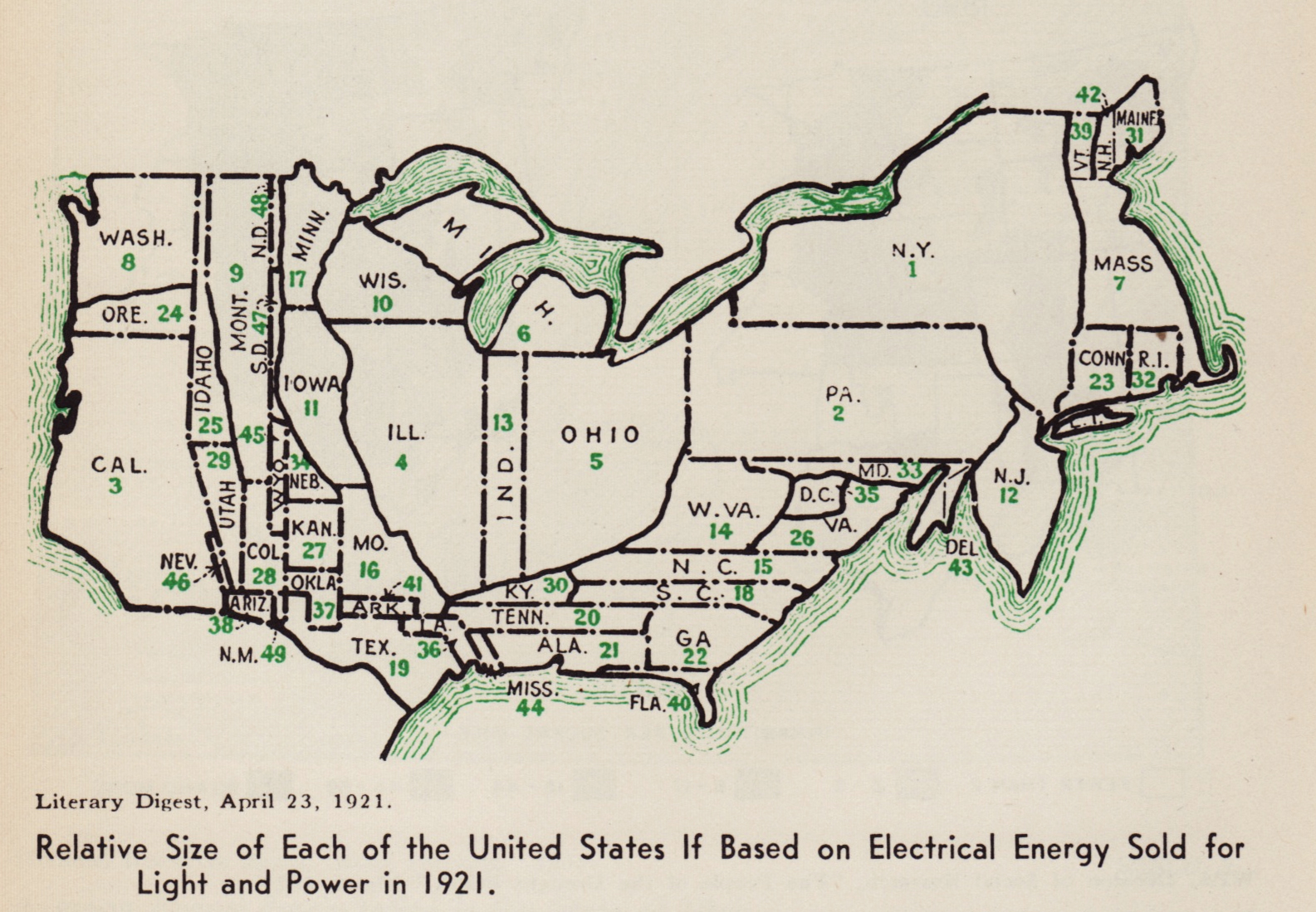
From the Literary Digest in 1921:

Cartogram, 1921: “Relative Size of Each of the United States if Based on Electrical Energy Sold for Light and Power in 1921” (Literary Digest, April 23, 1921)

•••••••••••••••

Cartogram, 1931: “The United States With the Area of the States Proportional to the Urban Population of 1930” (The Dartnell Corp., Chicago, Ill., 1931)

•••••••••••••••

Cartogram, 1933: “Horsepower Map of the United States in 1933 With the Area of Each State Drawn Proportional to the Amount of Horsepower Installed in the State” (Power Plant Engineering, New York City, 1933)

•••••••••••••••

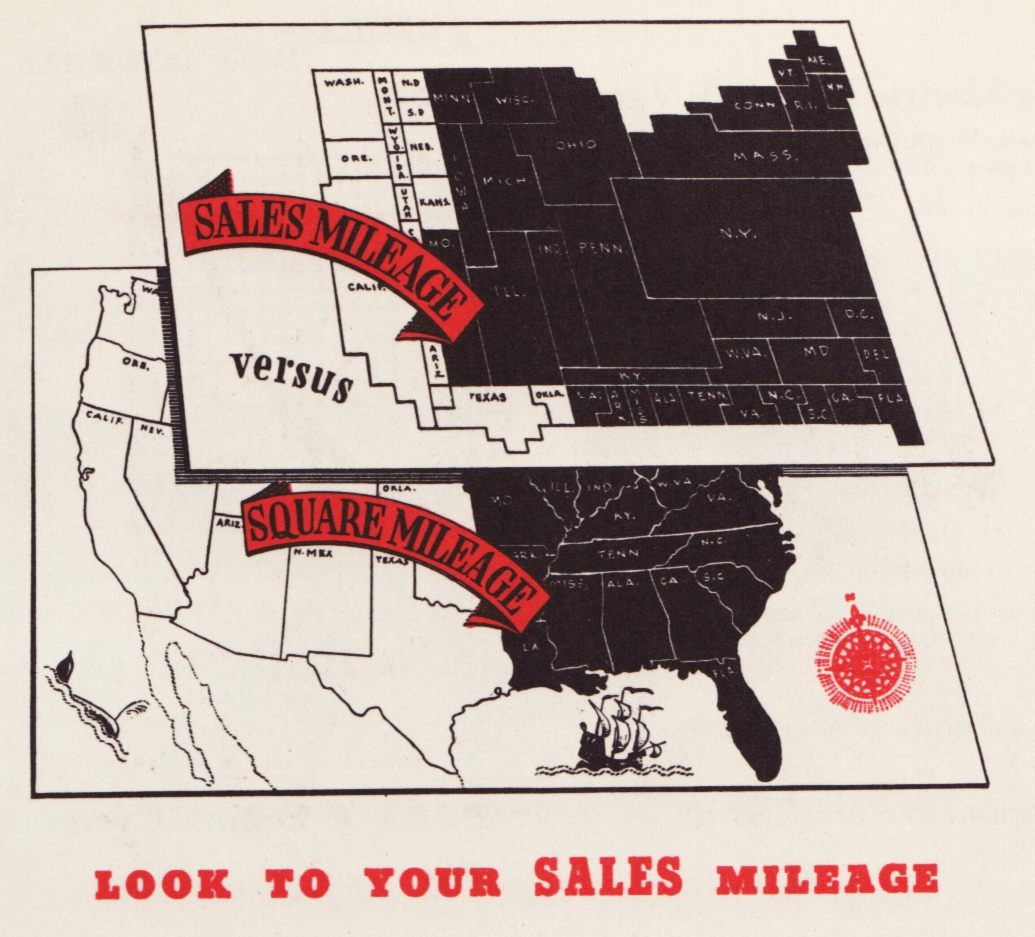
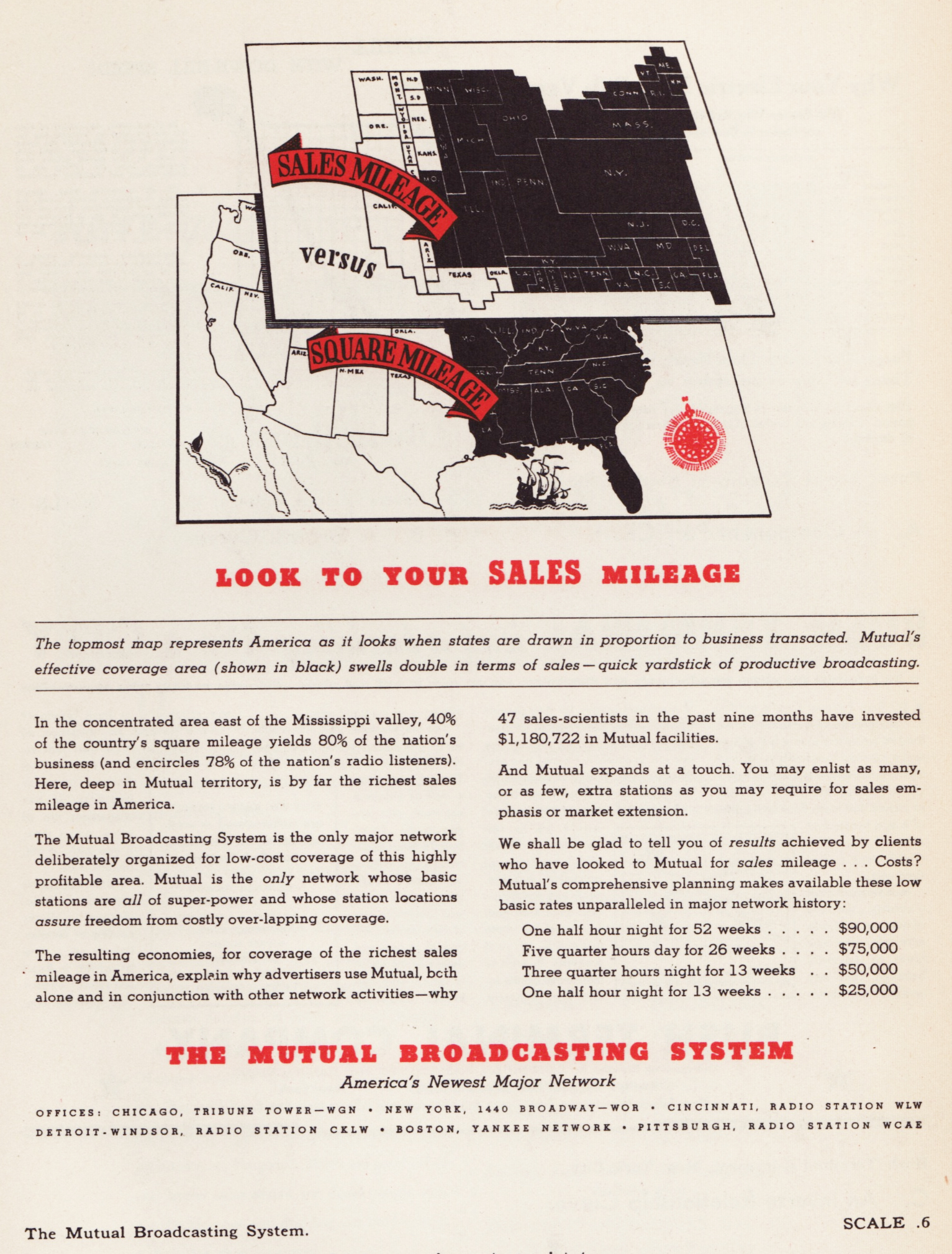
I had an old slide of the following cartogram but did not know its source: turns out it is from an advertisement for The Mutual Broadcasting Network, showing that 80% of business in the U.S. is transacted in states east of the Mississippi – MBN’s broadcasting area:

Cartogram, date unknown (1930s): “Look to Your Sales Mileage” advertisement (The Mutual Broadcasting System).

•••••••••••••••

A very diagram-ish cartogram which places an un-cartogrammed map of the US in the background:

Cartogram, 1937: “The United States With the Areas of the States Proportional to Their Manufacturing Output in 1935” (Business Week, June 12, 1937, New York City)

•••••••••••••••

brinton_gp_cartograms_1938

Cartogram, 1938: “How Each State Shared in PWA Allotments for Non-Federal Power Projects as of July 1, 1937” (Public Utilities Fortnightly, February 3, 1938, Washington DC)

•••••••••••••••

Reproduced from Willard C. Brinton’s Graphic Presentation (1939).

From a slouching, unkempt, uncouth, shambling, horrid boy, he emerged into being a respectable, neat, tidy, order-loving, painstaking, and industrious young man.

– Miss Winthrop, 1888

I had an ugly, unruly boy in my room, and be gave me more trouble than all the rest of the class. When I inherited him I felt as if Nemesis had overtaken me, and just how to control him and secure any kind of work from him was a problem I long wrestled with.
For several weeks he was the terror of the room, and my reputation for good order and dignity was, I felt, fast disappearing. The boy would not obey unless he felt like it, and punishments had no effect on him. Every plan I evolved for the regeneration of the boy proved abortive. He wouldn’t reform. Finally, by accident, I stumbled on the cure.
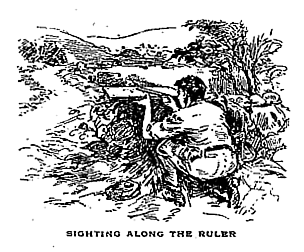
I discovered that he was interested in his drawing, or rather was interested in sketching odd bits of scenery, or objects in the room, not even omitting his respected teacher, who was a typical schoolmarm and wore glasses. I resolved to make the most of this one talent – if talent it was – and so one day, when I was in my best and sweetest mood, I asked the terror if he would not draw a plan for some shelves I wanted put up in my closet. He assented, and the sketch was neatly and accurately made. There was a new look in his eyes and a new expression on his face when he gave me the paper on which his drawings were made.
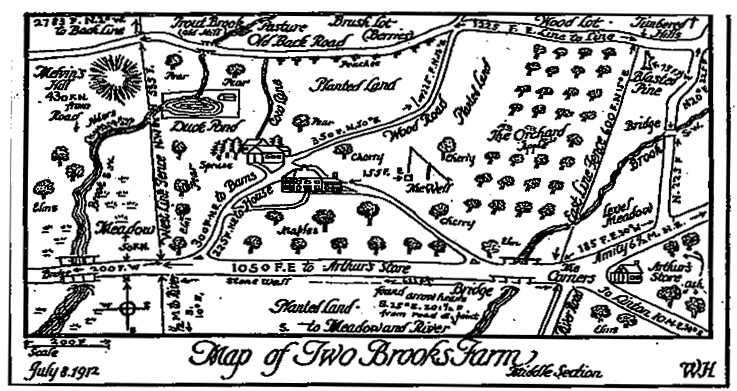
Then I advanced slowly and cautiously. I needed some maps made, following a new invention of mine in cartography, and again I employed the terror, and again the result was encouraging. The maps were models of neatness and precision. I judiciously praised him, and exhibited the maps to the class.
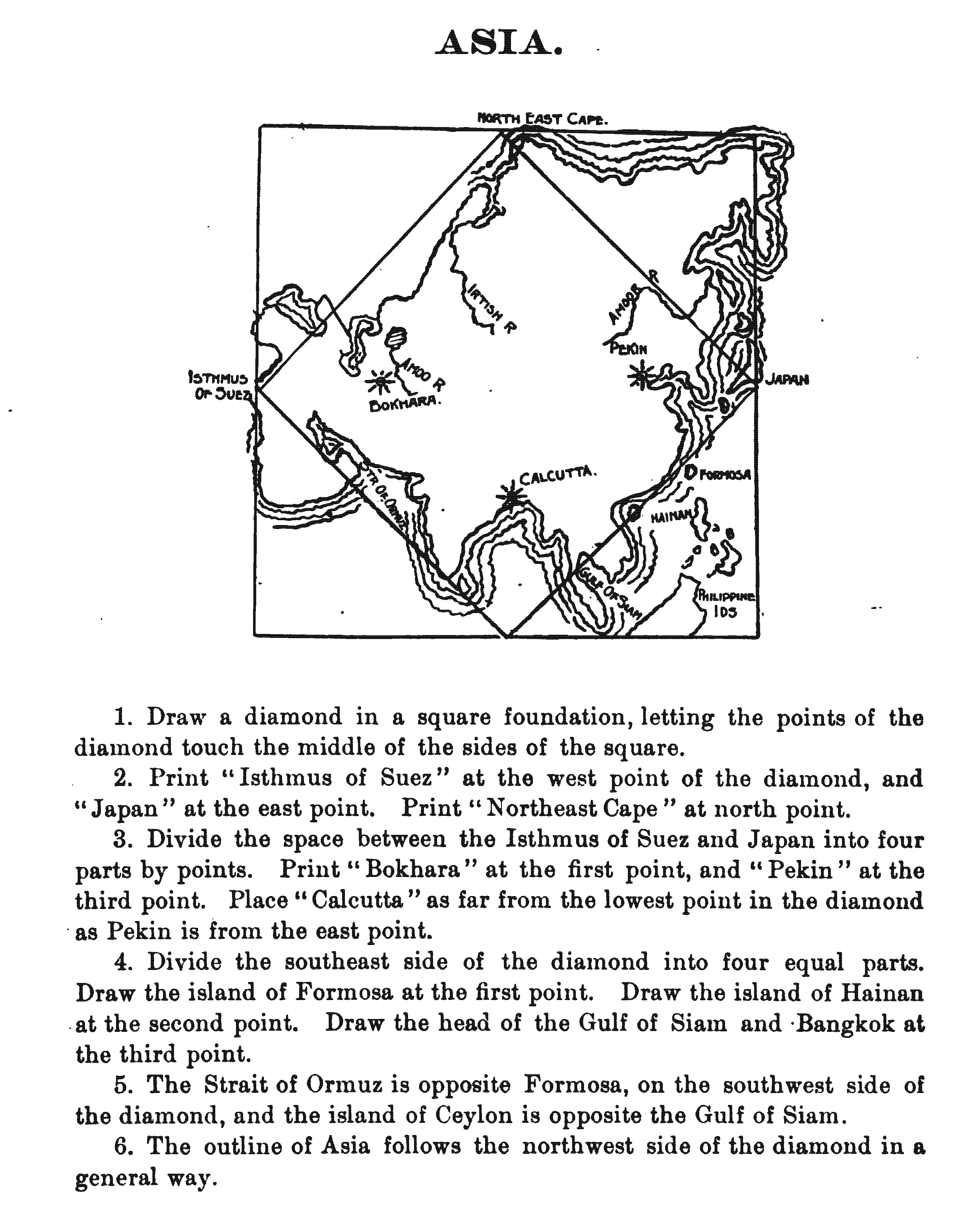
We were studying the continent of Asia, and the terror never had his geography lesson learned; but when I suggested that if he were to keep up his reputation in drawing he must draw the details of the county he was sketching, geography became a new study to him, and he easily wade excellent progress in this branch.
The terror came out of his chrysalis state a new creature. His old ways were left, and he readily adopted the better method of doing and living. From a slouching, unkempt, uncouth, shambling, horrid boy, he emerged into being a respectable, neat, tidy, order-loving, painstaking, and industrious young man.
•••••••••••••••••••••••••••••••••••••••••••••••••••••••••••••••••••••••••••••••••••••
Text:
  • Miss Winthrop, “A Crooked Stick Straightened,”  American Teacher, 1888 (reprinted in Scientific American, November 26, 1887, Vol. LVII., No. 22., pg. 346)
Illustrations:
  • Sighting Along the Ruler: The Youth’s Companion, August 8, 1918
  • Map of Two Brooks Farm: The Youth’s Companion, Aug 12, 1915
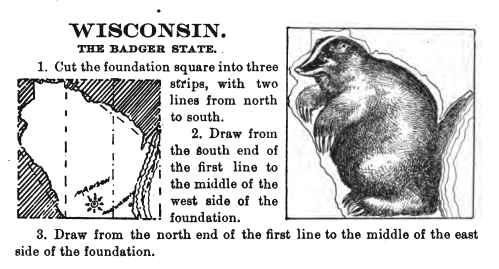
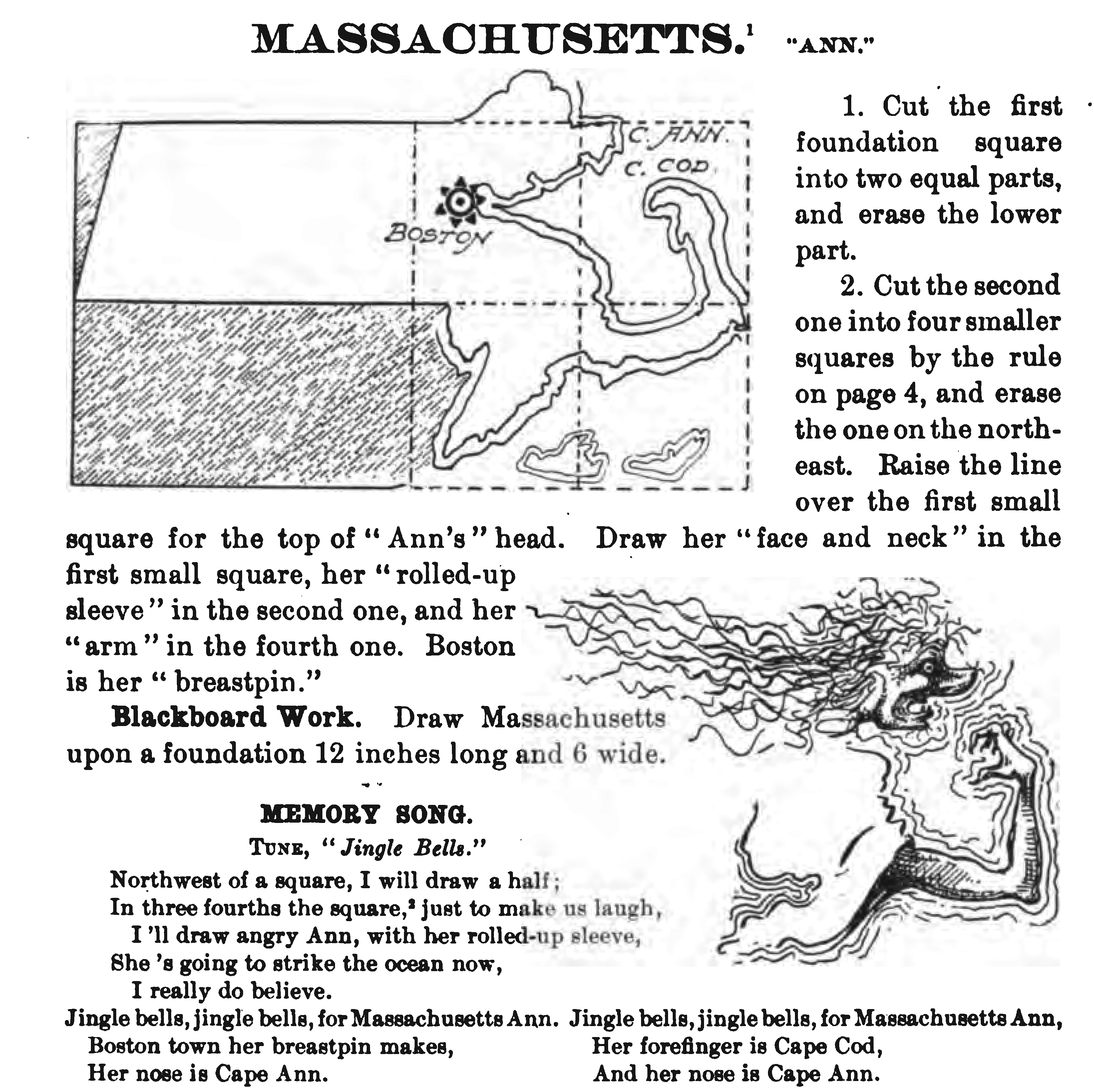
  • Wisconsin, Massachusetts, Asia: Lenore Congdon Schutze, Schutze’s Amusing Geography and System of Map Drawing (San Francisco, 1900)

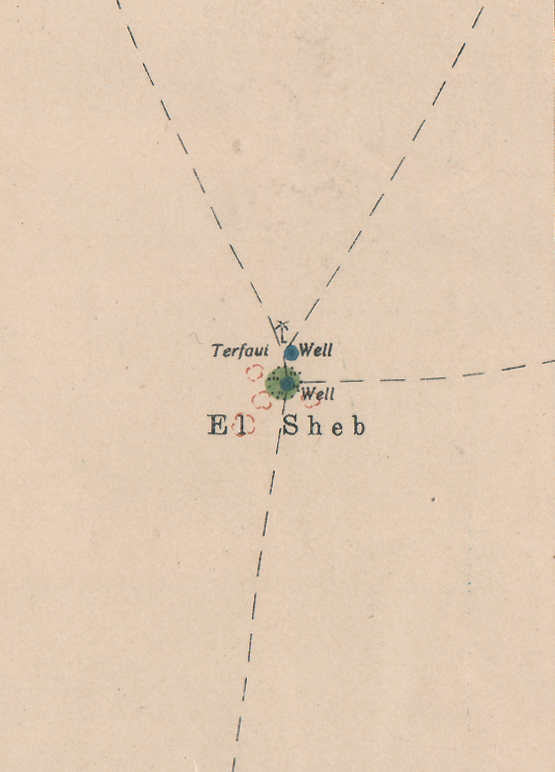
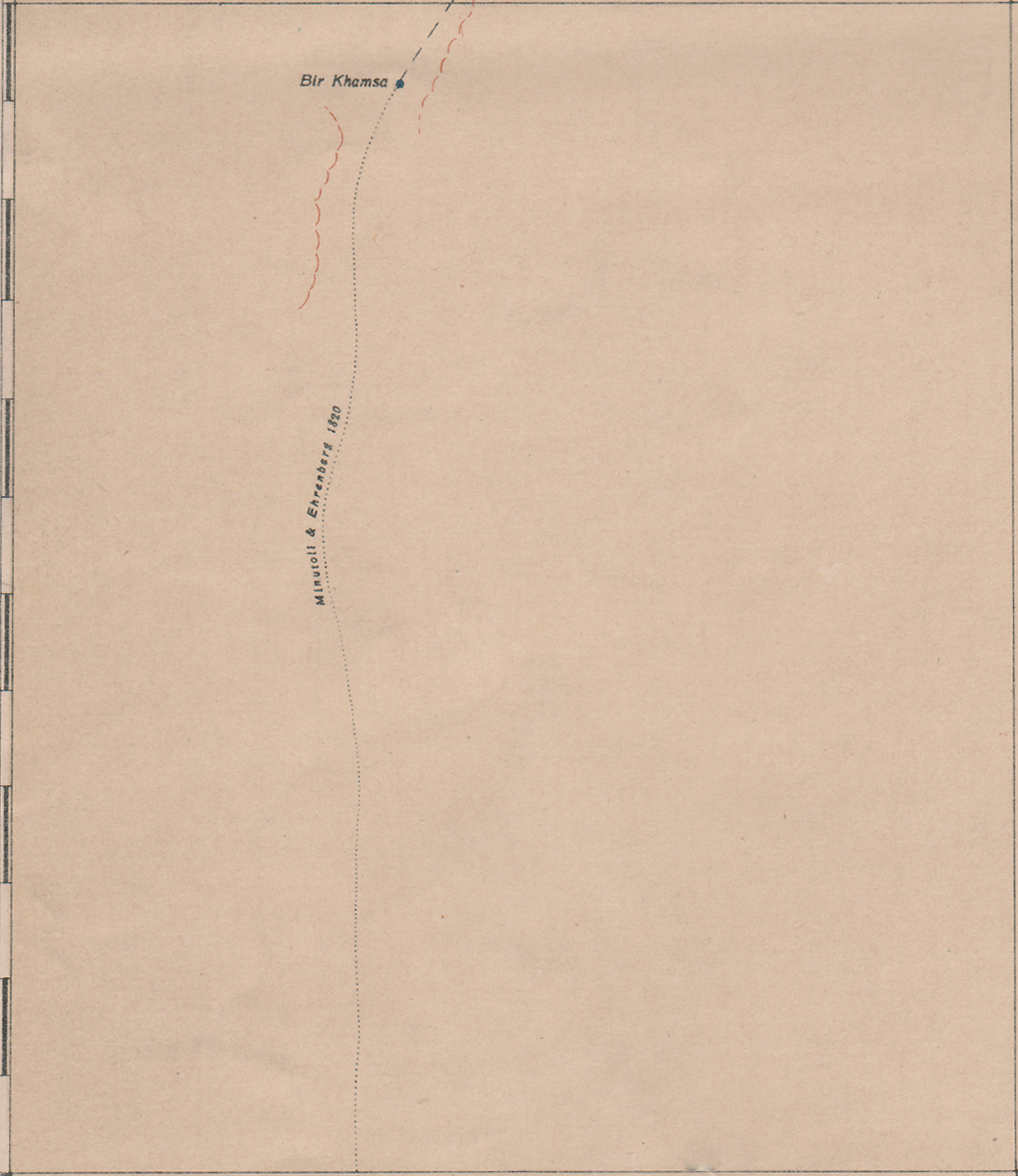
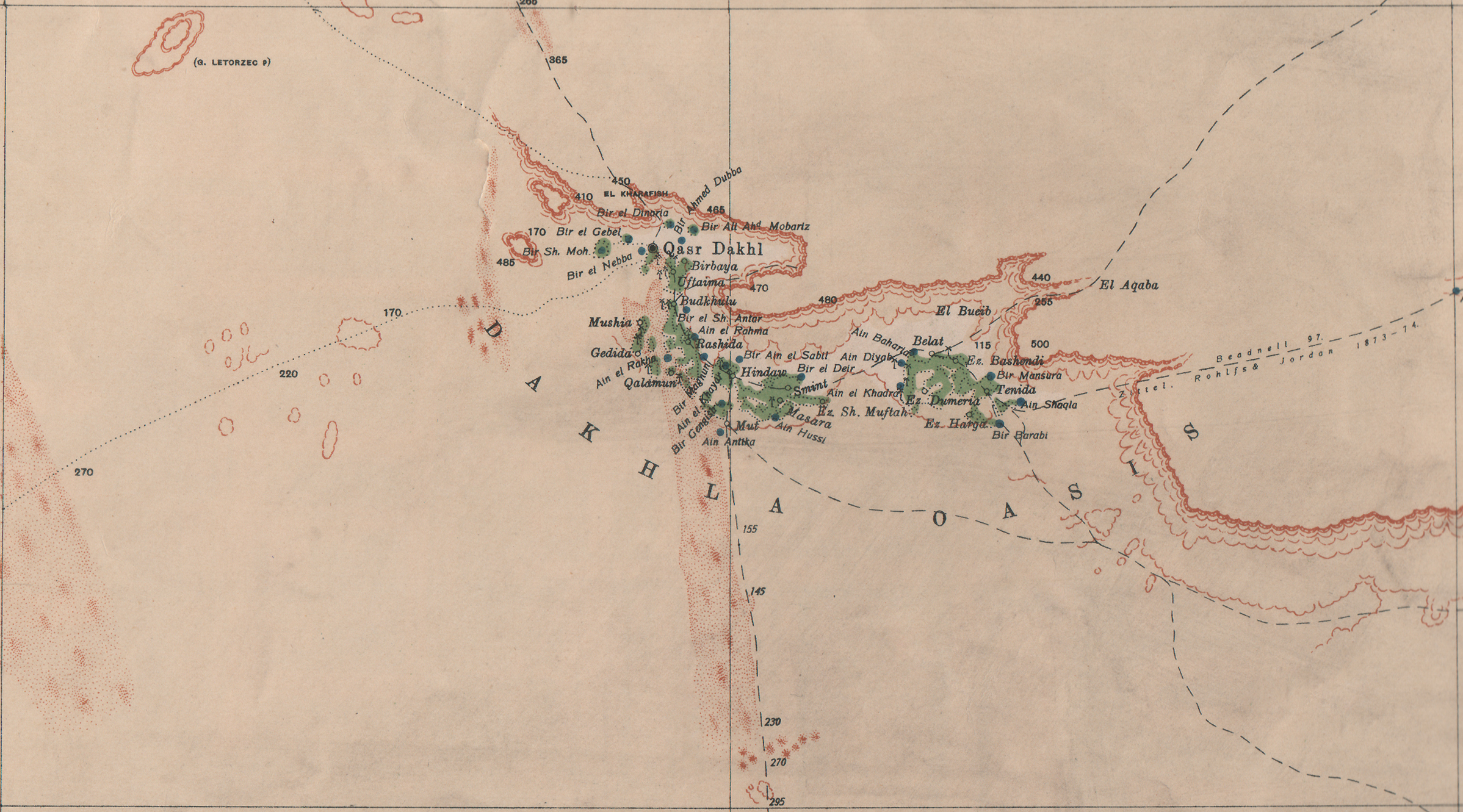
The Survey of Egypt, 1910, 1:1,000,000, Sheet 5 (detail 1, close-up)

•••

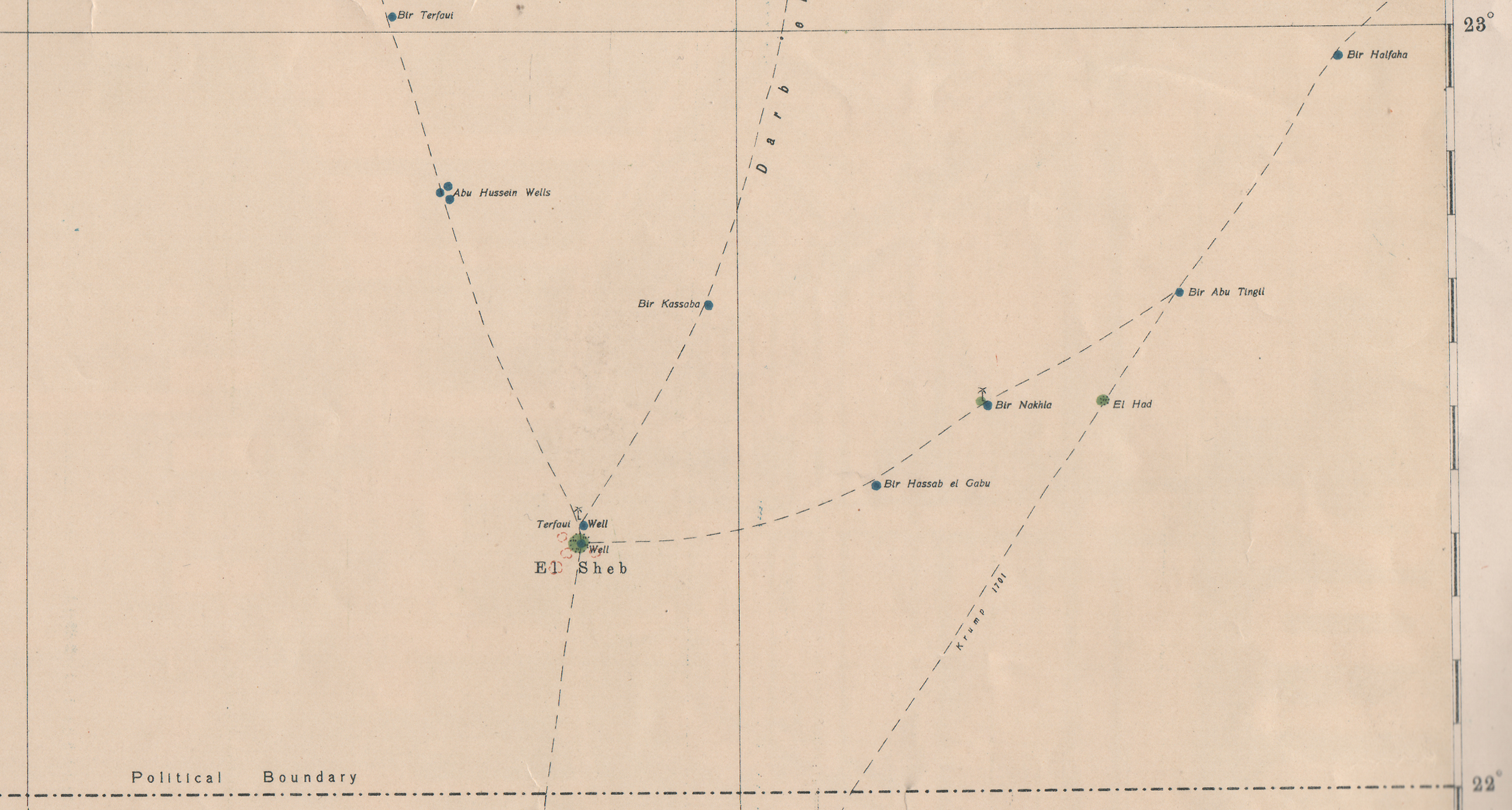
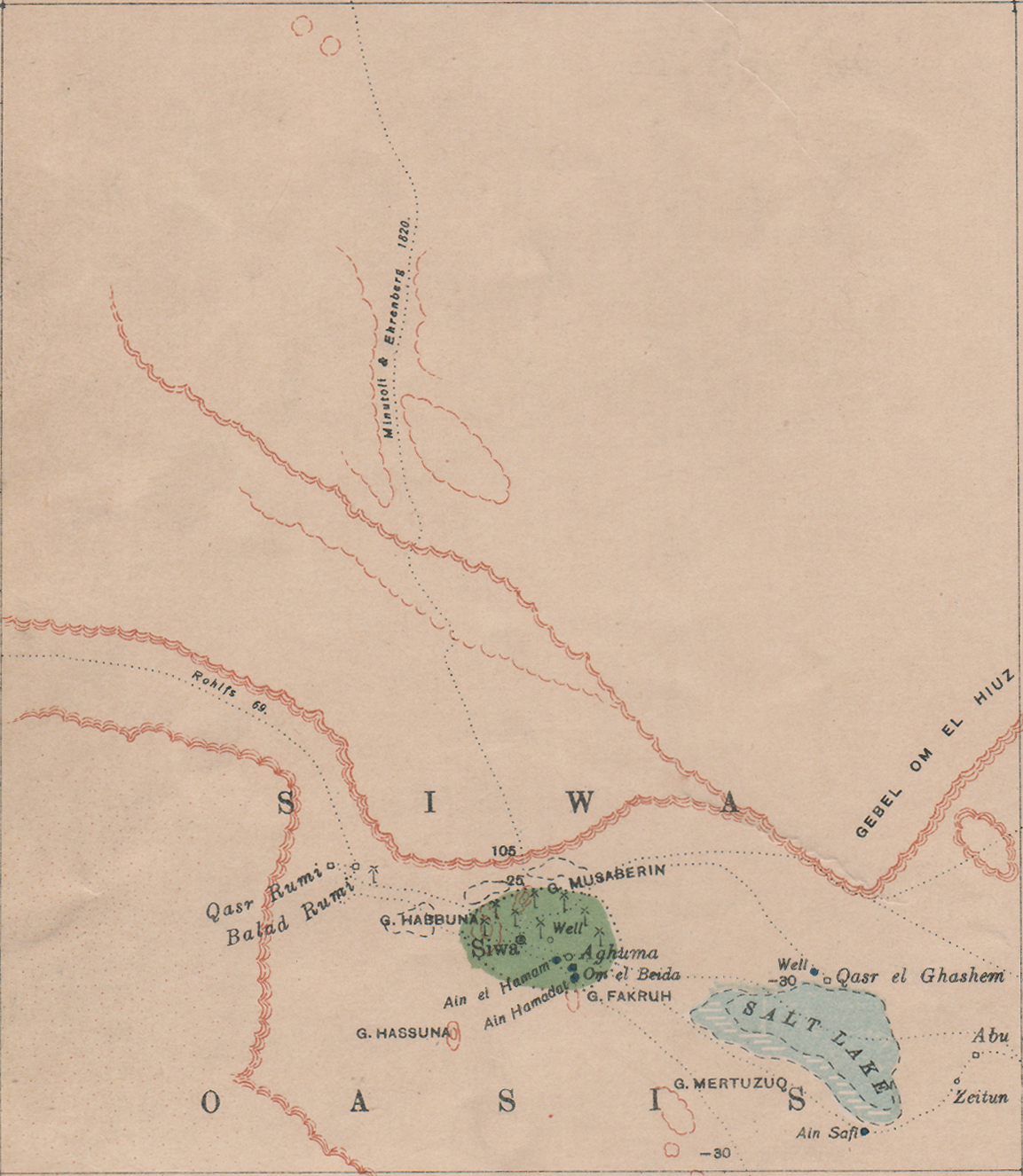
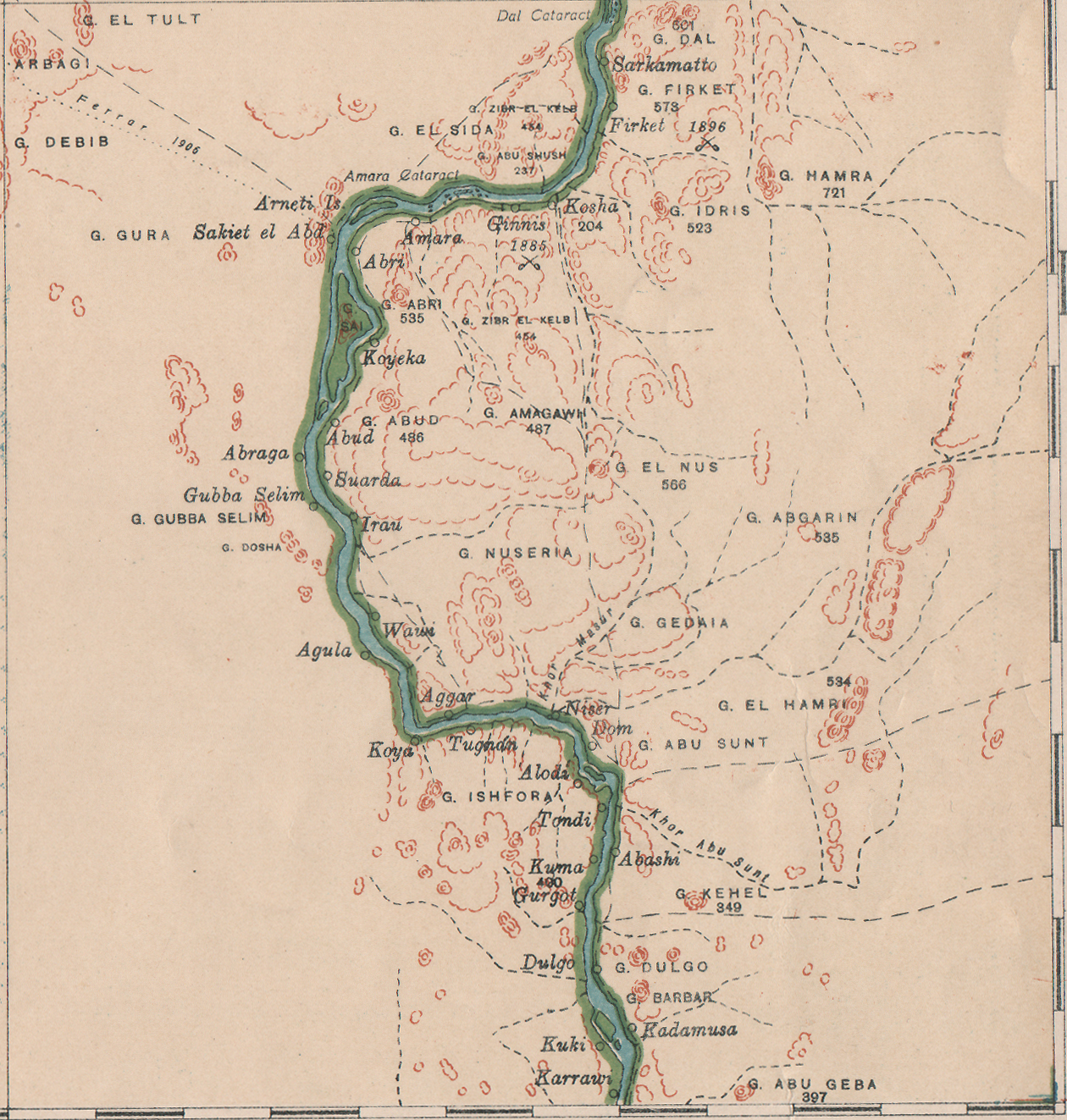
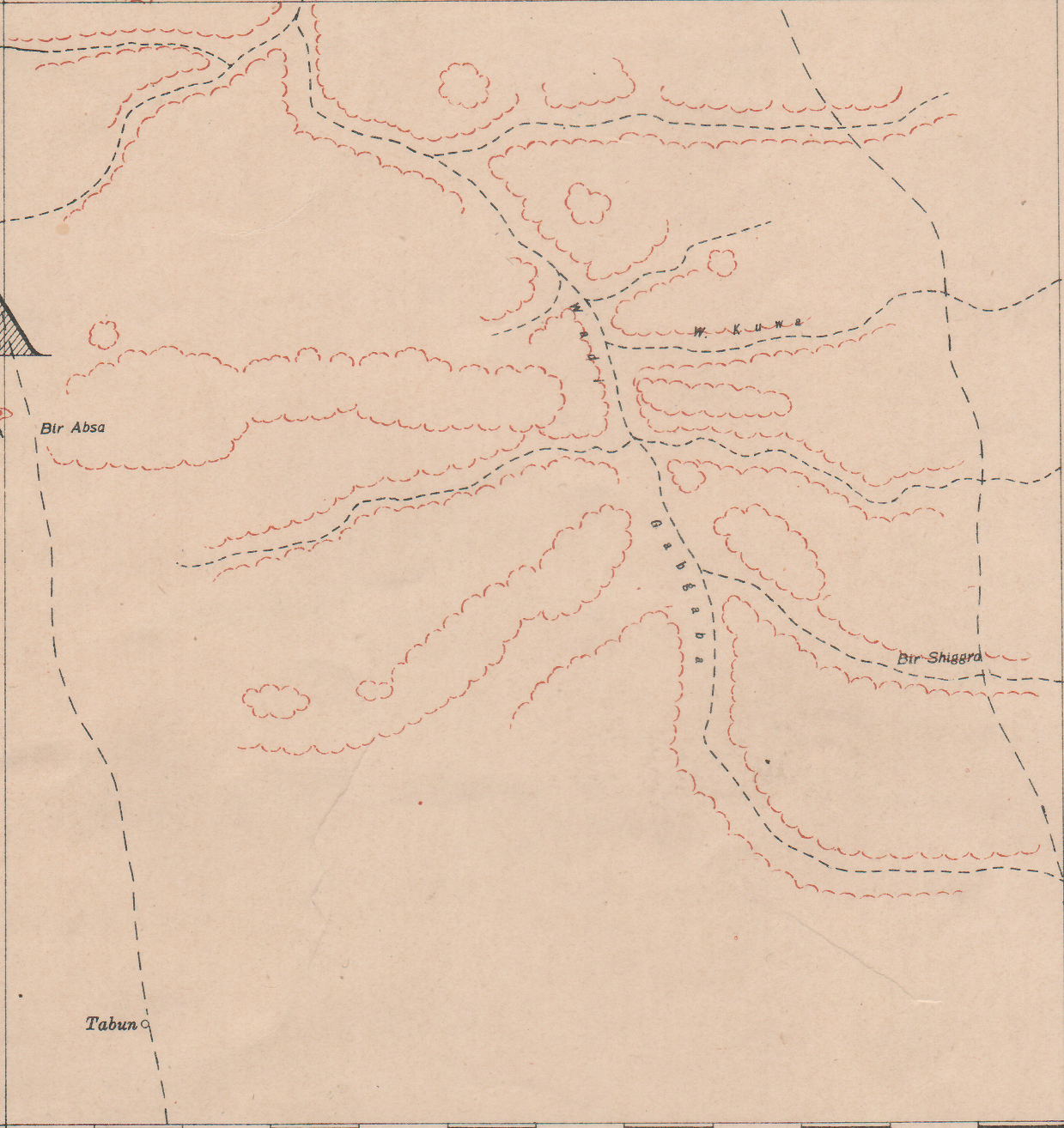
Found while cleaning out an old map cabinet: oceans of just about nothing, punctuated by signs of a minimal landscape. Soiled, creased, tears, dusty. Thumb-print and fading pencil marks, from someone who stared at this map a long time ago.

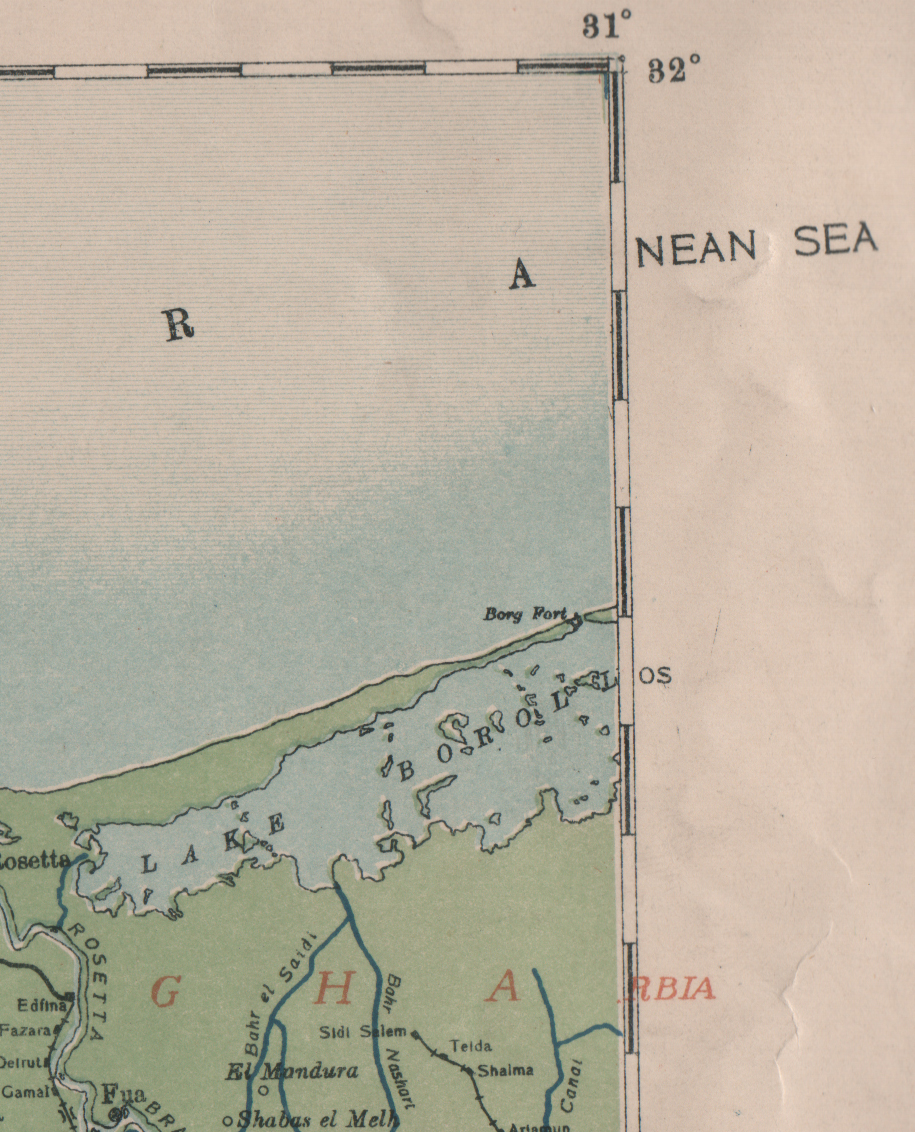
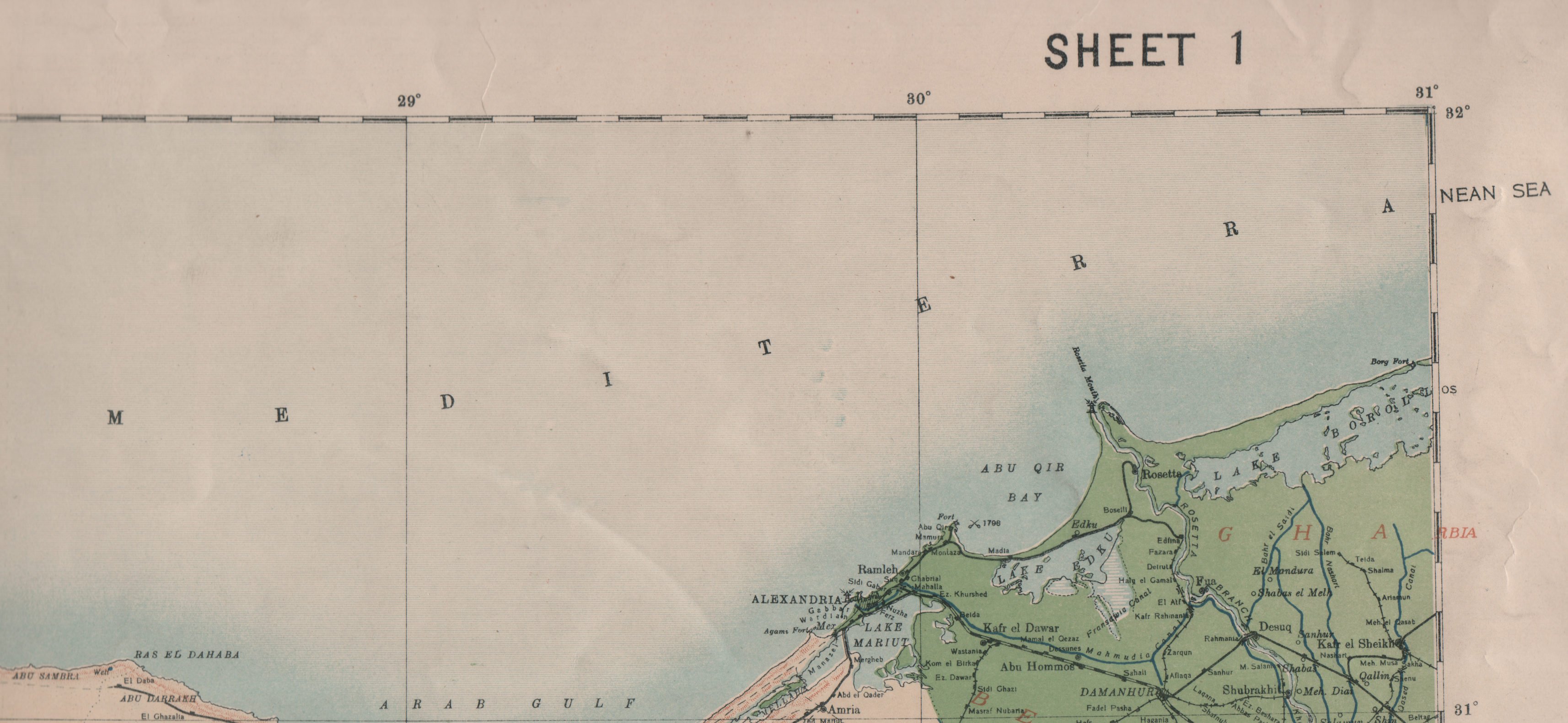
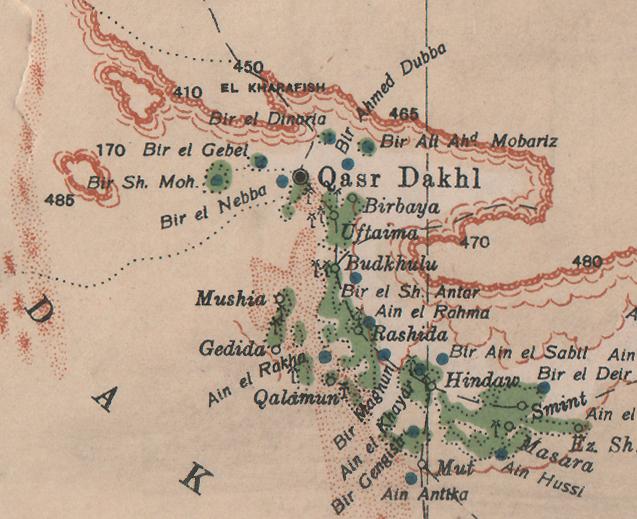
Details from a topographic map of Egypt in 6 sheets, published by The Survey of Egypt in 1910, scale 1:1,000,000.

Click on any map for a larger version of the scan.

•••

The Survey of Egypt, 1910, 1:1,000,000, Sheet 5 (detail 1)

•••

The Survey of Egypt, 1910, 1:1,000,000, Sheet 1 (detail 1)

•••

The Survey of Egypt, 1910, 1:1,000,000, Sheet 1 (detail 2)

•••

Note the type leaking over the map border (Mediterranean, Lake Borollos, Gharbia)

The Survey of Egypt, 1910, 1:1,000,000, Sheet 1 (detail 3 – close-up)

•••

Note the type leaking over the map border (Mediterranean, Lake Borollos, Gharbia)

The Survey of Egypt, 1910, 1:1,000,000, Sheet 1 (detail 3)

•••

The Survey of Egypt, 1910, 1:1,000,000, Sheet 3 (detail 1 – close-up)

•••

The Survey of Egypt, 1910, 1:1,000,000, Sheet 3 (detail 1)

•••

The Survey of Egypt, 1910, 1:1,000,000, Sheet 5 (detail 2)

•••

The Survey of Egypt, 1910, 1:1,000,000, Sheet 6 (detail 1)